By Dr. Salim Ahmed Vessah
Expanding access to reliable and affordable energy is a powerful driver of women’s empowerment and inclusive development in Central Africa. Modern energy reduces the burdens of unpaid domestic work, improves health and education outcomes, and creates opportunities for entrepreneurship and economic participation. By adopting gender-responsive energy policies and investing in clean energy infrastructure, governments and partners can advance gender equality while accelerating sustainable and inclusive economic growth.
The Hidden Gender Cost of Energy Poverty
Energy poverty is often discussed as an infrastructure challenge, but it is also one of the most significant barriers to women’s empowerment across Central Africa. As night falls in many urban and rural communities, economic activity slows, health centers struggle to provide services, and students face limited opportunities to study. For millions of women, however, the work continues. Meals must be prepared, water collected, children cared for, and household responsibilities fulfilled, often without reliable electricity or clean cooking solutions. While discussions on gender equality frequently focus on education, finance, political participation, or legal reforms, access to modern energy is rarely recognized as a foundational enabler of all these opportunities.
This challenge is particularly acute in Central Africa. Despite vast hydropower resources and significant renewable energy potential, the Economic Community of Central African States (ECCAS) remains one of Africa’s least electrified regions. In 2023, electricity access averaged only 56.7% across the sub-region, with stark disparities between urban and rural areas. While approximately 65% of urban residents have access to electricity, access rates in many rural communities remain between 20% and 30%. These inequalities matter because women are disproportionately represented in rural areas, subsistence agriculture, and informal economic activities. As a result, they bear a disproportionate share of the social and economic costs associated with inadequate energy services. The region’s energy deficit is therefore not merely an infrastructure gap; it is a structural obstacle to gender equality, economic inclusion, and sustainable development.
The Rural-Urban Energy Divide and Why Women Pay the Highest Price
The most significant energy inequality in Central Africa lies between urban and rural communities. While major cities have benefited from investments in power generation and distribution networks, many rural areas remain underserved. Cameroon exemplifies this challenge: although national electricity access has reached approximately 71%, about 75% of the rural population still lacks access. Similar patterns are observed across much of the ECCAS region, where progress in national electrification rates often masks persistent territorial disparities.
For women, the consequences extend well beyond the absence of lighting. Limited energy access contributes directly to what development practitioners describe as time poverty. Across Africa, women and girls can spend up to 50 hours per week collecting fuelwood, preparing meals using traditional methods, and fetching water. Time devoted to these activities reduces opportunities for education, paid work, entrepreneurship, skills development, and participation in community decision-making. Studies consistently show that access to modern energy can reduce household labour burdens and improve educational outcomes, particularly for girls.
Healthcare services face similar constraints. Rural health facilities operating without reliable electricity struggle to refrigerate vaccines, power medical equipment, or provide quality maternal and reproductive healthcare. These limitations affect entire communities, but women often bear the greatest burden as both caregivers and primary users of health services. The rural-urban energy divide is therefore not simply a matter of infrastructure access; it is a determinant of productivity, human capital development, and overall well-being.
Energy Access as a Catalyst for Women’s Empowerment
Energy poverty limits opportunities; modern energy expands them. Reliable electricity is productive infrastructure that transforms livelihoods and economies. Many women entrepreneurs in Central Africa, operating in agriculture, food processing, retail, and services, face severe energy constraints. Without electricity, they cannot efficiently process products, preserve goods, access digital platforms, or extend business hours. Electrification improves productivity, increases incomes, and enables participation in higher-value economic activities. The Democratic Republic of Congo exemplifies this opportunity. Despite vast hydropower resources, 85 million people lack electricity. Closing this gap would generate substantial economic benefits and improve millions of women’s livelihoods. Gender-responsive energy investments yield returns beyond social welfare, contributing to productivity growth, local employment, and economic diversification.
Clean cooking is another critical, often overlooked, dimension of empowerment. Across Africa, 900 million women and girls lack clean cooking solutions, relying on traditional fuels like firewood and charcoal. Indoor air pollution from these practices causes respiratory diseases and other adverse health outcomes, disproportionately affecting women and children. Beyond medical costs, time spent gathering fuel limits economic participation and reinforces unpaid labour. Expanding access to clean cooking technologies offers multiple benefits: improved health, increased productivity, environmental sustainability, and stronger gender equality. As economies digitize, energy access determines participation in mobile banking, online education, e-commerce, and information services. Without reliable electricity, women risk exclusion from Africa’s economic future. A gender-responsive energy transition must ensure women are not only beneficiaries but active participants in the emerging energy economy.
From Energy Access to Gender Equality
Energy access alone will not automatically empower women. While infrastructure creates opportunities, policies determine who benefits from them.
- First, governments should prioritize rural electrification as a core component of their gender equality strategies. Closing the rural–urban electricity gap would directly benefit millions of women whose livelihoods depend on agriculture and informal economic activities.
- Second, greater investments are needed in decentralized renewable energy solutions. Mini-grids and standalone solar systems can provide cost-effective alternatives for remote communities that remain beyond the reach of national grids, while also strengthening climate resilience.
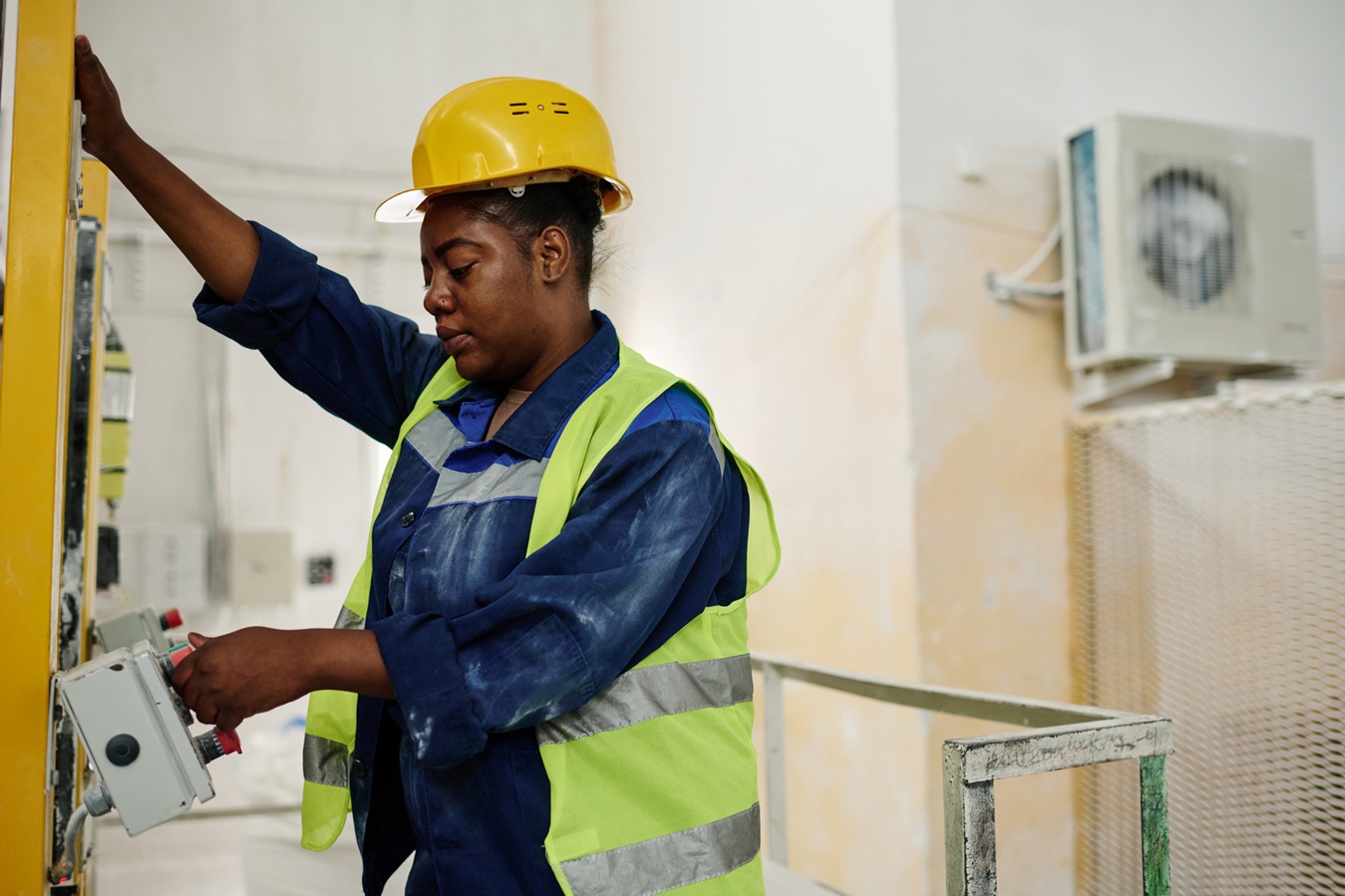
- Third, women should be supported not only as energy consumers but also as entrepreneurs, technicians, engineers, and decision-makers within the energy sector. Expanding access to finance, technical training, and business support services can enable women to seize opportunities created by the clean energy transition.
- Fourth, governments and development partners should adopt gender-sensitive energy policies by collecting sex-disaggregated energy data and integrating gender indicators into national energy planning frameworks.
- Finally, clean cooking must be fully integrated into national energy and gender strategies. Expanding electricity access while neglecting cooking needs leaves one of the largest dimensions of energy poverty unresolved.
Conclusion: Energy as a Foundation for Equality
Central Africa’s energy transition presents a unique opportunity for economic development and gender equality. However, this requires policies that explicitly address barriers women face in accessing modern energy. The region’s electricity deficit, particularly the rural-urban divide, continues to hinder women’s productivity, health, education, and economic participation. Expanding access to electricity and clean cooking solutions can reduce time poverty, strengthen entrepreneurship, improve healthcare, and unlock new paths to prosperity. Therefore, energy policy should be seen as both an infrastructure and a gender equality agenda. Success will be measured not by power plants or transmission lines, but by women gaining greater access to opportunity, income, health, and choice. For inclusive and sustainable growth, universal energy access is a powerful investment in women’s empowerment and Central Africa’s future.