

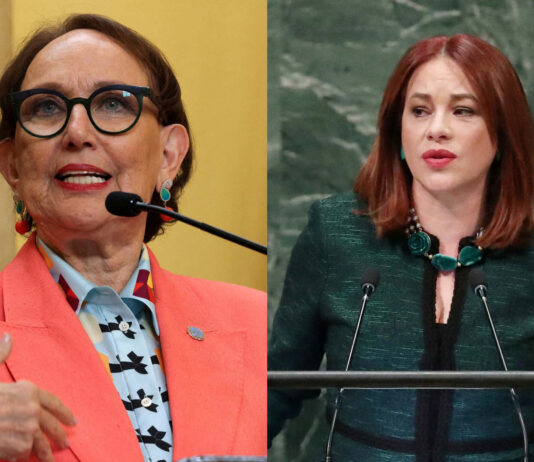
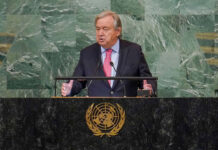
A New UN Leadership for a New Global Order: Advancing Africa’s Representation in the...
By Anthony Antem
The forthcoming selection of a new Secretary-General of the United Nations presents a critical opportunity to align global governance institutions with the...
Optimizing Artificial Intelligence for Conflict Prevention in Africa: The case for Multilateral Cooperation and...
Optimizing artificial intelligence for conflict prevention in Africa requires a dual focus on multilateral cooperation and localized innovation, enabling context-sensitive early warning systems while...
Digital Authoritarianism and Electoral Security in Africa: Regulating Disinformation Without Curtailing Civic Space
Balancing electoral security and civil liberties in Africa requires nuanced regulation of digital disinformation that counters authoritarian misuse of technology while safeguarding open civic...
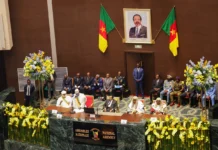
Elite Renewal or Managed Continuity? Interpreting Cameroon’s New Legislative Leadership
By Enowbachem Agbortanyi, Policy Analyst
A Symbolic Shift Within Structural Continuity
The legislative branch in Cameroon has reached a significant period of transformation with new leadership...
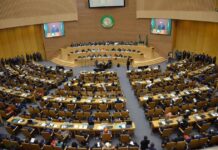
When Great Powers Bypass the Rules
Foreign Military Raids and Africa’s Sovereignty at Risk
By Anthony Antem
The January 2026 U.S. raid on Caracas, which captured Venezuelan President Nicolás Maduro without UN...

Could Africa’s Oil-Rich States Be Next?
Lessons from Venezuela’s Collapse and the U.S. Raid on Caracas
By Muriel Kinkoh
On January 3, 2026, U.S. forces stormed Caracas in a lightning raid that...
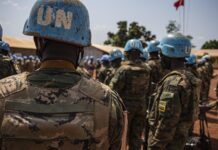
From Mandate to Impact: How Effective are UN Peace Operations in Africa? The Case...
Policy Highlights
MINUSCA has contributed significantly to stabilizing the Central African Republic by reducing civilian killings and supporting political transitions, elections, and DDR processes.
...
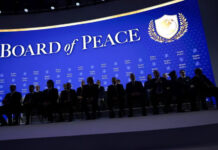
Africa and the Board of Peace: Sovereignty Challenges in a Changing Global Order
Policy Highlights
Africa remains largely excluded from the emerging governance model represented by the Board of Peace (BoP), which centralizes authority under a single...
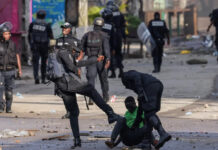
Eroding Trust: The Impact of Security Force Violence in Cameroon’s English-speaking Regions
Context
The security situation in Cameroon’s English-speaking regions (the Northwest and Southwest regions) continues to be characterized by a deeply ingrained cycle of violence, where...
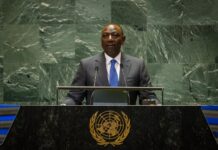
When the UN Speaks and is Ignored: Ruto’s Rebuke and Africa’s Dilemma
In his September 2025 address at the UNGA80, President William Ruto of Kenya struck a chord by highlighting the UN’s declining credibility: "On peace and...
Latest article
No Factories, No Trade: CEMAC Faces the Challenge of Structural Transformation
Highlights
No CEMAC member State accounts for more than 10% of exports to the continent.
The free movement of people, planned since 1999, has...

Burkina Faso’s New Study Abroad Decree: When Education Becomes a Political Privilege
By Enowbachem Agbortanyi
A Policy Framed as National Development
Burkina Faso's latest decree requiring every student wishing to study abroad to obtain government authorization marks more...
From the WTO MC14 to Action: Building Africa’s Productive Capacity through Trade, Digitalisation and...
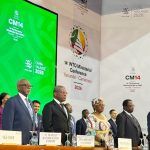
Africa cannot rely on trade liberalization alone to achieve economic transformation; instead, it must pair AfCFTA integration with deliberate industrial, agricultural, and digital capacity-building...
Leveraging WTO MC14 Investment Facilitation for Development to Accelerate Structural Transformation in Cameroon
Investment inflows will generate the expected level of development impact in Cameroon if the country addresses persistent challenges like regulatory inefficiencies, institutional fragmentation, and...

Rethinking Commercial Leadership in Central Africa: Addressing the Challenges of Informality, Inequality, and Digital...
Informality, inequality, weak digital infrastructure, and limited productive financing continue to marginalize ECCAS economies, while calling for coordinated reforms to achieve inclusive and transformative...
From Market Expansion to Value Addition: Repositioning CEMAC’s Trade Strategy for Structural Transformation
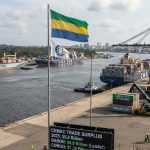
Repositioning CEMAC’s trade strategy requires a decisive shift from commodity-based market participation toward value-driven production systems, where trade, industrial policy, and regional integration are...