By Dr. Stephane Mbiankeu Nguea
Africa’s aspirations for industrial transformation are unfolding at a time when the international economic and political order is undergoing profound change. As the United Nations confronts growing questions about its effectiveness and representativeness, the quality of global leadership will play a decisive role in shaping opportunities for sustainable industrial development across the continent.
Introduction
The selection of the next UN Secretary-General in 2026 comes at the time when the world is increasingly fragmented. From Ukraine to the South China Sea, trade wars to military conflicts: power acts alone; the weak absorb the shock. For African nations, the stakes could not be higher. The international system is imperfect, but it is still the main organisation where small and medium-sized economies can bargain trade arrangements, secure development finance, and keep the bigger powers answerable. The World Trade Organisation’s dispute-resolution process keeps stalling. The World Bank, meanwhile, estimates developing countries will need an extra $2.4 trillion every year by 2030 to meet climate and development goals, but those pledges have not been delivered. Africa’s share of global foreign direct investment is still below 6%. Therefore, the election of the next Secretary-General transcends routine. It represents a unique institutional moment to redefine the contours of global cooperation, at a time when the price of fragmentation is rising by the day.
Global Fragmentation and Africa’s Industrial Constraints
The links between global governance failures and Africa’s industrial stagnation are direct and measurable. Three main mechanisms show up. First, the erosion of multilateral trade rules tends to hit emerging industrialisers especially hard. The AfCFTA aims to build a single market of 1.4 billion people, but everything hangs on predictable international trade rules for inputs, know-how, and export opportunities. When major powers impose unilateral tariffs, sanctions, and industrial incentives that run counter to WTO commitments, African exporters—who don’t really have the fiscal room to respond—get squeezed out of the markets they were promised. Second, fragmentation in digital governance weakens Africa’s ability to construct a competitive digital economy. As UNCTAD’s Digital Economy Report 2024 describes, the global digital economy is now managed through overlapping regulatory blocs: the EU’s GDPR, China’s cyber sovereignty approach, and the United States’ more market driven posture. Without a coherent multilateral structure, Africa risks turning into a patchwork digital market, unable to reach the scale required for locally produced platforms and industries. Third, climate finance shortfalls undercut infrastructure investment. The African Development Bank puts Africa’s infrastructure funding gap at about $68 to $108 billion each year. When rich countries fail to deliver the $100 billion annual climate finance pledged and reaffirmed at every COP, African governments face a brutal choice: invest in roads, ports, and power, or service their debt.
The Gender Dimension: Exclusion at the Top, Exclusion at the Base
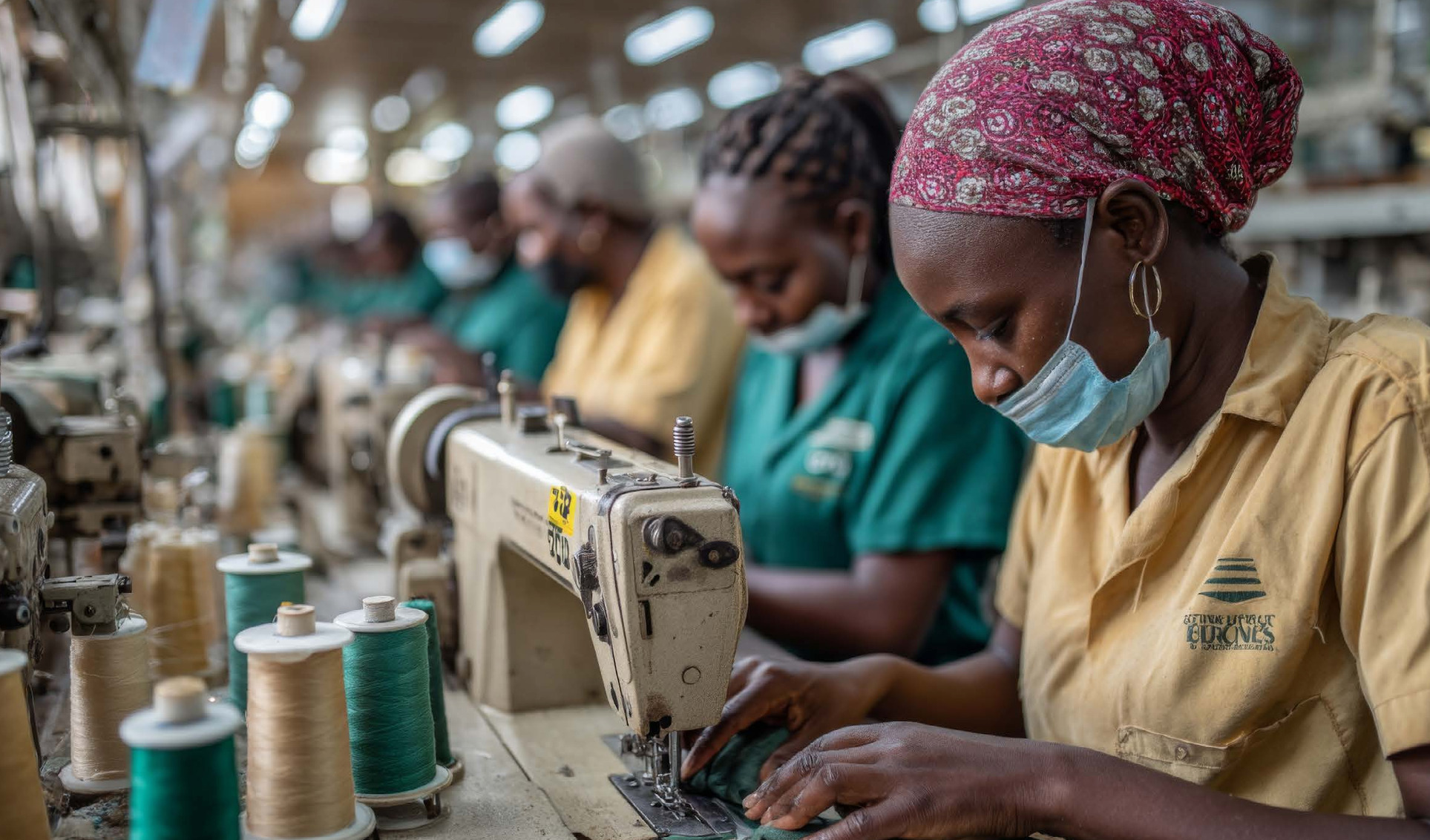
The debate over the next Secretary-General is also a debate about gender. In the UN’s 80-year history, no woman has ever held the post of Secretary-General. This gap is not symbolic, but is structural. It weakens priorities and legitimacy. Moreover, women are still shut out of the rooms that set the rules for Africa: finance, trade, and climate. When women are absent from decision-making tables, the policy agendas that come out of those rooms end up systematically underweighting the sectors and concerns that matter most for truly inclusive development, for example, care infrastructure, informal-sector formalisation, education, and health. For Africa, the stakes are not symbolic. The consequences are real and economic. As a recent study found, capital-intensive industrialisation in Africa has often sidelined women from the most stable and well-remunerated jobs. Fixing it requires action, not talk: industrial policies tied to gender-inclusive hiring, STEM education for girls, and care infrastructure so women can work without constant barriers. A multilateral system that cannot model gender equality will lack both the credibility and the analytical muscle required to push those policies forward. The AU’s Agenda 2063 explicitly frames gender equality as a driver of transformation. The UN’s own SDG 5 and SDG 8 commit the world to gender equality and decent work for all. The election of a woman as Secretary-General, and more broadly the institutionalisation of gender parity in all UN leadership structures, would send a clear signal.
The Opportunity: Africa’s Collective Leverage
Africa is not a passive spectator in this leadership transition. With 54 states and 1.4 billion people, it is the UN’s largest voting bloc. That weight has long been diluted by divisions and outside influence. However, the moment now demands unity, however hard it feels. A coordinated African position on the next Secretary-General should be built around three demands, not more- not less. First, the selection process should be genuinely transparent and merit based. It has to reject the informal rotation principle that has often barred candidates from particular regions, and sidelined all women. The “1 for 7 Billion” campaign has for a long time argued for this kind of change, and African civil society should really amplify these appeals instead of treating them like background noise. Second, candidates should come forward with clear, binding promises on multilateral trade and finance reform. This includes restoring the WTO dispute settlement, delivering on climate finance pledges, and also negotiating a global digital governance framework that actually respects the interests of developing economies. Third, gender parity in UN leadership should be treated as a non-negotiable minimum standard, if the institution wants renewed credibility that holds up under scrutiny. The AU, which has already managed gender parity at the Commission level, should lead this insistence by example, not just by statements.
Policy Recommendations
For African policymakers and civil society organisations, the following actions are urgent:
- The AU Commission should convene an extraordinary session to agree on selection criteria and, where possible, a shortlist of candidates, ensuring that the continent does not fragment its voting power.
- African member states should insist that candidates for Secretary-General publish specific, measurable pledges on trade reform, climate finance, digital governance, and gender parity in appointments.
- Organisations like Nkafuand its peers across the continent should track candidates’ statements, publish scorecards, and engage media to ensure that the selection process remains under public scrutiny.
- African governments should explicitly connect their support for any candidate to that candidate’s willingness to champion the AfCFTA as a model of regional integration that multilateral institutions should actively support.
Conclusion
The United Nations is at a crossroads because the institution’s legitimacy, that is its ability to stand in for the interests of most of humanity, is now under doubt. Africa has the most to lose if the UN failed, but it also has the most to gain if the UN is fair and inclusive. The election of the new Secretary-General represents an important turning point. It could turn out to be one more of those closed-door arrangements, done by the powerful, and repeating the same exclusionary routines that helped bring the system here. Alternatively, it could be a watershed moment, a deliberate move toward global leadership that mirrors the world, as it really is diverse, multipolar, and in urgent need of institutions that work for everyone, not just some.