

Effectiveness of “African Solutions to African Problems” in Silencing the Guns in Africa
The African continent has been at the crossroads of multiple and intricate challenges since independence. Some of these challenges include matters of the nascent...
Emerging from Military Coups in Africa: The Political Situation in Sudan
Introduction
The resurgence of military coups on the African continent and the new engineering of the 'coup d'état to the transition,' the 'double coup d'état'...
DDR Process in Cameroon, 5 Years Later: What Prospects?
Introduction
Since 1989, international efforts to end protracted conflicts in Africa, America and Asia have required sustained investments in disarmament, demobilization, and reintegration of...

Addressing Conflict-Related Trauma in Cameroon: A Pathway to Conflict Prevention and Sustainable Peace
Introduction
Like many other African countries, Cameroon has experienced its fair share of conflicts and violent conflicts, which have left deep wounds on individuals and...
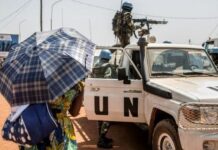
Enhancing Human Security and Strategic Peacebuilding for Sustainable Development in Africa
Introduction
Throughout our journey since independence, Africa has faced a series of crises that have tragically escalated into conflicts. These conflicts have too often...
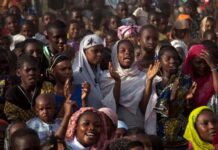
Accelerating the implementation of the Youth Peace and Security Agenda in Cameroon: A Step...
Introduction
Cameroon has been marked by socio-political tensions and recurring conflicts that have left a deep humanitarian crisis in the affected regions and hampered...

African Cup of Nations, a regional approach for sustainable peacebuilding
Context
Complex dynamics of conflicts in Africa over the past years have increasingly led several global, regional, and local stakeholders including schools of thought...

Internet shut-down, recurrent weapon of human rights violation: a view on Africa
Introduction
In the last decade, internet shut-down has been a recurrent practice weaponised by states as a measure to restrict the flow of information across...
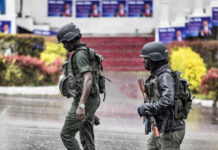
Assessing the impact of civil-military actions in a context of asymmetric conflict in Cameroon
INTRODUCTION
"Even if, by definition, the primary mission of our armed forces is to ensure peace and defend the integrity of our country's territory, they...
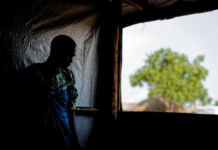
Cameroon Government’s Response to Conflict-Related Sexual Violence Within the Context of the Anglophone Armed...
Introduction
During armed conflict, civilians are typically in grave peril, with severe consequences such as loss of life, property and means of subsistence, widespread displacement,...
Latest article
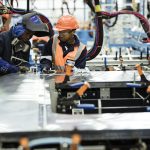
No Factories, No Trade: CEMAC Faces the Challenge of Structural Transformation
Highlights
No CEMAC member State accounts for more than 10% of exports to the continent.
The free movement of people, planned since 1999, has...

Burkina Faso’s New Study Abroad Decree: When Education Becomes a Political Privilege
By Enowbachem Agbortanyi
A Policy Framed as National Development
Burkina Faso's latest decree requiring every student wishing to study abroad to obtain government authorization marks more...
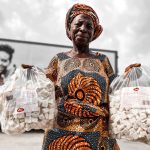
From the WTO MC14 to Action: Building Africa’s Productive Capacity through Trade, Digitalisation and...
Africa cannot rely on trade liberalization alone to achieve economic transformation; instead, it must pair AfCFTA integration with deliberate industrial, agricultural, and digital capacity-building...
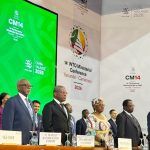
Leveraging WTO MC14 Investment Facilitation for Development to Accelerate Structural Transformation in Cameroon
Investment inflows will generate the expected level of development impact in Cameroon if the country addresses persistent challenges like regulatory inefficiencies, institutional fragmentation, and...

Rethinking Commercial Leadership in Central Africa: Addressing the Challenges of Informality, Inequality, and Digital...
Informality, inequality, weak digital infrastructure, and limited productive financing continue to marginalize ECCAS economies, while calling for coordinated reforms to achieve inclusive and transformative...
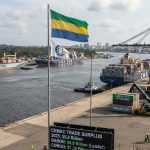
From Market Expansion to Value Addition: Repositioning CEMAC’s Trade Strategy for Structural Transformation
Repositioning CEMAC’s trade strategy requires a decisive shift from commodity-based market participation toward value-driven production systems, where trade, industrial policy, and regional integration are...