Policy Highlights
- MINUSCA has contributed significantly to stabilizing the Central African Republic by reducing civilian killings and supporting political transitions, elections, and DDR processes.
- Despite gains, insecurity persists due to armed-group control of territories, cross-border instability, and attacks on peacekeepers.
- Host-government dynamics, including competing partnerships with actors like Russia’s private military forces, complicate mission neutrality and operational cooperation.
- Limited resources, insufficient funding, and the UN’s broader financial crisis weaken MINUSCA’s capacity to protect civilians and sustain progress.
- Enhancing accountability, strengthening AU and regional cooperation, and expanding political partnerships are critical to improving mission effectiveness.
Introduction
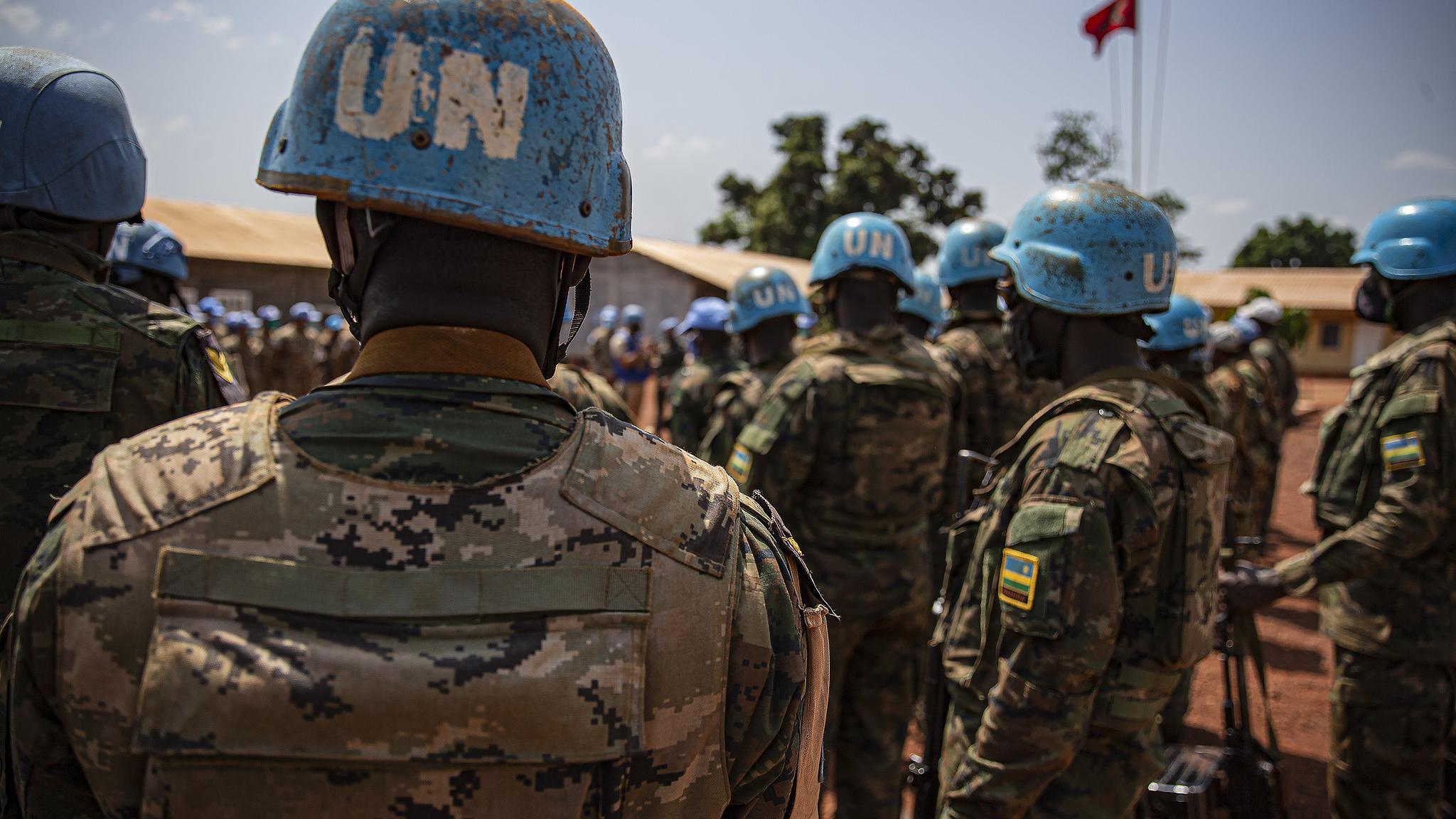
The peace and stability of Africa continue to be challenged by internal conflicts, fragility, and governance deficits. To respond to these crises, the UN has deployed multiple peace operations, including MINUSCA in the Central African Republic (CAR), to protect civilians, support political processes, and stabilize states. CAR’s most recent major crisis emerged from the 2012–2013 Séléka–Antibalaka conflict, leading to the creation of MINUSCA in 2014 under UNSC Resolution 2149. The mandate of MINUSCA has been renewed several times, the most recent until November 2026, reflecting the Security Council’s decision that the UN’s role is essential in a volatile environment for the consolidation of peace and stability. This paper evaluates the role and impact of UN missions in Africa, focusing on MINUSCA’s contributions, challenges, and actionable policy recommendations.
I — Assessing the role and impact of UN Missions in Africa
- The strategic role of UN peace operations
The United Nations peacekeeping missions in Africa have evolved from traditional ceasefire observation missions to multidimensional stabilization missions that encompass military deterrence, civilian protection, political facilitation, and state-building. Africa currently hosts the largest number of United Nations peacekeeping forces in the world, according to the United Nations Department of Peace Operations, due to the magnitude of conflict on the continent and its strategic role in modern peacekeeping operations.
The case of MINUSCA illustrates this shift in strategy. Created in 2014 by UN Security Council Resolution 2149, the mission had the dual mandate of protecting civilians, as well as supporting the transition, extending state authority, upholding human rights, and ensuring humanitarian access. Such a broad mandate is indicative of the lessons learned from previous missions in Africa, where missions with a too-narrow focus on security had failed to address the underlying causes of conflict. Research by the International Peace Institute indicates that the presence of MINUSCA has led to a reduction in the killing of civilians compared to the peak of violence in 2013, when 600 people were killed. Although violence still exists, the stabilization mission has ensured a minimum level of security required for political and humanitarian engagement.
- Supporting political processes and institutional development
In addition to military deterrence, UN missions in Africa are increasingly involved in facilitating political transitions and governance reforms. In the Central African Republic (CAR), MINUSCA facilitated the Political Agreement for Peace and Reconciliation between the government and armed groups in 2019. The agreement was meant to integrate armed groups into political institutions and minimize conflict through dialogue.
MINUSCA also supported the country in its national electoral processes. The mission supported the transportation of electoral materials to remote locations, the protection of polling stations, and the establishment of electoral dispute resolution. These efforts were essential in a country where the lack of infrastructure and the presence of armed groups would have made it impossible to hold elections across the country.
Institution-building goes beyond electoral support. The mission is involved in Disarmament, Demobilization, Reintegration, and Repatriation (DDRR) initiatives aimed at transforming combatants into civilian actors. As of 2025, over 5500 ex-combatants have joined DDR programs, especially those from the Retour, réclamation et réhabilitation (3R) and Unité pour la paix en Centrafrique (UPC) armed groups, leading to a decrease in the number of recruits for armed groups in local areas. While reintegration is still a challenge, these initiatives are part of the institutional mandate to rebuild state authority.
- Humanitarian support and security sector reform
Humanitarian access is one of the key pillars of contemporary UN peacekeeping missions. In CAR, 2.3 million people need humanitarian aid, and in response, MINUSCA has established humanitarian corridors and facilitated humanitarian access for relief agencies. Another important aspect of the mandate of MINUSCA is Security Sector Reform (SSR). MINUSCA is involved in training and reorganizing the national defense and internal security forces to ensure professionalism and civilian control. Furthermore, the integration of the United Nations Mine Action Service (UNMAS) into MINUSCA has minimized the risks associated with explosives through capacity building of the national defense forces and local community education to identify and dispose of explosives, especially improvised explosive devices (IEDs).
II — Challenges and criticisms
Persisting security threats: Despite the progress made, the CAR remains plagued by very serious levels of insecurity. This is because armed groups continue to control some territories, while inter-communal violence has also flared from time to time. Insecurity is reportedly most acute in the border regions, including spillover from Sudan. In 2025, a Zambian peacekeeper was killed in an attack by suspected Sudanese armed groups in the north of CAR. This underscored the volatility of the operational environment.
Governance and host-government cooperation: For successful peace operations, the consent and cooperation of the host government are essential. Nevertheless, there have been tensions between MINUSCA and the government of the CAR at times. There have been reported differences over the coordination of operations and issues of sovereignty, especially about security arrangements and interactions with non-state actors. The formation of alternative security partnerships between the CAR government and other actors, such as Russia, has transformed the security environment in CAR, allowing President Touadéra to circumvent conventional but constricting international aid and military training. Wagner Group mercenaries from Russia have been providing vital support for counter-insurgency operations. They protect key mining areas and provide security in the country in exchange for natural resources. This situation highlights the larger challenge that UN missions are currently facing in Africa, which is maintaining impartiality and alignment with the host government while maintaining independence.
Human rights concerns and conduct issues: Though MINUSCA is guided by the UN’s code of conduct and discipline, there have been accusations of misconduct against UN peacekeepers in several missions, and MINUSCA has not been an exception. Sexual exploitation and abuse cases committed by peacekeepers in CAR have undermined the trust and legitimacy of the mission. The UN has a zero-tolerance policy on sexual exploitation and abuse and has established Conduct and Discipline Teams in missions to deal with allegations. Nevertheless, accountability is critical to maintaining legitimacy, especially among vulnerable populations who depend on peacekeepers for security.
Resource constraints: This constitutes a major challenge in the Central African Republic (MINUSCA), as this limits the mission’s ability to protect civilians, control large areas of land, and facilitate political processes. Resource constraints include a lack of funding, a lack of infrastructure, and a lack of manpower to cover a country with such a complex conflict. Also, owing to the fact that the UN is currently facing a severe budget crisis, as iterated earlier this year by the UN Secretary General, the organisation might run out of cash by July. This greatly impedes missions ability to operate effectively, especially in CAR, where funds are highly needed to sustain the mission.
III – Policy recommendations
- Enhancement of political partnership arrangements: It is important to establish regular coordination mechanisms between MINUSCA, the CAR government, and civil society to foster trust, coordinate operational goals, and promote national ownership of peace-building processes.
- UN enhancement of accountability and conduct standards: It is imperative to commit to strong enforcement of measures to protect against misconduct, such as conducting transparent investigations, providing support services for victims, and public reporting to ensure community confidence and legitimacy.
- There is a need for regional and multilateral integration to enhance engagement with the AU and regional economic communities to address cross-border threats and integrate peacekeeping efforts into regional conflict resolution mechanisms.
The UN peace operations in Africa, represented by MINUSCA in the Central African Republic, is a case study of the potential and challenges of international peace engagement. Although MINUSCA has been an essential actor in protecting civilians, promoting political transitions, and ensuring humanitarian assistance, the challenges of insecurity, resource constraints, governance, and misconduct have hindered its success. A rebalanced strategy that builds on resources, partnership, accountability, and regional integration can make a significant difference in peace consolidation in CAR and other conflict-affected regions in Africa.

Enowbachem Agbortanyi
Enowbachem Agbortanyi is a Policy Analyst with the Peace and Security Division at the Nkafu Policy Institute. He holds a Master’s in Political Science from the University of Gothenburg and is a Swedish Institute Alumnus. His work spans roles at Centre for Human Rights and Democracy in Africa (CHRDA), and research contributions to the Varieties of Democracy Institute (V-Dem) and the Governance and Local Development Institute (GLD) both in Sweden.