Policy Highlights
- Africa remains largely excluded from the emerging governance model represented by the Board of Peace (BoP), which centralizes authority under a single chairperson and limits multilateral inclusiveness.
- The BoP’s selective membership and monetized entry requirements risk deepening Africa’s marginalization in global peace and security decisions.
- Overlapping peacekeeping actors (UN vs. BoP) could create operational confusion and weaken coordinated responses to African conflicts.
- Growing fragmentation in global governance may pressure African states to align with competing international structures based on interests, not long term sovereignty.
- Strengthening Africa’s collective voice, especially through unified advocacy for UNSC reform and enhanced AU-led peace mechanisms, is essential to preserve sovereignty and agency.
Introduction
Africa faces renewed challenges navigating a rapidly evolving global order marked by rising fragmentation and personalized models of governance. While African leaders have consistently advocated for comprehensive reforms within the UN system—particularly the Security Council—the pace of change has remained slow. This long standing imbalance continues to privilege major powers and limit Africa’s influence in global peace and security decisions.
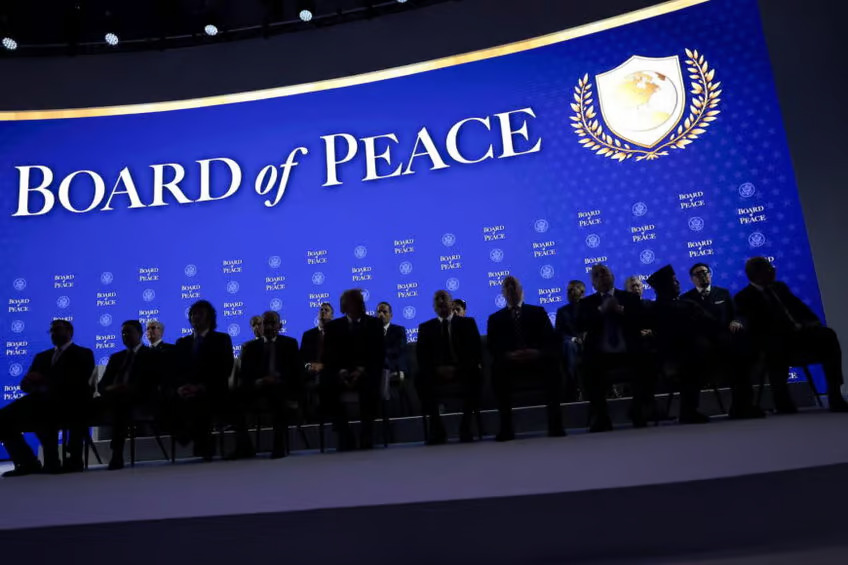
The emergence of the “Board of Peace, (BoP)” introduced under UNSCR 2803 (2025) and chaired by the U.S. President Donald Trump adds a parallel peacekeeping mechanism that centralizes decision-making authority and excludes regions as sub-Saharan Africa. This raises concerns across Africa regarding representation, legitimacy and long-term sovereignty. This policy brief therefore, examines the potential implications of the Board of Peace for Africa’s sovereignty and proposes strategies for constructive engagement in an evolving geopolitical landscape.
- The Board of Peace: An Overview
The BoP is structured around a chairman, an executive board, and subsidiary bodies, but unlike the UN, it centralizes authority in the Chairman, who holds sole discretion to appoint successors, invite members, and approve charter amendments. The charter of the BoP designates President Donald Trump as its Chairman, granting him centralized authority over the institution’s governance. There are no term limits, and membership invitations are selective, with around 50 countries reportedly received invitations to join the BoP as founding members. No states from Sub-Saharan Africa were included among the invitees. Permanent membership requires a US$1 billion contribution, creating a monetized hierarchy that replaces the UN principle of sovereign equality. This embeds structural inequality in the governance framework and limits universal representation. States that do not opt for permanent status are granted three-year renewable terms, subject to the Chairman’s discretion.
- Between the UN and the Board of Peace: A shift in global governance
Contrary to the institutionalized and rules-based architecture of the United Nations, the BoP signals a decisive shift in global governance from multilateralism to personalized executive authority. By vesting centralized powers in its Chairman, Donald Trump without term limits and with sole discretion over succession, membership invitations, charter amendments, and institutional restructuring, the BoP departs from the principle of sovereign equality that underpins the post-1945 international order. Its tiered membership model, which conditions permanent status on a US$1 billion contribution, introduces a monetized hierarchy in place of universal representation, while its selective invitation process excluding entire regions such as Sub-Saharan Africa undermines inclusivity. Collectively, these features suggest a transformation from a rules-based, consensus-driven system to a centralized, discretionary, and capital-weighted model of governance, potentially redefining legitimacy and authority in global institutional design.
- The Implications on Africa’s sovereignty:
The shift in global governance as articulated above highlights a number of potential challenges for the African continent.
- The absence of a broad international consensus on foreign peace operations across the continent
While both the UN and the BoP share some similarities especially in terms of their actual mandates of international peacekeeping, peace operations across the continent may suffer occasional delays and operational ineffectiveness due to the absence of broad international consensus. With each of these organizations poised to act in alignment with its mandate, the choice of who to intervene within a specific context might suffer lack of clarity or duplication of efforts and interventions. For a conflict affected continent like Africa, which hosts the largest number of UN peace operations, the nature of conflict and instability in the continent requires, amongst all things, coordinated multilateral action, which neither institution currently guarantees.
- Risk of increased global fragmentation of multilateral organizations due to interest-driven adhesions
In the international system, states operate in a condition of structural anarchy, defined not by chaos but by the absence of a central authority above sovereign governments. Unlike domestic political orders, where police, courts, and security institutions are mandated to respond to crises, there is no overarching global hierarchy with the authority or guaranteed capacity to act decisively in moments of international emergency. The frequently cited analogy that there is “no one to call” at the global level captures this institutional gap. While international organizations exist, their authority ultimately derives from member states and remains contingent on their consent. As a result, states cannot depend on a supranational guarantor of security and must prioritize self-help strategies to safeguard their interests and ensure survival. Some of these strategies may include the desire for sovereign states to align to either or both UN and BoP. While the lack of institutional reforms that guarantee Africa a key role within the UNSC could trigger a wave of discontent and possible withdrawals from the leading peacekeeping organization, the overly centralized governance model of the BoP further characterized by absolute and discretionary powers of the chairperson, the controversial conduct of the USA’s immigration policy and foreign military interventions, the huge membership fee and selective invitations for specific nations to join the board have had a significant impact on the acceptance and adhesion of some states such as Germany, France, Sweden, the United Kingdom and the Vatican amongst others, into the BoP.
Conclusion and Policy Pathways
How then should Africa position herself vis-a-vis these shifting geopolitical dispensations remains the time-ticking question that concludes the arguments raised in this policy brief. To ensure Africa does not run the risk of being under-represented once again at major multilateral decision-making spaces, it is recommended the following;
- For African states having demonstrated strong political will and commitment to the charter of the UNO and equally having benefited the most from UN peace operations, a strong, collective, and strategic advocacy for a permanent African representation to the UNSC should be the absolute priority to ensure meaningful geographical representation, benefits of full and equal rights for African nations. Within the prevailing context, member states stand to benefit the most should they align with a governance model that fairly guarantees the fundamental principles of equity of rights amongst member states as opposed to an overly centralized model.
- To ensure African states are not trapped in short-lived governance models or peacekeeping mechanisms, we recommend that states diversify diplomatic engagement across multilateral organizations like BRICS and the G20. This would avoid adherence to untested governance structures, maximize gains for member states, and reduce risks attached to foreign engagements, especially in overly centralized, partisan, or unilaterally driven agendas.
- For the African Union, largely driven by its Pan-African ideology, the urgency lies in operationalizing local and regional approaches to peacekeeping so as to limit alignment with foreign agenda and external actors. To achieve this, the AU needs to empower the African Peace and Security Council by effectively operationalizing the African Standby Force and enhancing coordination with Regional Economic Communities and Regional Mechanisms. By strengthening internal capacity, the AU ensures full alignment with Agenda 2063 and avoids over-reliance on external mechanisms.
- For effective coordination, the African Union should establish a clear continental framework designed to reduce fragmentation in regional and international engagements, safeguard the sovereigntyof its Member States in global affairs, and ensure coherence with existing AU legal and policy instruments. Such a framework should formalize structured consultation mechanisms between Member States and the AU before initiating or entering into significant external partnerships or commitments. Institutionalizing this coordination would strengthen collective bargaining power, enhance policy consistency, and mitigate the risk of external actors exploiting intra-African divisions through “divide and rule” dynamics.

Antem Anthony
Antem Anthony is the Head of Conflict Analysis and Prevention unit & Policy Analyst in peace & security at the Foretia Foundation. Prior to joining the Foundation, he served as conflict, policy and security assistant at the International Crisis Group, Kenya. Anthony is a certified administrative and operations professional from the United Nations University for Peace and the Pan African Institute for Development, West Africa (PAID-WA)