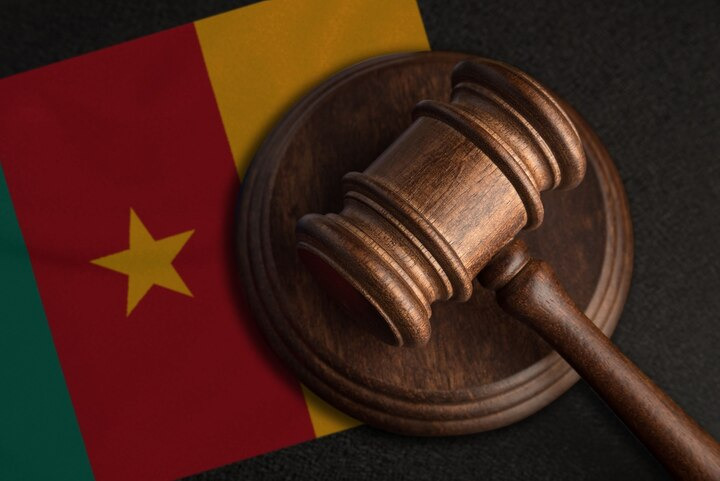
The Cameroonian military court’s life imprisonment sentence of Anglophone peace activist Abdul Karim Ali is a significant and disturbing development in the Anglophone crisis. It not only has legitimate human rights issues and raises suspicions about Cameroon’s adherence to the rule of law, but its broader implications raise critical questions on the prospects of peace and stability for the Anglophone regions.
Abdul Karim Ali is equally renowned for calling for peace and open demonstrations against human rights violations committed by combatants of the Anglophone crisis in Cameroon. His activism has seen him run afoul of the authorities. He was once arrested in September 2019 and held incommunicado for weeks without charge before being released. He was re-arrested in August 2022 without a warrant and taken incommunicado for a few days. According to Amnesty International, he was later charged with ‘hostility against the fatherland,’ ‘failure to report,’ ‘secession,’ and ‘rebellion [1].
Legal and Human Rights Concerns
Recourse to military courts to try civilians in Cameroon has been challenged by human rights organizations as the government continues to use the 2014 anti-terrorism law to back its actions. Military courts are not as independent and impartial as they must be to render fair hearings, and the procedures of their tribunals often fall short of international standards. In Abdul Karim’s case, his prolonged pre-charge detention, refusal of legal counsel, and conditions of detention, in allegedly a small, cramped cell with basic facilities absent, constitute gross violations of his rights.
Also, his charges seem to be politically driven based on his nonviolent activism and campaigns that promote freedom of expression, which is enshrined in the constitution of the state. This trend of targeting critics and activists using national security as a cover to undermine the rule of law and silence genuine dissent is a characteristic of an authoritarian regime.
Impact on the Anglophone Crisis
The sentencing of Abdul Karim Ali may tend to exacerbate tensions within Cameroon’s Anglophone regions. It implies that peaceful activism and calls for negotiation to resolve the conflict are countered by harsh punishment, which could discourage moderate voices and force more people toward violent extremism. It is a replica of the earlier sentencing of the leader of the so-called state of Ambazonia, Sisiku Julius Ayuk Tabe, who also received a life sentence from the same military tribunal in Yaounde.
Such government actions contribute to a vicious cycle of subjugation and resistance, making peaceful resolution attempts to the conflict far-fetched. The continued use of military courts is an intentional attempt to silence dissenters, which tends to undermine efforts to build trust and engage in meaningful dialogue with the Anglophone community.
The life sentence decision handed down to Abdul Karim has been widely condemned by both local and international human rights groups, including CHRDA, Frontline Defenders, and Amnesty International, while calling for the release of Abdul. They argue that his detention violates his fundamental rights that include the right to an open hearing in a civilian court and is a step backward for peace-building in Cameroon.
The sentencing decision by the military tribunal further fuels mistrust of the government by the civilian population. The peacebuilding process requires trust-building amongst parties, and especially for the civilians who have suffered the grave impact of the crisis, to trust the process and the government. This action of sentencing a peace activist to life imprisonment is contrary to the government’s effort to regain trust from the civilians of the two regions, who long considered the government as a perpetrator of violence – acting against its role of primary responsibility to protect.
To remedy these issues, support peace and security, and put an end to the crisis, the government of Cameroon should:
- Free Abdul Karim Ali and other detainees who have been held for the exercise of their right to free expression and peaceful assembly.
- Abolish the use of military tribunals to prosecute civilians and provide fair trials to all persons following both national and international laws.
- Initiate and engage in an all-inclusive dialogue with representatives of the Anglophone regions, including activists, civil society actors, and leaders of the different separatist movements (including those in prison) to resolve the main causes of the conflict.
- Implement reforms to protect human rights, secure the rule of law, and rebuild trust between the government and the Anglophone population.
The life imprisonment of Abdul Karim Ali is a setback for human rights and peace prospects in Cameroon. The interdiction of peaceful activism and the oppression of critics and opposition can only serve to further polarize the Anglophone population and further entrench the conflict. The government needs to turn to inclusive dialogue, respect for human rights, and the rule of law if it is to achieve durable peace and security in the regions.

Enowbachem Agbortanyi
Enowbachem Agbortanyi is a Policy Analyst with the Peace and Security Division at the Nkafu Policy Institute. He holds a Master’s in Political Science from the University of Gothenburg and is a Swedish Institute Alumnus. His work spans roles at Centre for Human Rights and Democracy in Africa (CHRDA), and research contributions to the Varieties of Democracy Institute (V-Dem) and the Governance and Local Development Institute (GLD) both in Sweden.