Introduction
In the absence of a unified definition, civil society denotes the realm of voluntary groups, labor unions, associations, organizations, and individuals that function independently of the state. It includes a broad spectrum of entities, such as non-governmental organizations (NGOs), community groups, advocacy groups, and faith-based organizations(1). Civil society is essential in advocating for and safeguarding among other issues, the promotion of human rights. Several primary methods through which civil society aids in safeguarding human rights encompass advocacy efforts, monitoring and documenting, assisting victims, advancing human rights education, and engaging in policy development(2). The scenario in Cameroon is nonetheless complex as CSOs, working with the sole aim of promoting human rights, are experiencing significant repression by the government. The Asian Development Bank (ADB) outlines five major roles of CSOs in advancing the sustainable development goals(3). The relationship between CSOs and the state in Cameroon has recently become quite strained with the Ministry of Territorial Administration’s(MINAT) statements regarding certain CSOs(4). Numerous stakeholders, including lawyers, civil society activists, and opposition leaders, have denounced the suspension and prohibition of several CSOs like Reach out Cameroon (ROC), Association Charitable Socio-culturelle du Cameroon (A.C.S.C.C), and Réseau des Défenseurs des Droits Humains en Afrique Centrale, (REDHAC), viewing it as an effort to reduce civic space. In this paper, we will analyze the significant contribution of CSOs in advancing human rights, evaluate the difficulties they are encountering while pursuing this daunting duty, and ultimately provide well informed policy suggestions on how they can endure in perilous circumstances.
Who is to promote human rights?
A frequent response to this inquiry is that the government must protect human rights.
The legal framework for states to promote human rights is built on international human rights law, encompassing treaties, declarations, and mechanisms, with the Universal Declaration of Human Rights (UDHR) serving as its foundation. States have obligations to respect, protect, and fulfill human rights, requiring them to take positive action and refrain from actions that violate these rights(5) The influence and reach of state authority are so widespread in every aspect of our lives that human rights are frequently seen as a collection of principles or agreements between the state and its citizens. As per John Lock’s social contract(6), that people live together in society in accordance with an agreement that establishes moral and political rules of behavior. Some people believe that if we live according to a social contract, we can live morally by our own choice and not because a divine being requires it. Over the past fifty years, since the adoption of the Charter of the United Nations in 1945, the terminology of human rights has become widely adopted at the international level(7). International human rights instruments impose different types of obligations upon States such as the duty to protect, which is built on valuing the dignity of each person, the duty to promote and the duty to fulfil. By nature, human rights are inherent entitlements that are acquired only by virtue of being a human. However, human rights laws place obligations on states to take the necessary steps to protect and promote these rights and prohibit them from taking part in violation of any right. It is based on these accepted international norms that the international community imposes different kinds of obligations on States.
The contribution of civil society towards the promotion of human rights in Cameroon.
In Cameroon, Civil Society Organizations (CSOs) play a vital role in various sectors, including citizen mobilization, monitoring democratic processes, and improving living conditions, often working alongside government and private sector institutions. Examples of CSOs in Cameroon include but not limited to; Cameroon Network of Human Right Organizations (RECODH) a network of associations working for the promotion of human rights, social cohesion and governance, Association for the Promotion of African Community Initiative, which focuses on promoting community initiatives, Cameroon Education for All Network (CEFAN) a leading umbrella network for education of civil society, Approache Participative, Development et Santé de Proximité (APDSP) which works on health issues and advocate for community interest(7.5).
Civil society organizations (CSOs) have proven indispensable in promoting human rights and empowering vulnerable individuals in conflict-affected and post-conflict regions across the globe and Cameroon in particular. CSOs play a multifaceted role in human rights and transitional justice initiatives that can include documenting and reporting of violations, aiding victims, advocating for marginalized groups, and pressuring decision-makers – state, non-state, and international – to enact and uphold policies that contribute to protecting human rights(8). They participate in various initiatives aimed at safeguarding and advancing human rights. Examples of this encompass, but are not restricted to, offering legal, psychological, or other expert support to at-risk groups, such as human rights defenders, victims of human rights abuses and violations, and other marginalized or targeted communities(9). Their advocacy efforts around the world in general and Cameroon in particular have improved the living conditions as well as enabled access to important services for displaced persons. This underscores the significant influence of grassroots movements in advancing human rights and emphasizes the need to empower local communities.
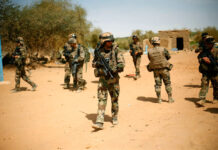
Summarily, CSOs have played vital roles in alleviating poverty conditions of persons in most regions of Cameroon , especially in areas plagued by crisis such as the North West and South West regions affected by the ongoing Anglophone conflict, and the Far North region affected by the Boko Haram insurgency and other climate related disasters, by offering services (healthcare and education), engaging in advocacy (campaigns, lobbying, legal support to individuals, raising awareness, and representing marginalized groups), overseeing funds directed to other organizations promoting democratic governance initiatives, developing policies, and delivering technical assistance, which includes consultancy support and practical help in knowledge sharing(10). CSOs therefore play an influential role in setting and implementing development agendas across Cameroon. Despite the important role which CSO’s play towards the promotion of human rights, as well as in advancing development, they still encounter many obstacles that impede their ability to operate effectively.
Challenges faced by CSOs in their pursuit for Human Rights Promotion
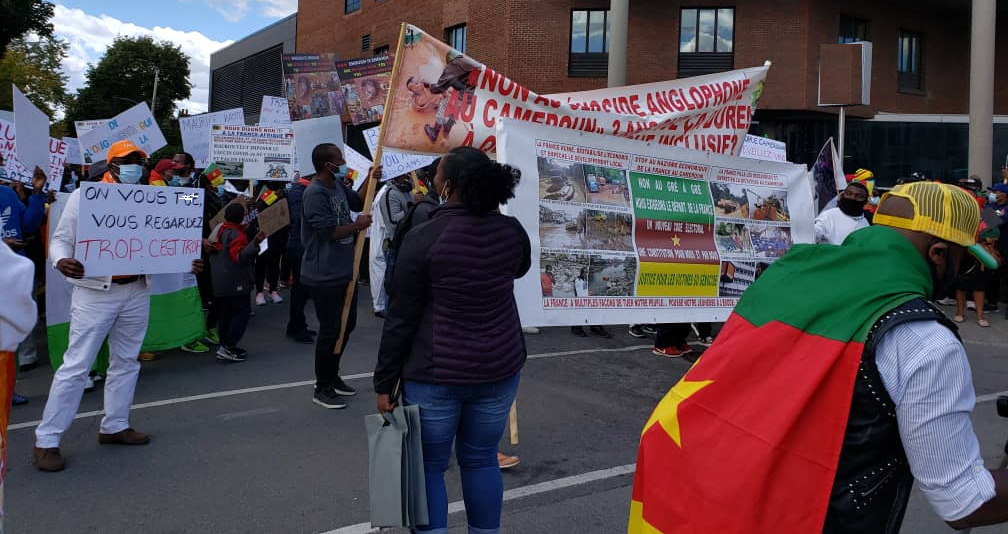
While CSOs play a pivotal role in safeguarding human rights, they are often faced with significant challenges and limitations, especially given resource constraints and contextual difficulties(11). A frequent issue is the diminishing civic space. Owing to the current pressure to distinguish politics from CSOs in human rights advocacy, authoritarian regimes in certain nations are imposing strict legal limitations on the funding that CSOs can obtain for activities related to human rights(12). A concrete illustration of this is the ongoing scenario in Cameroon involving the Ministry of Territorial Administration and several CSOs, resulting in the suspension and ultimately the banning and cancellation/withdrawal of operational permits as mentioned supra. If CSOs are prohibited from advocating for human rights, democracy, and the rule of law, they not only forfeit their role in advocacy, but society also loses advocates who can represent the rights of vulnerable groups, such as women, children, and others. Summarily, these challenges range from limited access to resources, capacity building, funding, shrinking civic space and increased scrutiny from governments(13).
Way forward
In conflict-affected and post-conflict areas, the sheer number of CSOs engaged in transitional justice and human rights initiatives can lead to fragmentation and resource competition, resulting in redundancy and inefficiency. This competition for funding and recognition can divert attention from the overarching objective of upholding human rights. Consequently, for CSOs to successfully operate, advocate for human rights promotion and equally deliver on their agendas void of governments interventions, there is a need for;
- cooperation and collaboration,
- elimination of unhealthy competition,
- diversification of funding sources,
- work within the law and above all establish a consortium.
The absence of a unifying body in CSOs activities in Cameroon like a consortium is a major weakness. The teachers can collectively make their voices heard through their union, the lawyers can do the same through the Bar Council, same with medical practitioners and even the transport sector.
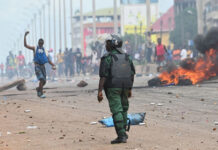
To conclude, the CSO will fall short of its expectations if the central government of the state continues to censor its activities and seemingly exerts direct control on its operations. This defeats the purpose of its existence and only weakens its power of independence from the state government. The unstable socio-political situation of Cameroon, characterized by armed conflict, power struggle among political parties and pre-election upheavals have further shrunk the country’s civic space due to the government’s high-level censorship and forceful crackdown of most CSO activities, especially those that question state authorities and actions that violate human rights.
Dr. Pippie Hugues
Dr. Pippie Hugues is a Policy Analyst at the Governance and Democracy Division of the Nkafu Policy Institute. He holds a Ph.D. in International Law with specialty in Human Rights, Conflict and Peace building.