

Democratic Shakiness and Security Crisis In the North-West and South-West Cameroon
Introduction
Since October 2017, Cameroon’s Anglophone regions have been experiencing a chaotic security shift. The insecurity at work is the result of the domestic...

Assessing the Growing Impact of Extremism in Africa
The growing spread and disparaging significances of violent extremism are among the foremost challenges to peace and security faced in the world today. Violent...
G5 Sahel Summit: What Should We Learn From It?
In the span of a year, the G5 Sahel would have suffered deep tremors. Between the double coup d'État in Mali, the assassination of...
Conflict In Ethiopia: Where Do We Go From Here?
In the contemporary era, the great majority of the world’s political systems have undergone one form of internal warfare leading to the violent collapse...

Are We Moving Toward Reconciliation In Côte d’Ivoire?
Thrown into the limelight by successive deaths, at eight months intervals, of two prime ministers - Amadou Gon Coulibaly and Ahmed Bakayoko, both from...
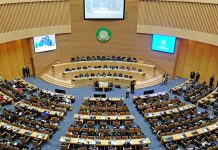
Assessing the Contribution of the AU Peace and Security Council in Maintaining Peace and...
Introduction
The Africa we live in has become progressively more intricate, with new security challenges evolving in a geometric sequence, thus threatening the peace...

Women And Peacebuilding In Central Africa Subregion: Empowerment As A Process Of Inclusion In...
The Central Africa subregion, known as the Economic Community of Central African States, is one of the subregions in Africa that suffer from violence and is generally affected by numerous crises.
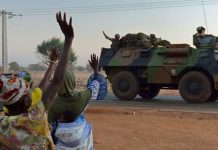
The Importance of Conflict Early Warning and Response Systems in Conflict Prevention in Africa
Operational early warning and response systems entail human expertise, unified political support and a specific technical platform degree. Stakeholders need proper education on indicators and response mechanisms
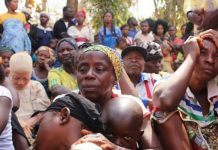
Gender Perspectives: The Role of Women in Ending the Anglophone Crisis in Cameroon
When the older male elites and chiefs are losing effective control over the heavily-armed young militia, Cameroonian women have the opportunity to intervene in peacebuilding. As mothers, grandmothers, aunts, spouses, and sisters – and as those more often victimized
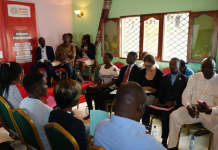
Cultivating Responsive Leadership for Sustainable Peace in Cameroon
To achieve some social, orderliness, cohesion, and development, there has always been the need for a leader. Leadership is regarded as a desired social responsibility, for the supposition of which social competition occurs.
Latest article
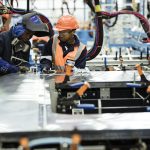
No Factories, No Trade: CEMAC Faces the Challenge of Structural Transformation
Highlights
No CEMAC member State accounts for more than 10% of exports to the continent.
The free movement of people, planned since 1999, has...

Burkina Faso’s New Study Abroad Decree: When Education Becomes a Political Privilege
By Enowbachem Agbortanyi
A Policy Framed as National Development
Burkina Faso's latest decree requiring every student wishing to study abroad to obtain government authorization marks more...
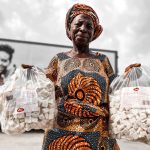
From the WTO MC14 to Action: Building Africa’s Productive Capacity through Trade, Digitalisation and...
Africa cannot rely on trade liberalization alone to achieve economic transformation; instead, it must pair AfCFTA integration with deliberate industrial, agricultural, and digital capacity-building...
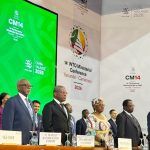
Leveraging WTO MC14 Investment Facilitation for Development to Accelerate Structural Transformation in Cameroon
Investment inflows will generate the expected level of development impact in Cameroon if the country addresses persistent challenges like regulatory inefficiencies, institutional fragmentation, and...

Rethinking Commercial Leadership in Central Africa: Addressing the Challenges of Informality, Inequality, and Digital...
Informality, inequality, weak digital infrastructure, and limited productive financing continue to marginalize ECCAS economies, while calling for coordinated reforms to achieve inclusive and transformative...
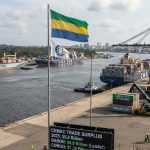
From Market Expansion to Value Addition: Repositioning CEMAC’s Trade Strategy for Structural Transformation
Repositioning CEMAC’s trade strategy requires a decisive shift from commodity-based market participation toward value-driven production systems, where trade, industrial policy, and regional integration are...