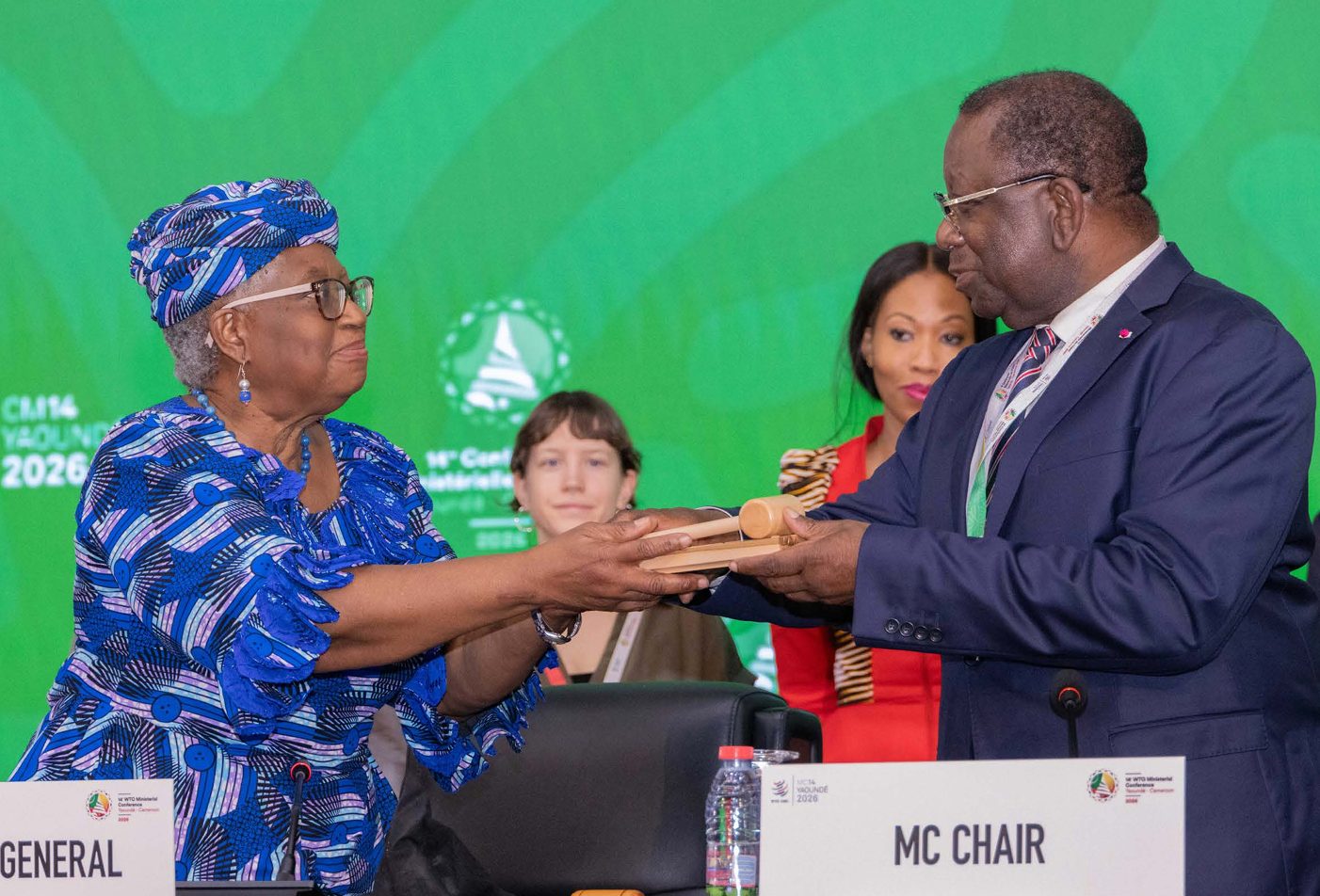
The 14th Ministerial Conference of the World Trade Organization held in Yaoundé was not so successful due to failed negotiations on agriculture, e-commerce, and institutional reform, compounded by weak and uncoordinated African diplomacy. African states must strengthen regional cooperation and adopt unified negotiation strategies better to defend their economic interests in global trade forums.
By Prof. Theophille Nguimfack
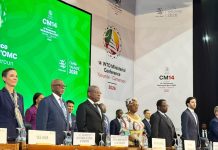
During five days, the capital of Cameroon, Yaoundé, was the epicenter of high-level negotiations at the 14th Ministerial Conference of the World Trade Organization (WTO). From March 26 to 30, 2026, this Conference took place against the backdrop of trade tensions between the United States and other economic powers, including China, Canada, and the European Union. Adopting a protectionist stance, the President of the United States regularly brandishes tariff hikes as a formidable weapon to secure concessions that go beyond mere trade regulation with its partners.
Indeed, the Yaoundé meeting was expected to be contentious, with the issues up for debate including WTO reform. The United States arrived with red lines that stalled negotiations, it intends to deny any usefulness to the WTO. Nevertheless, Cameroon achieved a diplomatic feat by hosting the 14th WTO Ministerial Conference. This was the second to be held on the African continent, following the one in Nairobi, Kenya, in 2015.
It is worth noting that in the opening remarks of Cameroon’s Minister of Trade, the WTO member countries unanimously decided to entrust the organization of this Ministerial Conference to his country, thus deviating from the previously established principle of rotation. This statement suggests that the Cameroonian government employed persuasive diplomacy to obtain a waiver of WTO rules. However, aside from this initial diplomatic feat, the results obtained during the Conference reveal a resounding failure in the negotiations. For this failure, African States must be blamed for their lackluster diplomacy, which needs to be strengthened.
I- A conference marked by the failure of negotiations
The success of a conference depends largely on the negotiations undertaken by the stakeholders. At the 14th WTO Ministerial Conference, the prior positions of certain States suggested a likely failure in the negotiations. However, this scenario could not have been anticipated, as confirmed by the lack of agreement on the main points under discussion.
One of the agreements negotiated at the 14th Ministerial Conference concerned trade in agricultural products. Having received proposals from the Member States, the negotiating body submitted a revised text whose objective was to strike a balance that promotes fair trade in agricultural products and strengthens food security. Persistent blockades between India, Brazil, and the United States have prevented any consensus. This failure is detrimental to the countries of the South, which criticize in particular the refusal of subsidies for their small farmers and the continued aid for cotton by the States of the North.
The Conference was also tasked with reaching an agreement on tariffs on e-commerce. The plan was to negotiate the extension of a moratorium prohibiting customs duties on such transactions. Concluded in 1998, this moratorium was renewed every two years at each WTO Ministerial Conference. On this point, no consensus was reached, as some emerging countries, such as India, feared that an agreement would result in significant losses in customs revenue.
Finally, the Conference aimed to achieve institutional reform within the WTO. The idea was to remove the obstacles paralyzing the institution, one of which stems from the consensus rule. Another goal was to revitalize the dispute settlement mechanism, whose appointment of judges is being blocked by Washington.
From the above, the 14th WTO Conference was a fiasco in its results, proof that diplomacy failed.
II- Lackluster Diplomacy of African States
It appears that the issues under negotiation at the 14th WTO Conference are of definite interest to African States. However, these States have done little to defend these interests, nor have they adopted strategies to exert significant influence during the negotiations.
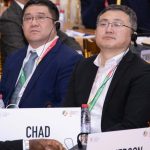
Member States indeed submit their proposals to the chairperson of the body in charge of the negotiations before the Conference. However, African States were expected to mobilize more for an event held on the continent and addressing issues that particularly affect their economies. Aside from the symposium organized at the University of Yaoundé II in the lead-up to the Conference, Cameroon, the host country, failed to sufficiently engage private sector and civil society actors in the event. It seems the country was far more concerned with the organizational challenges of the Conference. A similar apathy was observed in other African States, as if they were waiting for other States to advocate for their interests.
Furthermore, it is inconceivable that Africa would not seek consensus within regional organizations on issues related to agriculture and e-commerce before taking a stance at the WTO. Africa’s position would have been reinforced if the States on the continent had been able to agree on a common stance within the African Continental Free Trade Area (AfCFTA). Yet, Cameroon’s Minister of Trade praised the virtues of consensus at the opening of the Conference, stating that in Africa, it is customary to debate under the tree or in the palaver hut, and to move arm in arm, celebrating the consensus and the joy of living together.
Shouldn’t we reassure ourselves that we are united with our own people before seeking consensus with others?
III- Conclusion and recommendations: strengthening the diplomacy of African States
It would be wise for African nations to place particular emphasis on their diplomatic influence within international organizations such as the WTO. Given their struggling economies, this strategy can rely on nothing other than their sheer numbers. Statistically, Africa accounts for more than a third of the world’s nations, boasts a large consumer base, and possesses natural resources that are critical to global industry. Until African leaders recognize these strengths and the need to form a united front in international negotiations, they will remain spectators in the battles between developed nations, while their interests continue to be trampled upon. To strengthen their diplomacy, African nations must:
– consult with one another within sub-regional and regional organizations to present a common stance that effectively defends their interests in multilateral international organizations;
– have the boldness to denounce, in whole or in part, agreements that are not in line with their strategic interests;
– anticipate political or diplomatic obstacles that could jeopardize the achievement of a consensus in international negotiations.

Prof. Théophile NGUIMFACK VOUFO
Holder of a PhD/Ph.D in Public Law, option Public Finance, Dr. Nguimfack is currently Lecturer at the Faculty of Legal and Political Sciences of the University of Dschang.