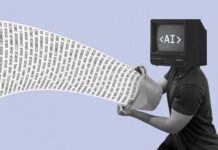

In Africa, the promotion of artificial intelligence calls for a government that acts as both a strategist and a regulator, capable of stimulating innovation while ensuring an ethical, inclusive framework conducive to sovereign technological development
By Prof. Nguimfack Théophile
No activity undertaken by the population escapes the control of the State. Artificial intelligence (AI) is no exception. Yet, one might think that AI is of interest only to the experts who develop it and its various users. However, this would be to over look the impact of these new technologies on human life and State governance. In fact, AI refers to the branch of computer science that aims to simulate human cognitive abilities. It relies on the creation and application of algorithms executed in a dynamic computing environment, which enables computers to think and act like human beings .
Thus, AI has a huge impact on how we go about our daily life in the society, how life is governed, and the role humans play within it. However, we must be careful that this technology does not turn against humanity. According to the United Nations, while AI has the potential to address some of humanity’s greatest challenges, its rapid development inevitably comes with a series of risks and challenges. These challenges call for an effective government strategy in promoting AI, particularly in contexts where technological culture is not yet well-established, such as in Central Africa. Upon analysis, the State has the responsibility to combine concrete actions and regulation in promoting AI. Furthermore, AI represents a challenge for State governance, because although it is a competing actor, it remains primarily a key regulator of this new technology.
I- Artificial intelligence, a challenge for State governance
AI is a technological advancement that serves humanity. It is therefore logical that a State concerned with its development would see it as a governance issue at three levels at least.
At the economic level, promoting AI makes it possible to develop technologies that enhance the performance of economic operators. This performance, in terms of productivity and efficiency, leads to additional wealth creation and an increased tax base.
At the social level, the technological innovations associated with artificial intelligence aim to improve the living conditions of populations. The impact can be seen in fields such as healthcare, security, and trade.
At the level of governance in public and private organizations, AI has become a decision-support tool. It saves time and helps reduce errors in task execution. Its applications are developed and used by tax authorities, business managers, etc.
II- The State, a promoter of AI challenged by the private sector
There can be no AI without a government policy geared towards investments that structure the digital sector. It is incumbent upon the government to lay the foundations for this technology in at least two areas.
Firstly, the State must play a key role in promoting AI-related infrastructure. Beyond energy and internet connectivity infrastructure, this involves creating technology hubs, that serves as incubators where the conditions are right to foster innovation. This is the model of the Silicon Valley, which has fostered the emergence of the digital giants (GAFAM). According to Seydina Ndiaye, this is a guarantee of digital sovereignty that prevents Africa from relying on solutions imposed by multinationals with enormous capital.
Secondly, the State has the responsibility to integrate training on AI into academic and professional curricula. Its institutional support lies in subsidies and other incentives that promote research, development, and innovation. In this area, competition from foreign multinationals remains fierce, as they can easily lure human resources away from African States by offering more attractive salaries.
III- The State, a key regulator of Artificial Intelligence
To limit the risks associated with the use of AI, its developers implement security measures. However, given the risks posed by the use of AI, the State is called upon to strengthen its regulatory role .
Firstly, regulatory standards require establishing rules for the creation and use of AI. Therefore, the State can adopt protective measures for users or third parties, and define obligations, violations, and their corresponding penalties.
Secondly, the economic regulation of AI appears imperative, as its reckless use can create distortions among users. On the one hand, the State must impose transparency in the use of AI to ensure fair competition among users. On the other hand, the State must be able to define specific areas excluded from or protected from AI, in a spirit of protectionism.
Finally, ethical regulation is what places humans at the center of AI. In this regard, the government must establish ethical frameworks for data privacy, security, transparency, and accountability in AI systems. In short, AI must support sustainable development, democracy, and human rights rather than despotism.
Conclusion
Moreover, it is clear that AI will shape State governance across all fronts. In turn, the State must be able to integrate it into its development policy to better leverage its potential. This policy must involve significant investments in infrastructure and multidimensional regulation encompassing normative, economic, and ethical dimensions.

Prof. Théophile NGUIMFACK VOUFO
Holder of a PhD/Ph.D in Public Law, option Public Finance, Dr. Nguimfack is currently Lecturer at the Faculty of Legal and Political Sciences of the University of Dschang.