
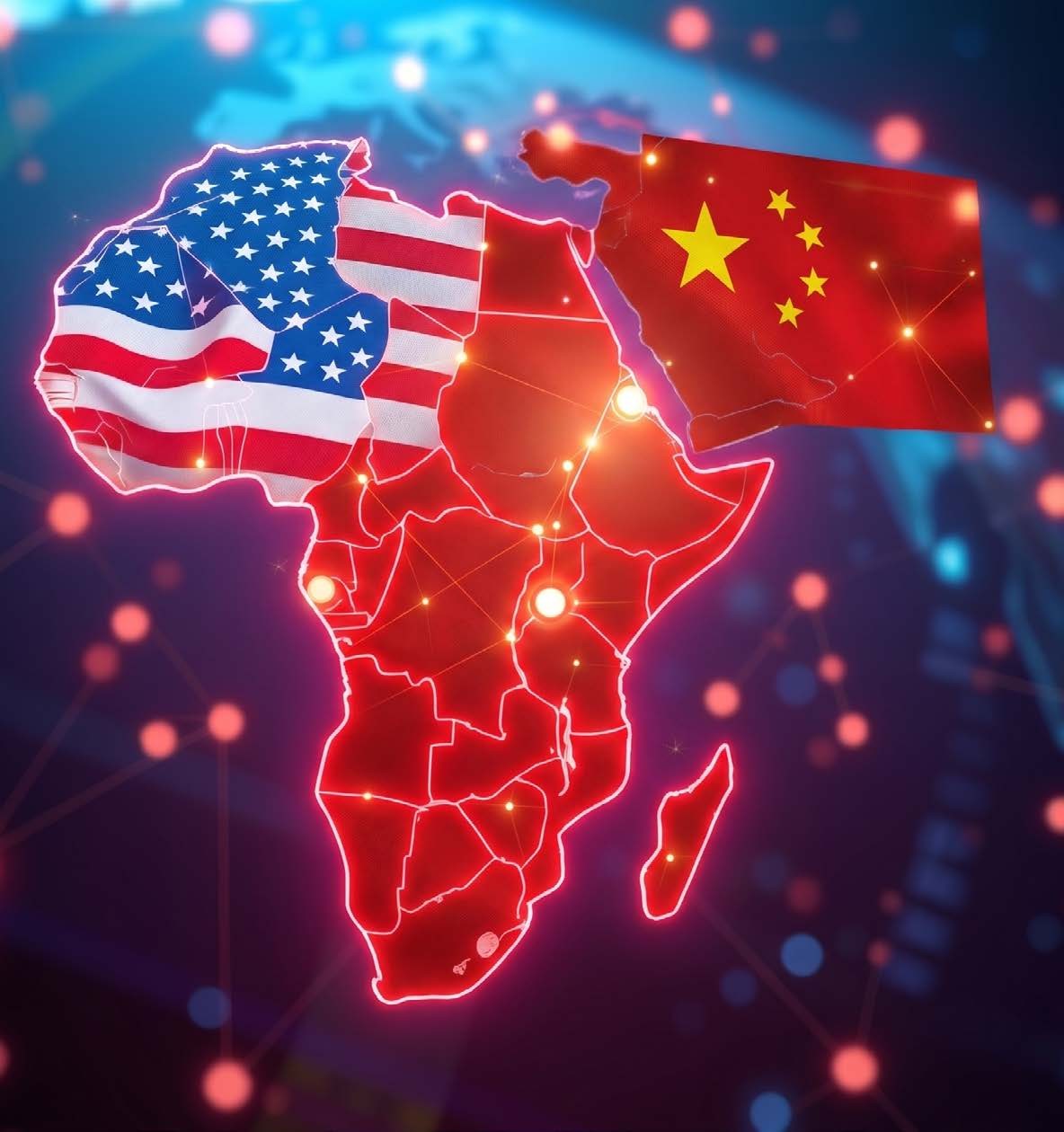
As global AI geopolitics intensify, Africa must assert a strategic role by shaping inclusive governance frameworks, strengthening regional alliances, and leveraging its data and talent to negotiate equitable participation in the evolving digital order.
As artificial intelligence (AI) becomes a central driver of global economic, military, and technological power, Africa faces both unprecedented opportunities and significant challenges. The shifting geopolitical landscape around AI is dominated by major powers whose policies and technologies shape international norms and market dynamics. Artificial intelligence is reshaping global power dynamics, with leading nations using it to boost economic, security, and diplomatic influence. For Africa, AI offers opportunities for development but also risks marginalization in global technology governance. As Africa’s role in the AI geopolitical landscape is still emerging, there is a need for strategic policies to help African states navigate international AI competition, protect their interests, and leverage AI for inclusive growth by enhancing digital sovereignty, innovation, cooperation, and governance.
This policy brief examines the implications of these global AI power dynamics for African countries and proposes strategic policy responses to safeguard Africa’s interests, assert agency, and foster international cooperation. Key recommendations to address the identified problem include developing a coordinated continental AI strategy, investing in local innovation ecosystems, enhancing digital sovereignty through data governance, and engaging effectively in global AI governance forums.
Global AI Geopolitics: Power Dynamics and Trends
Artificial intelligence has emerged as a critical domain for global power projection, with major actors like the United States, China, and the European Union positioning themselves as leaders in AI research, development, and deployment. While the US leverages its strong private sector, world-class research institutions, and defense capabilities to maintain AI leadership, China on its part views AI as a cornerstone of its national development and global influence ambitions. China’s strategic interests center on achieving AI dominance to transform its economy, enhance social governance through AI-powered surveillance, and assert geopolitical influence through technology exports and digital infrastructure initiatives like the Digital Silk Road. AI technologies influence global power across multiple dimensions like economic, military, and diplomatic influence. These trends illustrate how AI is not merely a technological domain but a focal point of 21st-century geopolitics.
Africa’s Position in the Global AI Landscape
AI adoption in Africa is at an early but rapidly evolving stage. Various countries have started integrating AI technologies across sectors such as agriculture, healthcare, finance, and education to address pressing development needs. Examples include AI-driven mobile health applications, precision farming tools, and fintech solutions that increase financial inclusion. Several African nations have launched national AI strategies or digital transformation plans aimed at promoting AI research, innovation, and regulation. Regional bodies like the African Union are working to develop continental frameworks to harmonize AI policies and foster collaboration. Additionally, emerging AI research centers and innovation hubs in cities such as Nairobi, Lagos, Cape Town, and Kigali are becoming focal points for AI development and entrepreneurship within the continent. Despite these positive developments, AI research output and policy implementation remain uneven with significant variation in capacity and resources.
Risks and Opportunities for Africa
Africa’s reliance on AI technologies, platforms, and expertise primarily developed and controlled by foreign powers, especially USA, China, and EU, creates vulnerabilities. This dependency can limit Africa’s autonomy in shaping AI applications suited to local needs and may expose countries to geopolitical pressures or unfavorable terms of technology transfer.
The continent’s vast and diverse data, from social media to health and agricultural information, is also a valuable resource. Without robust data governance frameworks, African countries risk exploitation through unauthorized data extraction, surveillance, or commercial exploitation by foreign corporations and governments, undermining privacy and sovereignty.
Furthermore, global AI governance and standard-setting are dominated by major powers and international organizations where African voices are often underrepresented. This exclusion risks the imposition of norms, standards, and regulations that do not align with African values, priorities, or contexts, potentially marginalizing the continent in global AI governance.
Increased digitalization and AI adoption expose African countries to cyber-attacks, information manipulation, and AI-enabled threats.
In terms of opportunities, Africa can bypass traditional development stages by adopting advanced AI technologies directly, accelerating progress in sectors such as healthcare, agriculture, education, and financial services. This leapfrogging potential allows faster achievement of development goals and improved competitiveness in the global economy.
African countries have the opportunity to influence the development of ethical AI frameworks that reflect their cultural values, social priorities, and development needs. By championing inclusive, transparent, and human-centric AI principles, Africa can contribute to a more balanced and diverse global AI governance landscape.
AI and digital technologies can drive deeper regional integration by harmonizing policies, facilitating cross-border data flows, and enabling shared infrastructure and innovation ecosystems. This integration can create larger markets, attract investment, and strengthen collective bargaining power on the global stage.
With a young, dynamic population and growing tech ecosystems, Africa has significant potential to nurture homegrown AI talent and startups. Supporting innovation locally can reduce dependency, create jobs, and develop solutions tailored to African realities. Balancing these risks and opportunities requires coherent policies that empower African countries to protect their digital sovereignty, participate effectively in global AI governance, and leverage AI technologies for sustainable and inclusive development.
Conclusion
As artificial intelligence reshapes global power structures, Africa stands at a critical crossroad. While the continent faces significant challenges, including technological dependency, infrastructural gaps, and limited representation in global AI governance, it also possesses unique opportunities to leverage its youthful population, emerging tech ecosystems, and regional cooperation frameworks. By adopting coherent and forward-looking strategic policies that prioritize digital sovereignty, capacity building, and ethical AI development, African countries can transform these challenges into strengths. Proactive engagement in international AI dialogues and the cultivation of inclusive innovation ecosystems will enable Africa not only to safeguard its interests but also to emerge as a meaningful contributor to the global AI landscape. Ultimately, Africa’s ability to navigate the complexities of global AI geopolitics will determine its role in shaping a future where technology drives sustainable development, equitable growth, and shared prosperity across the continent and beyond.
Key Policy Recommendations:
- Africa should establish a Pan-African AI Coordination Body to unify AI policies and advocate for the continent globally.
- Investments in AI education and innovation hubs are essential to foster research, support startups, and develop talent.
- Strengthening data sovereignty through robust protection laws, data localization, and improved digital infrastructure is critical.
- Active participation in international AI governance forums will help Africa influence global standards.
- Lastly, promoting ethical and inclusive AI development ensures that technological advances align with African values and benefit all communities, especially the marginalized.

Dr. Pippie Hugues
Dr. Pippie Hugues is a Policy Analyst at the Governance and Democracy Division of the Nkafu Policy Institute. He holds a Ph.D. in International Law with specialty in Human Rights, Conflict and Peace building.