Repositioning CEMAC’s trade strategy requires a decisive shift from commodity-based market participation toward value-driven production systems, where trade, industrial policy, and regional integration are aligned to support structural transformation, economic resilience, and sustained job creation.
By Dr. Wirajing Muhamadu Awal Kindzeka
The Structural Paradox of CEMAC’s Trade Model
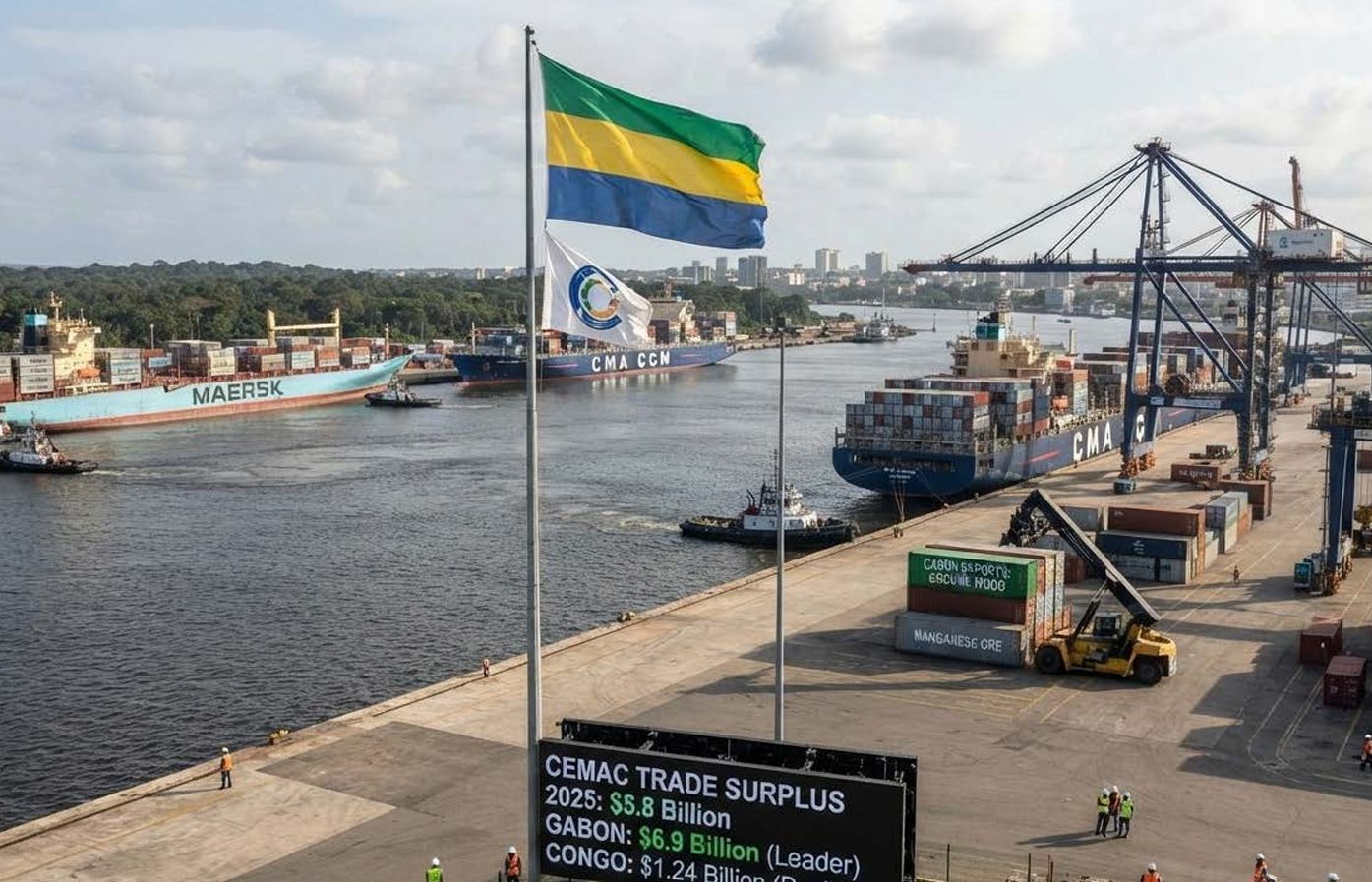
CEMAC economies remain deeply integrated into global trade, but on structurally weak terms. The region continues to export primarily unprocessed commodities such as crude oil, timber, and agricultural products, while importing higher-value manufactured goods. This pattern reflects a broader structural imbalance common across many developing economies, where trade participation does not translate into industrial development. Global trade data confirm that merchandise trade remains dominated by commodity flows, with limited diversification in product structures across many economies. Recent evidence shows that primary commodities account for more than 80% of exports in several African economies, underscoring the region’s persistent dependence on low-value trade structures. This reflects weak industrialization, low job creation, and high exposure to external shocks with a fundamental structural paradox: active participation in global trade without corresponding productive transformation. This pattern aligns with the “commodity dependence trap,” where export specialization in raw materials constrains industrial upgrading and limits long-term growth prospects. This model exposes CEMAC to three critical vulnerabilities:
- First, price volatility, driven by dependence on global commodity cycles, undermines fiscal stability and long-term planning.
- Second, limited domestic value capture, as raw exports generate fewer linkages to local industries and employment.
- Third, weak integration into global value chains, reducing the region’s competitiveness in emerging sectors such as manufacturing and digital trade.
This reflects a broader structural reality: global trade is evolving, but CEMAC’s production systems have remained largely unchanged. The region’s trade expansion has not translated into inclusive growth or structural transformation. Without deliberate policy intervention, increased openness risks deepening dependence rather than enabling diversification.
From Trade Participation to Productive Transformation
The central policy challenge for CEMAC is not access to markets; it is what the region produces and exports within those markets. Trade openness without productive transformation risks reinforcing dependency. To reverse this trajectory, CEMAC must pursue a structural shift anchored on three pillars:
- Industrial Upgrading and Value Addition: The region must transition from exporting raw commodities to producing processed and semi-processed goods. Agro-processing, timber transformation, and light manufacturing offer immediate entry points for value creation and employment generation.
- Regional Value Chain Development: CEMAC’s fragmented national markets limit economies of scale. Strengthening regional production networks, where countries specialize along complementary segments of value chains, can enhance competitiveness and intra-regional trade.
- Strategic Positioning in Trade Governance: Rather than being rule-takers, CEMAC countries must engage more actively in shaping trade rules, particularly in emerging areas such as digital trade, services, and investment facilitation.
Navigating a Changing Global Trade Landscape
The global trade environment is undergoing significant transformation, marked by fragmentation, shifting alliances, and the rise of regional trade blocs. For CEMAC, this changing landscape presents both risks and strategic opportunities. On one hand, increased fragmentation introduces uncertainty and weakens the predictability of global trade rules. On the other, it creates space for regions to redefine their trade positioning through strategic partnerships and regional integration. In this context, the African Continental Free Trade Area (AfCFTA) represents a critical opportunity. It provides a platform for: First, expanding intra-African trade; second, developing regional value chains; and third, supporting industrialization through a larger integrated market. Estimates suggest that the AfCFTA could increase intra-African trade by over 45% by 2045 and boost the value of cross-border trade by $275.7bn, particularly in manufactured goods, if supported by complementary industrial policies (UNECA, 2023). However, these gains are not automatic. They depend on the ability of CEMAC countries to align trade liberalization with domestic production capacity.
Policy Priorities for Trade-Led Structural Transformation
Repositioning CEMAC’s trade strategy requires a coherent and sequenced policy approach.
- First, align trade and industrial policies. Trade strategies must directly support domestic production and sectoral development priorities, rather than operate in isolation. This means prioritizing sectors with high value-add potential and embedding them into national and regional development plans. This requires moving from horizontal trade policies to sector-targeted strategies, particularly in agro-processing, light manufacturing, and regional supply chains.
- Second, address binding structural constraints. Infrastructure deficits, high production costs, and weak institutional capacity continue to undermine competitiveness. Targeted investments in energy, transport corridors, and digital infrastructure are essential to support industrial activity. In Central Africa, infrastructure gaps and high logistics costs remain among the highest in Africa, significantly eroding export competitiveness.
- Third, strengthen regional coordination. A unified regional strategy will enhance bargaining power, reduce duplication, and support the development of integrated production systems. A coordinated regional trade and industrial framework can position CEMAC as a unified economic bloc in global negotiations.
- Fourth, leverage continental frameworks strategically. While WTO frameworks remain important, the African Continental Free Trade Area provides a more immediate opportunity to build regional value chains and expand intra-African trade.
A Strategic Shift: From Dependency to Value Creation
The future of CEMAC’s integration into the global economy depends on a fundamental policy choice: whether to remain a supplier of raw materials, or to transition toward a value-driven, industrial, and competitive economic system. This transition requires moving beyond short-term revenue dependence on commodities toward long-term investments in productive capacity. It also requires redefining the role of trade, not as an end in itself, but as a means to achieve structural transformation. Without such a shift, the region risks maintaining a pattern of volatile growth, limited employment creation, and persistent external vulnerability.
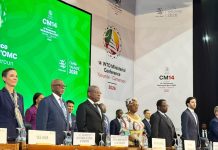
The WTO Ministerial Conference in Yaoundé was a strategic wake-up call. It has exposed the structural limits of a development model based on commodity exports. At the same time, it has highlighted the growing importance of regional coordination, productive capacity, and strategic trade positioning. For CEMAC, the policy choice is clear: either remain locked into a model of low-value trade dependence, or transition toward a value-driven, industrial, and competitive trade system. The future of the region’s integration into the global economy will depend not on how much it trades, but on what it trades, how it produces, and the value it captures.
Conclusion: Trade as a Tool for Transformation
Repositioning CEMAC’s trade strategy is not simply about increasing exports, but about changing what is produced, how it is produced, and where value is captured. By aligning trade, industrial, and regional policies, the region can move toward a more resilient and inclusive development model, one that translates trade participation into tangible economic outcomes. The path forward is clear: CEMAC’s competitiveness will not be determined by access to markets alone, but by its ability to produce differently, integrate strategically, and capture value across the production chain. The credibility of this transition will depend not only on policy design, but on implementation capacity, coordination, and sustained political commitment.