Foreign Military Raids and Africa’s Sovereignty at Risk
By Anthony Antem
The January 2026 U.S. raid on Caracas, which captured Venezuelan President Nicolás Maduro without UN authorization, was more than a regional crisis. It was a global signal: powerful states are increasingly willing to bypass international law and multilateral institutions in pursuit of their interests. For Africa, long a terrain of external interventions, the implications are profound. Sovereignty, already fragile, risks becoming conditional.
The raid was justified under the familiar language of counterterrorism and narcotics control. Yet its deeper meaning lies in the erosion of norms. Article 2(4) of the UN Charter prohibits the use of force except in self-defense or with Security Council authorization. By acting unilaterally, Washington undermined this principle. The precedent is dangerous: if great powers can override legality, smaller states lose one of their few shields against coercion.
The Normative Framework
International law has always struggled to constrain power. The prohibition of force is a jus cogens norm, binding on all states. Yet its application has been contested. In Iraq in 2003, the U.S.-led invasion bypassed the Security Council. In Libya in 2011, NATO stretched a humanitarian mandate into regime change. In both cases, legality was debated, but power prevailed. Absolute Resolve continues this trajectory, but with a new twist: the direct arrest of a sitting head of state.
For Africa, the stakes are higher. The continent has relied on international law and multilateral institutions to deter external aggression. Weakening these norms leaves African states exposed to unilateral interventions cloaked in the language of counterterrorism or humanitarianism.
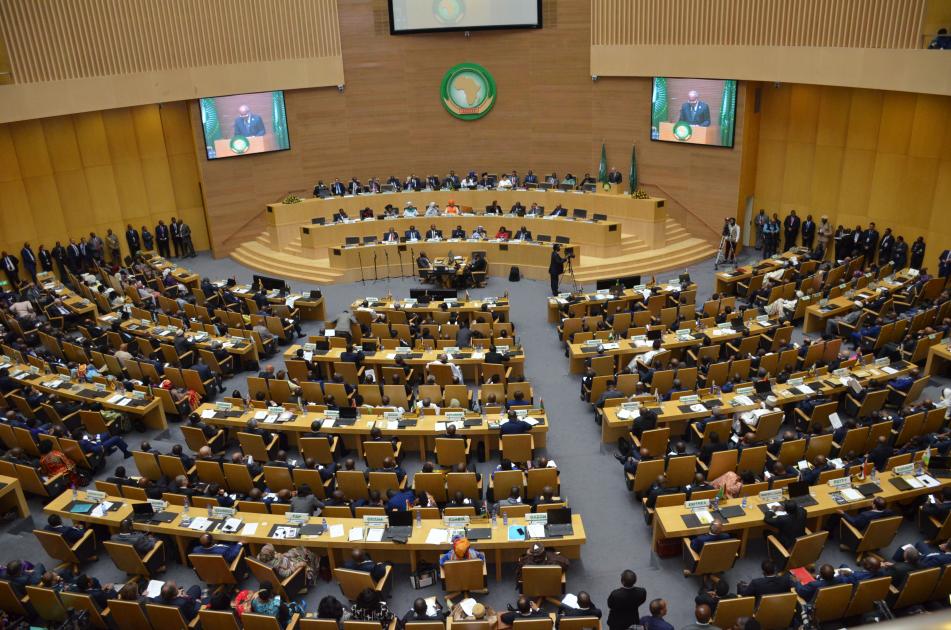
The African Union’s Position
The African Union (AU) has sought to balance sovereignty with responsibility. Its Constitutive Act permits intervention in cases of genocide, war crimes, or crimes against humanity. The Peace and Security Council can authorize missions to restore constitutional order. These provisions reflect a commitment to protect populations while respecting sovereignty.
Yet the AU’s capacity remains limited. Its interventions often depend on external funding and logistical support. When great powers bypass multilateral frameworks, the AU’s authority is undermined. The raid on Caracas illustrates how quickly norms can be eroded, leaving regional organizations sidelined.
Patterns of External Raids
Africa has long been a theater of external military operations. France’s Operation Barkhane in the Sahel, the U.K.’s Operation Barras in Sierra Leone, Russia’s Wagner Group deployments, and U.S. raids in Somalia and Nigeria all reflect a pattern: interventions justified as counterterrorism but often driven by strategic interests.
These operations have mixed outcomes. Some have weakened extremist networks. Others have fueled resentment, caused civilian casualties, and entrenched instability. The common thread is the bypassing of multilateral oversight. Consent is often ambiguous, accountability limited, and legality contested.
Sovereignty at Risk
The raid on Caracas reinforces a troubling precedent: powerful states may bypass international law to pursue unilateral objectives. For Africa, this raises three risks.
First, weak adherence to multilateralism. If great powers act outside the UN, African states may lose faith in institutions that already marginalize them. Calls for Security Council reform will intensify, but without reform, adherence may weaken.
Second, future unilateral attacks. The precedent of Venezuela may embolden interventions in Africa, particularly in resource-rich or unstable states. Nigeria’s December 2025 raid illustrates how quickly such logic can migrate.
Third, conflict escalation. Unilateral actions risk exacerbating conflicts rather than containing them. In Somalia, U.S. raids sometimes bypassed national authorities, fueling controversy and undermining legitimacy.
Conclusion
Bypassing rules may offer tactical gains for great powers, but it undermines the foundations of global governance. For Africa, the consequences are existential. Sovereignty becomes conditional, security outsourced, and legitimacy eroded.
The path forward requires reform. The UN Security Council must be restructured to reflect Africa’s role, with permanent seats and veto power. The AU must move from observation to action, articulating clear guidelines for external interventions and strengthening early warning systems. Transparency and consent must be documented to ensure accountability.
In a fragmenting world, Africa cannot afford to be passive. The choice is stark: either shape the rules, or be shaped by those who bypass them.

Antem Anthony
Antem Anthony is the Head of Conflict Analysis and Prevention unit & Policy Analyst in peace & security at the Foretia Foundation. Prior to joining the Foundation, he served as conflict, policy and security assistant at the International Crisis Group, Kenya. Anthony is a certified administrative and operations professional from the United Nations University for Peace and the Pan African Institute for Development, West Africa (PAID-WA)