Africa’s Industrial Future at a Strategic Crossroads
By Dr Salim Ahmed Vessah
For decades, globalization promised efficiency. Firms fragmented production across borders, locating activities wherever labor was cheapest or resources most abundant. By 2015, global value chains accounted for nearly half of world trade, fueling rapid industrialization in East Asia and integrating emerging economies into global manufacturing. Africa, however, remained largely on the margins.
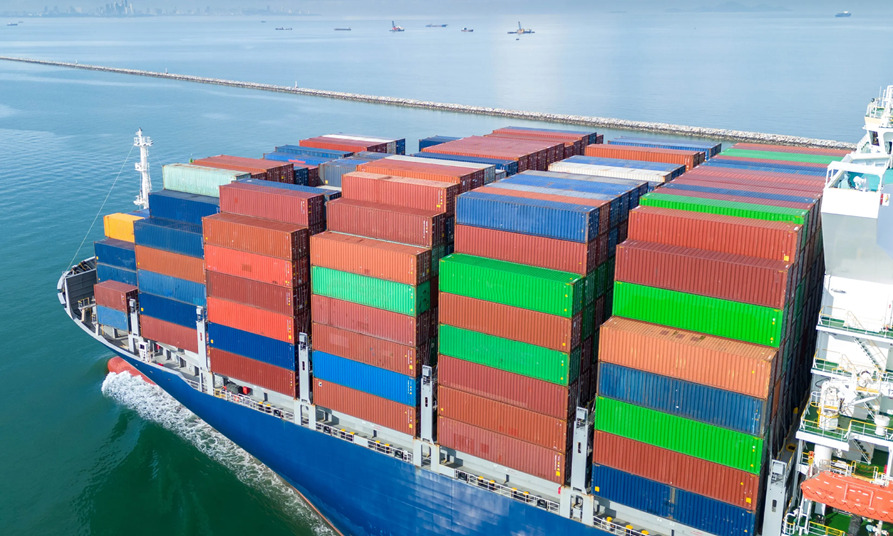
Today, the foundations of cost-driven globalization are weakening. Geopolitical rivalry, industrial policy activism, and pandemic-induced disruptions have reshaped global supply chains. Trade interventions have multiplied fivefold since 2018. Advanced economies have committed more than a trillion dollars to strategic sectors such as semiconductors, clean energy, and critical minerals. The COVID-19 pandemic exposed vulnerabilities, with shipping costs surging 300 percent in 2021 and production delays affecting more than 60 percent of firms.
For Africa, these shifts present both risks and opportunities. The continent contributes less than 2 percent of global manufacturing value added and only 15 percent of intra-regional trade. Yet the reconfiguration of supply chains creates openings in agro-processing, pharmaceuticals, renewable energy components, and mineral beneficiation. The question is whether Africa can seize them, or whether it will remain excluded from emerging “trusted” production networks.
Structural Constraints
Africa’s industrial position is constrained by five structural challenges.
First, low manufacturing intensity. Manufacturing contributes less than 11 percent of GDP in Sub-Saharan Africa, compared to over 20 percent in East Asia. Supplier networks are underdeveloped, clusters sparse, and technological upgrading limited.
Second, fragmented trade and integration. Intra-African trade represents only 15–18 percent of total trade, restricting economies of scale. Tariffs, inconsistent customs procedures, and non-harmonized standards hinder cross-border production.
Third, high logistics costs. Transport costs average 30–40 percent of product value, compared to 10–15 percent in East Asia. Weak infrastructure, inefficient ports, and unreliable electricity raise the cost of doing business.
Fourth, limited finance. Development finance mechanisms are fragmented, and private investors perceive high risks. The absence of blended finance platforms and risk guarantees constrains capital deployment.
Fifth, skills and technology gaps. Africa’s workforce often lacks the technical and managerial skills required for sophisticated manufacturing. Weak links between universities and industry reduce innovation potential.
Together, these constraints create a mismatch between Africa’s industrial capacity and the requirements of modern supply chains.
Strategic Opportunities
Despite these challenges, global supply chain reconfiguration creates openings.
Agro-processing offers immediate potential. West Africa produces over 70 percent of global cocoa but exports it largely raw. Expanding grinding and food processing in Ghana and Côte d’Ivoire could significantly raise value addition. East Africa’s horticulture and grain processing could reduce post-harvest losses and serve regional markets.
Pharmaceuticals have emerged as a strategic priority after COVID-19. South Africa already hosts vaccine formulation capacity, while Rwanda, Senegal, and Ghana are investing in fill-and-finish facilities. Regional production could reduce import dependence and strengthen resilience.
Renewable energy components are another frontier. Southern Africa’s lithium and manganese, Central Africa’s cobalt, and East Africa’s geothermal potential provide a basis for regional value chains in batteries and power equipment.
Mineral beneficiation remains critical. Zambia’s copper, Guinea’s bauxite, and Mozambique’s graphite illustrate opportunities to move beyond raw exports toward intermediate processing.
Historical Parallels
Africa’s current dilemma recalls earlier waves of industrialization. In the 1960s, East Asia leveraged export-oriented manufacturing to climb the value chain. Africa, by contrast, remained tied to commodity exports. In the 1980s, structural adjustment programs further weakened industrial capacity. Today, the risk is repetition: exclusion from emerging supply chains could entrench dependence on raw commodities.
Yet history also offers hope. Just as East Asia seized opportunities during global shifts, Africa can leverage the current reconfiguration. The African Continental Free Trade Area (AfCFTA) provides a framework for regional value chains. Early movers who modernize infrastructure and harmonize standards can establish reputations as trusted partners.
Policy Reflections
Africa’s path forward requires decisive action.
Short-term priorities include operationalizing AfCFTA, targeting priority sectors, and expanding investment facilitation. Medium-term goals involve infrastructure modernization, standards harmonization, and industrial cluster development. Long-term strategies must focus on skills upgrading, technology transfer, and integration into trusted supply chains.
The challenge is coordination. Fragmented policies, uneven implementation, and limited financing have hampered progress. Without strategic interventions, Africa risks exclusion from emerging networks. With them, the continent can position itself as a competitive participant in global manufacturing.
Conclusion
Global supply chains are fragmenting, with firms prioritizing resilience and reliability over efficiency. For Africa, this is both a threat and an opportunity. The continent remains marginally integrated, but shifts toward diversification create openings in agro-processing, pharmaceuticals, renewable energy, and mineral beneficiation.
The choice is stark. Either Africa acts decisively to integrate into reconfigured supply chains, or it risks being locked into commodity dependence for another generation. Industrialization is not optional, it is existential.