Highlights
- Financial experts have made it clear: before considering new debt, governments must improve the management of their water services by plugging leaks and modernizing billing systems.
. Every year, Africa loses billions of dollars in unaccounted-for water, according to estimates by water utilities and development banks. Recovering these losses is the fastest and least expensive way unlock investment, without incurring interest payments.
- With more than $1,000 billion in assets held by local pension funds and insurers, local-currency bonds represent a credible and largely untapped opportunity.
- Introduction
At a session held during the Africa at World Bank’s Spring Meetings, investors, ministers, and experts from development banks gathered on a panel under the theme: ” Unlocking Capital for Africa’s Water Security and Sanitation.” The discussions quickly enlightened the audience. The financial experts on the panel did not advocate for massive new debt. On the contrary, they emphasized a priority: before raising new capital, African States must first stabilize the day-to-day management of their public services. The World Bank estimates that achieving universal access to water and sanitation on the continent will cost more than $100 billion. However, Albert Zeufack, the World Bank Country Director for the DRC, Angola, Burundi and Sao Tomé and Principe, pointed out that fiscal flexibility is shrinking globally. The era when big amount of money was collected from public coffers is over. The future of water financing will depend on mobilizing private capital, but this capital, as the panel clearly emphasized, is not based on emotions: it demands guarantees and predictability.
- Let us go back to the fundamentals
Alex Money, CEO of Watermarq, illustrated what is the problem by using the AUDA-NEPAD AIP pyramid, a tool that traces the true origin of water funding. At the very top of this pyramid is the tiny share of subsidies and highly concessional aid. In the middle, we find climate funds and development bank loans. But the immense base of the pyramid holds the greatest potential for closing the funding gap. And it has nothing to do with new debt. it’s quite simply “sweating those assets well”. Here is a question Alex Money asked the audience: “Why pay interest? Why take loans and pay interest when you can get stuff done without having to do that in the first place?”. He reminded them that Africa loses billions of dollars annually due to unpaid water bills—including leaks and theft—as well as tariffs that are too low to cover network maintenance or the construction of new wastewater treatment plants. Before an investor agrees to take a risk on future profits, public services must prove that they are able to collect back payments owed and charge a fair price for their services. Getting these fundamentals right is an essential prerequisite for any project to be bankable. In the same vein, Don Christensen, Executive Chairman of InvestBank Corp., listed the demands made by institutional investors: escrow accounts, water purchase contracts with clauses as strict as those in electricity contracts, and first-risk mechanisms to absorb construction risks. Investors are not afraid of water itself; they fear the unpredictable. Offer them a rate approved by a credible regulator and a buyer who pays on time, and the funds will flow in.
- A Well-Structured African Capital
This capital does not necessarily have to be in the dollar currency. Mahesh Kotecha, president of Structured Credit International Corp., pointed out that the African continent holds over $1000 billion in liquid assets. He cited the example of the “water” bond issued by Angola in 2024—a local currency bond worth the equivalent of $20 billion, backed by subscriber revenues and structured off the government’s balance sheet. African pension funds and insurance companies, which currently invest their liquidity in Treasury bonds, could be redirected toward water infrastructure if the financial structures are adapted. The solution does not always involve foreign exchange, but rather tailored financial engineering.
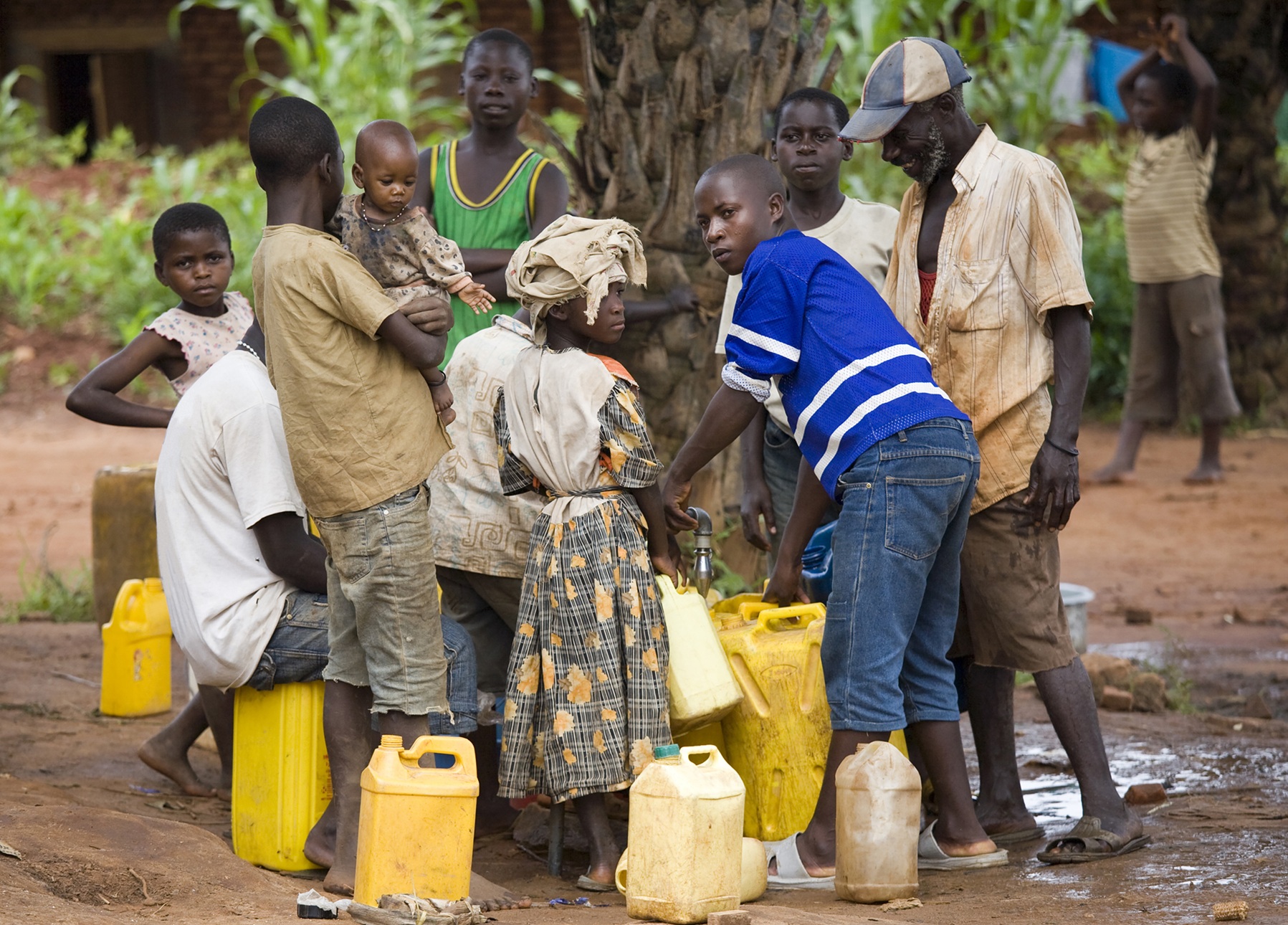
Ann Thomas, Senior WASH Advisor at UNICEF, warned of a major disconnect: more than 80% of African households rely on on-site sanitation systems – pit latrines or septic tanks. However, the large-scale funding models discussed by the bankers present are still based on centralized sewer systems, a solution inherited from the 19th century and ill-suited to 21st-century African cities. “At this rate, it would take hundreds of years to achieve this,” she warned. There is a yawning gap between the way finance is conceived and the reality of people’s lifestyles. Bridging the gap will require to demonstrate the same level of creativity as we do for bonds and guarantees—this time applying it to financing septic tank services, decentralized treatment, and household-level improvements. Sanitation can no longer be the forgotten topic in investment discussions. The World Bank Group is demonstrating its commitment to moving forward. Dr Zeufack confirmed the merger of the institution’s guarantee platforms and MIGA ‘s commitment to deploying $1 billion in guarantees under the new Water Forward initiative. These guarantees represent precisely the type of credit reinforcement capable of shifting the risk-return balance for a pension fund based in Nairobi or Lagos. However, they must be backed by unwavering political will.
Conclusion
The roadmap is clear, but demanding. African governments should use the Water Investment Scorecard not as a report card for donors, but as a mirror to gauge their own maturity. They would do well to draw inspiration from Senegal’s national compact or the corridor-based prioritization approach adopted by the DRC. Above all, they must understand that the strongest signal they can send to the markets is a water bill that users are willing to pay with confidence. The World Bank has set a new goal of improving water security for an additional 400 million people by 2030. For Africa, this begins with reducing leaks, fair pricing, and mobilizing domestic savings—not with a flood of new loans. Capital is not lacking; what is missing is the assurance. It is up to governments and regulators to fill this gap so that investment can finally take off.