


Internet shut-down, recurrent weapon of human rights violation: a view on Africa
Introduction
In the last decade, internet shut-down has been a recurrent practice weaponised by states as a measure to restrict the flow of information across...

African Cup of Nations, a regional approach for sustainable peacebuilding
Context
Complex dynamics of conflicts in Africa over the past years have increasingly led several global, regional, and local stakeholders including schools of thought...
Accelerating the implementation of the Youth Peace and Security Agenda in Cameroon: A Step...
Introduction
Cameroon has been marked by socio-political tensions and recurring conflicts that have left a deep humanitarian crisis in the affected regions and hampered...
Enhancing Human Security and Strategic Peacebuilding for Sustainable Development in Africa
Introduction
Throughout our journey since independence, Africa has faced a series of crises that have tragically escalated into conflicts. These conflicts have too often...

Addressing Conflict-Related Trauma in Cameroon: A Pathway to Conflict Prevention and Sustainable Peace
Introduction
Like many other African countries, Cameroon has experienced its fair share of conflicts and violent conflicts, which have left deep wounds on individuals and...
DDR Process in Cameroon, 5 Years Later: What Prospects?
Introduction
Since 1989, international efforts to end protracted conflicts in Africa, America and Asia have required sustained investments in disarmament, demobilization, and reintegration of...
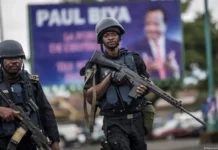
Inter-Ethnic Clashes: Recurrent Drivers of Violent Conflict and Obstacles to Peace Processes in Cameroon
Introduction
A historical covenant and a significant identity among the African people are their affiliation to various tribes or ethnicity. A typical African would most...

Appraising the Role of Think Tanks in Peacebuilding in Africa
Introduction
Over the years, think tanks have been very instrumental in the process of peacebuilding across Africa through their programs and mechanisms. They conduct...

Exploring the Part International Stakeholders, Civil Society and Faith-based Organisations can ...
Introduction
For decades, “Cameroon has been widely praised for its ability to maintain the stable, and peaceful coexistence of its numerous cultural, ethnic and...
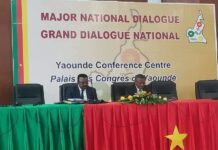
Beyond Power Politics: Are there any prospects for a successful peace-building dialogue in Cameroon?
Introduction
National dialogues are an important instrument that can be used to resolve conflict and build lasting peace. According to Inclusive Peace, an international organization,...
Latest article
No Factories, No Trade: CEMAC Faces the Challenge of Structural Transformation
Highlights
No CEMAC member State accounts for more than 10% of exports to the continent.
The free movement of people, planned since 1999, has...

Burkina Faso’s New Study Abroad Decree: When Education Becomes a Political Privilege
By Enowbachem Agbortanyi
A Policy Framed as National Development
Burkina Faso's latest decree requiring every student wishing to study abroad to obtain government authorization marks more...
From the WTO MC14 to Action: Building Africa’s Productive Capacity through Trade, Digitalisation and...
Africa cannot rely on trade liberalization alone to achieve economic transformation; instead, it must pair AfCFTA integration with deliberate industrial, agricultural, and digital capacity-building...
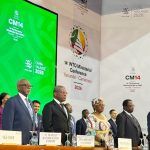
Leveraging WTO MC14 Investment Facilitation for Development to Accelerate Structural Transformation in Cameroon
Investment inflows will generate the expected level of development impact in Cameroon if the country addresses persistent challenges like regulatory inefficiencies, institutional fragmentation, and...
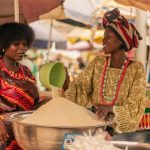
Rethinking Commercial Leadership in Central Africa: Addressing the Challenges of Informality, Inequality, and Digital...
Informality, inequality, weak digital infrastructure, and limited productive financing continue to marginalize ECCAS economies, while calling for coordinated reforms to achieve inclusive and transformative...
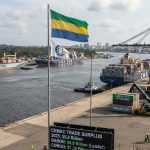
From Market Expansion to Value Addition: Repositioning CEMAC’s Trade Strategy for Structural Transformation
Repositioning CEMAC’s trade strategy requires a decisive shift from commodity-based market participation toward value-driven production systems, where trade, industrial policy, and regional integration are...