


From Guns to Governance: Rethinking Burkina Faso’s Fight against Terrorism
Burkina Faso, long extolled for its reputation as a peaceful and reasonably calm nation in West Africa, is now host to one of the...
Sudan’s Fate in the Face of a Deadly Conflict: Navigating a Path toward Peace...
Sudan, a country long mired in political turmoil and intra-state violence, has plunged once again into a disastrous war of great regional and international...
Terrorism and challenges of regional cooperation in the Lake Chad Basin
Introduction
The Lake Chad Basin (LCB) region which encompasses parts of Cameroon, Chad, Niger and Nigeria has struggled with a variety of insecurity issues...

The sentencing of Abdul Karim Ali backpedals Cameroon government’s peace efforts.
The Cameroonian military court's life imprisonment sentence of Anglophone peace activist Abdul Karim Ali is a significant and disturbing development in the Anglophone crisis....
Contemplating Cameroon’s Socio-political and Economic Outlook, post-Biya era: an aggravated ‘Polycrisis’ and policy...
Introduction
The global guardian, a global risk assessment and geopolitical stress index, predicts (1) through its 2025 global risk map that Cameroon falls amongst countries...

How Cameroon’s Electoral Autocracy Threatens Peace and Security
Context
Cameroon is governed by a de facto autocratic regime, guised by some democratic tenets like elections and multipartism . Despite the presence of multipartism,...
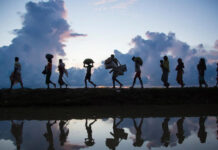
The Ripple Effect: How Forced Displacement Fuels Poverty in Africa
Introduction
Forced displacement and poverty are two major challenges that have a substantial impact on Africa’s socio-economic landscape. The continent is home to numerous challenges...

Interview with Christian Achaleke
Youth engagement is increasingly recognized as a cornerstone for sustainable peace and development. In Cameroon, a country grappling with significant security challenges, the role...
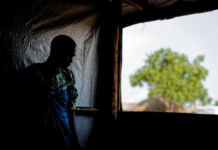
Cameroon Government’s Response to Conflict-Related Sexual Violence Within the Context of the Anglophone Armed...
Introduction
During armed conflict, civilians are typically in grave peril, with severe consequences such as loss of life, property and means of subsistence, widespread displacement,...
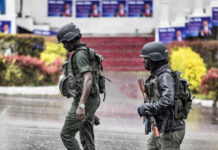
Assessing the impact of civil-military actions in a context of asymmetric conflict in Cameroon
INTRODUCTION
"Even if, by definition, the primary mission of our armed forces is to ensure peace and defend the integrity of our country's territory, they...
Latest article
No Factories, No Trade: CEMAC Faces the Challenge of Structural Transformation
Highlights
No CEMAC member State accounts for more than 10% of exports to the continent.
The free movement of people, planned since 1999, has...

Burkina Faso’s New Study Abroad Decree: When Education Becomes a Political Privilege
By Enowbachem Agbortanyi
A Policy Framed as National Development
Burkina Faso's latest decree requiring every student wishing to study abroad to obtain government authorization marks more...
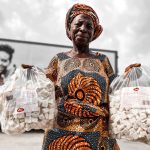
From the WTO MC14 to Action: Building Africa’s Productive Capacity through Trade, Digitalisation and...
Africa cannot rely on trade liberalization alone to achieve economic transformation; instead, it must pair AfCFTA integration with deliberate industrial, agricultural, and digital capacity-building...
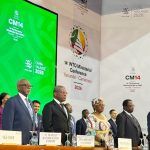
Leveraging WTO MC14 Investment Facilitation for Development to Accelerate Structural Transformation in Cameroon
Investment inflows will generate the expected level of development impact in Cameroon if the country addresses persistent challenges like regulatory inefficiencies, institutional fragmentation, and...

Rethinking Commercial Leadership in Central Africa: Addressing the Challenges of Informality, Inequality, and Digital...
Informality, inequality, weak digital infrastructure, and limited productive financing continue to marginalize ECCAS economies, while calling for coordinated reforms to achieve inclusive and transformative...
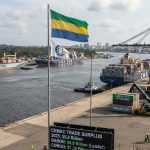
From Market Expansion to Value Addition: Repositioning CEMAC’s Trade Strategy for Structural Transformation
Repositioning CEMAC’s trade strategy requires a decisive shift from commodity-based market participation toward value-driven production systems, where trade, industrial policy, and regional integration are...