By Dr. Stéphane Mbiankeu Nguea
Policy Highlights:
- Global extreme poverty continues to decline, but progress is becoming increasingly uneven across regions, masking deep and persistent vulnerabilities in Sub-Saharan Africa and the Middle East, North Africa, Afghanistan and Pakistan (MENAAP) region.
- The MENAAP region is now the only region where extreme poverty has increased in recent years, highlighting the devastating effects of conflict, political instability, climate shocks and insufficiently inclusive economic growth.
- Sub-Saharan Africa continues to bear a disproportionate share of the global poverty burden and remains behind other regions in recovering from the socioeconomic effects of the COVID-19 pandemic.
- Conventional poverty-reduction approaches have shown limited effectiveness in fragile and conflict-affected settings, underscoring the need for context-specific strategies that integrate security, climate resilience and institutional development.
- Achieving meaningful poverty reduction in the coming decade will require stronger statistical systems, adaptive social protection, greater domestic resource mobilisation and sustained international commitment to the regions furthest behind
Introduction
The World Bank has published its semi-annual update on global poverty, and the least that can be said is that the picture is mixed. On the one hand, extreme poverty – defined by the critical threshold of $2.15 per day in 2017 purchasing power parity – continues to decline slowly globally. The global rate fell from 10.4% in 2024 to a projected 10.0% for 2026, representing a positive inflexion, modest though it may be, but real, nonetheless. On the other hand, this global progress, driven by the resilience of certain emerging economies, masks alarming regional realities that should concern the international community. The new data, which integrates 28 additional country-years as well as a new and particularly detailed household survey for Pakistan, offers a more precise radiography of a world in flux. This statistical refinement is essential, because we can only effectively combat what we measure correctly. The exercise of “now-casting” – real-time projections that allow trends to be adjusted even before final national accounts are published – shows the extent to which margins of error can upend the priorities of international aid. However, beyond the accounting expertise, this update above all reveals a disturbing truth: while most regions of the world have definitively pushed their extreme poverty rate below the symbolic 5% threshold, two vast geopolitical areas remain lagging persistently, where conventional policies have proven insufficient to reverse the trend.
A Widening regional divergence
The global extreme poverty rate continues to decline, driven by sustained progress in South Asia – where India and Bangladesh are continuing their economic take-off – and by the stabilisation of Latin America, which has managed to preserve its social safety nets despite recurring political shocks. Yet this flattering global average acts as a smokescreen: it masks two major pockets of resistance, Sub-Saharan Africa and the MENAAP region, spaces where poverty seems not only to take root, but also sometimes to worsen. The case of the MENAAP region, which includes the Middle East, North Africa, Afghanistan and Pakistanis the only one in the world where the extreme poverty rate has increased in recent years. Thanks to the new Pakistani survey, which made it possible to better capture intra-national disparities, the 2024 rate is revised from 11.8% to 14.4%. Behind these percentages, 21 million additional people are falling into extreme poverty – a population equivalent to that of Sri Lanka as a whole. Moreover, this is the brutal reflection of a region shaken by an unprecedented polycrisis. Chronic political instability, open conflicts in Gaza, Sudan and Syria, devastating climate shocks such as the floods in Pakistan, and structurally insufficient and insufficiently inclusive economic growth have turned this area into the epicentre of the new global precariousness.
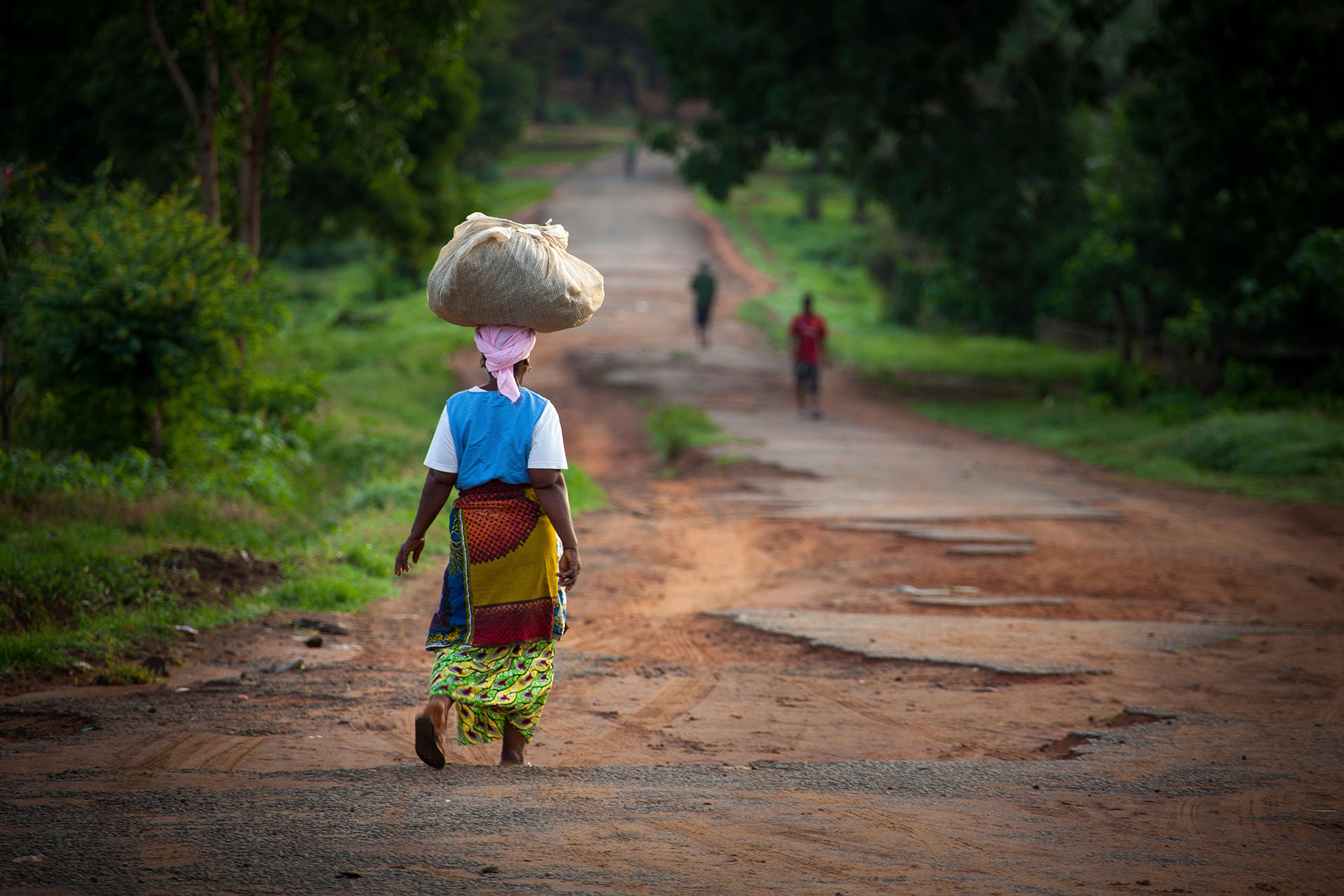
Sub-Saharan Africa, for its part, is not to be outdone. The World Bank now estimates that it will not return to its pre-COVID-19 poverty level until 2025. This alarming delay contrasts violently with the rest of the world, which already largely surpassed this milestone as early as 2022 for most other regions. Why such a gap? Because the continent is suffering the full force of a pincer effect: on the one hand, one of the highest population growth rates on the planet, which dilutes meagre gains in per capita GDP; on the other, an external debt burden that suffocates national budgets, thereby reducing room for manoeuvre for social investment. These two regions now account for the vast majority of the 847 million individuals living on less than $2.15 a day. Together they concentrate almost all of global poverty, and they are light-years away from the eradication target that the international community had nevertheless set for itself under the Sustainable Development Goals. This observation suggests a need to reconsider current development strategies. The uniform approach, often modelled on Asian templates, is clearly insufficient in these fragile contexts marked by institutional vulnerability and exposure to exogenous shocks. It is no longer a question of applying ready-made recipes, but of designing tailor-made policies capable of navigating uncertainty. This means combining massive investments in education and health, adaptive social safety nets capable of reacting instantly to food crises, and resolute support for the local private sector to create productive jobs. Above all, it requires an international mobilisation that reorients its financing toward the most neglected areas.
Three factors explain persistent divergence in poverty reduction: protracted multi-dimensional conflicts that erode state capacity over decades, high fertility rates that absorb economic gains rather than translating into per capita income improvements and severe, recurrent climate shocks that erode household assets. These conditions require rethinking standard development approaches. Social protection must be adaptive to shocks, infrastructure climate-resilient, and governance focused on service delivery in fragile contexts. Implementation faces obstacles: limited institutional capacity, fragmented aid systems creating transaction costs, and security constraints. Addressing these requires long-term institutional strengthening and flexible programmes that operate in volatile environments. Without such adaptations, even well-designed policies risk failure.
Policy Implications
Faced with the regional divergence that threatens the cohesion of the global economic edifice, three strategic priorities impose themselves with compelling urgency.
First, it is vital to strengthen the quality, frequency and granularity of field data. The World Bank update demonstrates brilliantly how the addition of a single national survey, in Pakistan, was able to revise upward by several million the number of poor people in an entire region. The poorest countries badly lack reliable statistical systems, trained personnel and appropriate collection technologies. Investing massively in their national statistical institutes, equipping them with digital tools and expertise, is not a luxury reserved for advanced economies: it is a sine qua non condition for the effectiveness of aid. Without reliable data, we are piloting blind, and the billions disbursed risk missing the hardest-to-reach populations.
Second, poverty reduction strategies must imperatively be adapted to fragile and post-conflict contexts. What has worked in Southeast Asia, with strong states and a skilled workforce, cannot be mechanically transposed to the Sahel, where chronic insecurity prevents access to fields, nor to Yemen, where the banking system is on the verge of collapse. Programs must necessarily integrate conflict prevention and resolution as central pillars, while developing robust climate adaptation mechanisms, because recurrent droughts wipe out in a few weeks the gains of several years. Furthermore, strengthening the institutional capacities of fragile states should precede any fund transfers, lest these resources be diverted or wasted.
Third, it is imperative to maintain, or even increase, the financial commitment of bilateral and multilateral donors. Extreme poverty is declining globally, certainly, but progress remains extremely fragile. The World Bank’s nowcasts for 2026, though rigorous, are based on economic growth projections that predate recent events, which have been marked by increased volatility in commodity prices and geopolitical tensions. A sudden economic slowdown in G7 countries, a new food crisis induced by El Niño, or an escalatory conflict in a strategic zone can reverse the poverty curve in a matter of months. Donor countries should therefore honour their official development assistance commitments, prioritising resources toward regions where the marginal efficiency of each dollar invested is highest.
Fourth, governments should prioritise domestic resource mobilisation and protect social spending during fiscal adjustment. Expanding tax bases, curbing illicit financial flows, and improving public expenditure efficiency can generate fiscal space without compromising poverty reduction. When adjustment is unavoidable, social protection programmes—especially cash transfers and school feeding—should be ring-fenced from cuts. International partners should support tax administration reforms and debt restructuring to prevent austerity from falling on the poorest, preserving hard-won gains and maintaining confidence in the state’s commitment to its most vulnerable citizens.
Conclusion
The March 2026 update from the World Bank acts as a salutary wake-up call in a world too often distracted by immediate emergencies. It reminds us that extreme poverty is not a geographic or historical fatality, but neither is it an automatically downward curve. The 847 million people who live today in absolute precariousness are not lines in an Excel spreadsheet: they are human lives, marked by hunger, lack of access to healthcare, and the impossibility of offering a decent future to their children. The world undeniably possesses the technical, scientific and financial means necessary to eradicate this scourge. The challenge is whether governments and development are willing to focus resources and policy attention on the regions that are failing furthest behind. Every year lost in inaction or in the reproduction of obsolete patterns condemns millions of children to an endless cycle of deprivation, which in turn breeds instability and forced migration. The data is there, scrutinised, refined, shared. The operational tools are available, proven on other continents. Only one ingredient remains to be added to the equation: determined, rapid and massively coordinated action. The challenge is no longer understanding where poverty is concentrated. The data already tells us that. The challenge is whether governments and development partners are willing to focus resources and policy attention on the regions that are falling furthest behind.