
After three years of an unprecedented health crisis, the World Health Organization (WHO) has declared an end to the COVID-19 public health emergency of international concern [1]. In Africa, COVID-19 has unevenly affected countries, and the current total number of confirmed cases across the continent is reported to be 9 530 267365 deaths, representing respectively 1% and 3% of the cumulative number of global cases and deaths [2].
While it is an established and ongoing health issue, it is appropriate to spotlight the challenges the emergency has brought to our healthcare systems and discuss the way forward to improve preparedness and response to future health threats. In many African countries, public health and social anti-COVID-19 measures led to a slowdown in healthcare facilities attendance, health services utilization, and stock out of essential supplies, resulting in adverse outcomes on existing public health issues, including maternal and child health, Tuberculosis, HIV, malaria and non-communicable diseases [3,4].
African nations also experienced negative socioeconomic consequences such as reduction of personal and household income, increased unemployment, increased use of alcohol and drugs, discontinuation of education, anxiety, and stress among individuals, leading to the emergence of mental health disorders and domestic violence [5]. In addition, the COVID-19 pandemic in Africa might have middle to long-term consequences that need to be identified and addressed [3,4]. However, although many countries on the continent lacked preparedness and responded poorly to the pandemic, national multisectoral plans and joint continental strategy coordinated by Africa Center for Disease Control (CDC) helped the continent to contain the spread of the disease and overcome the outbreak [4,5,6].
As the world is recovering from COVID-19, it is time for assessment, understanding, and perspective. This paper highlights some insights African governments and policymakers can rely on in the road to recovery, to improve preparedness for and response to future pandemics.
The Necessity to Build Strong and Resilient Healthcare Systems
It is an urgent need to implement strategies that will strengthen African health systems and improve their resilience against crisis.
Improve Health Infrastructure and Workforce
At the height of the COVID-19 pandemic, the capacities of healthcare facilities in Africa were overwhelmed because of a limited number of beds, personal protection equipment, isolation centers, ventilators, and intensive care units [7]. Improving health infrastructure requires governments’ commitment, involvement of the private sector, and international cooperation to identify the needs and oppose them with suitable actions. Moreover, in many African countries, there is an inadequately distributed and insufficient health workforce.
For example, Africa requires 25,000 frontline epidemiologists and has about 5,000 [8]. During the pandemic, healthcare workers had to be redeployed into the provision of Covid-19 management settings, disrupting other health services delivery [3,7]. It is thus urgent for African nations to expand their health sector human resources by providing adequate environment and infrastructure for training, capacity building, and professional insertion of health workers.
Besides, regional-level initiatives such as the “Kofi Annan global health leadership program” or the Africa CDC for workforce development are promising solutions for an increased number of skilled health workers and strengthening health systems.
Improve Healthcare Financing
Financing healthcare services remains a real challenge for African countries in the context of limited financial resources, poor governance, and rampant corruption. Although African governments committed in the 2001 Abuja Declaration to dedicate at least 15 percent of their annual budgets to health, only a few countries are even close to the target [8]. Furthermore, the mobilization of funds to address the COVID-19 emergency led to an imbalance of budgetary allocation to other health services [7].
If we aspire to a form of autonomy and independence on the continent, it is imperative that healthcare financing comes from the nations on their own through public investments, various forms of private sector participation, and efficient management. Thus, African countries should adopt strategies to improve healthcare financing. Such a health financing reform can be based on the WHO recommendations for health systems financing improvement, including increased public investment in health, innovative financing (increasing taxes on air tickets, foreign exchange transactions, and tobacco, for example), and strategic health purchasing [9].
Nevertheless, transparent management of external financial assistance is critical to sustaining undertaken structural transformations relying on global solidarity and can provide additional funding for healthcare services. For example, COVID-19 funds from global partners and private donors’ utilization must be tracked to assess the reallocation of the “pandemic dividend” in the reinforcement of health systems [3].
Capitalize on Health-Related COVID-19 Innovations
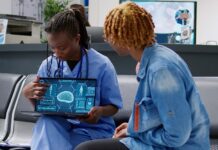
According to the WHO African direction, over 120 health technology innovations have been piloted or adopted in Africa to tackle COVID-19, and Africa accounts for 13% of innovations developed worldwide in different areas of COVID-19 response, including surveillance, contact tracing, community engagement, treatment, laboratory systems and infection prevention and control [10]. These innovations, majorly based on ICT, 3D printing, and robotics, demonstrate the enormous technological potential that Africa can leverage to improve access to healthcare.
Build Regional and National Autonomy on Medicines, Medical Supplies, and Diagnostics
During the pandemic, some African countries experienced poor availability of essential medicines, challenges in personal protective equipment procurement and unequal access to vaccines, and even a shortage of syringes [3,7].
Besides, there is a common thought that the overall burden of COVID-19 was underestimated in Africa because of limited testing capacity [4,8]. Seroprevalence studies targeting specific antibodies confirmed overwhelming proportions of undetected cases in some countries, ranging from 10% to 30%, largely beyond the proportion of reported cases [4].
African governments and private investors should promote and support country-level and regional-level production of diagnostics, vaccines, medicines, and medical equipment that will drive down costs and increase responsiveness to health threats [8].
Promote Civic Engagement in Designing Public Health Policies and Actions
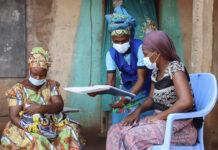
There is a need to design and promote strategies that can improve community engagement in health policies and interventions. In some parts of the continent, such as Sub-Saharan Africa, there is a low level of civic engagement in the development and implementation of public health policies [11] and poor adherence to public health actions [12]. This low civic engagement may at least partially explain COVID-19 vaccine hesitancy among African populations.
A recent study on selected municipalities in Cameroon has shown that 25% of community members were aware of their role in public health policies, and consequently, only 16% of them demonstrated engagement in public health actions [12].
Explore the Potential of African Traditional Medicine
The drive for a cure for COVID-19 has highlighted the immense potential of Traditional medicine as a valid alternative for addressing major health threats [13,14]. There is evidence supporting the presence of proven anti-COVID-19 secondary metabolites in ingredients of traditional remedies used by the population for the prevention or treatment of COVID-19 or its symptoms [13].
For this indigenous knowledge to be safeguarded and efficiently used to improve healthcare on the continent, products need to be developed following the WHO standards, taking into consideration sustainability, environmental protection, and copyright issues [13,14]. A continental leadership in research and clinical trials would guarantee total autonomy in the standardization, clinical efficiency, and safety assessment of products from African traditional medicine.

Solange Dabou
Solange DABOU holds a Master of science in Clinical Biochemistry from the University of Dschang and have followed a distance learning training in epidemiology and health statistics from Aix Marseille University.

Dr. Bruna Djeunang Dongho
Ghyslaine Bruna Djeunang Dongho, Ph. D., is the Senior Researcher in Global Health and Public Health at the Nkafu Policy Institute.

Regina Sinsai
Regina Sinsai holds a Bachelor of Arts Degree in Psychology from the United States International University – Africa, in Nairobi and an HND in General Nursing from the Humanity Health Professional Training Center (HHPTC) in Yaoundé.

Evrard Kepgang
Kepgang Evrard is a young research and humanitarian passionate. He holds a master’s degree in Public health and epidemiology at the University of Dschang.
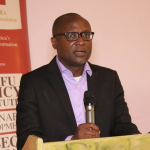
Dr Ronald Gobina is a Nephrologist, working with the Regional Hospital in Buea. He is a Health Fellow and the Director of the COVID-19 taskforce for the DLF foundation. He is member of the International Society of Nephrology (ISN) and the Initiative to Strengthen Health Research Capacity in Africa (ISHReCA).