Introduction
The decline in the legitimacy of democratic systems across the African continent has increasingly been the subject of multiple reflections in many policy spaces and amongst scholars. Are there any specific incidents that initiated this downward trend, or has democracy gradually lost its appeal for a variety of reasons? Going down memory lane, the fall of the Berlin Wall in November 1989 and the subsequent end of the Cold War were hailed globally as a triumph of democracy over communism (1). At that moment, it seemed as though democracy had achieved a definitive victory. The events of late 1989 initiated a shift towards democracy in the nations of the former Eastern bloc, culminating in the integration of several Eastern European countries into the European Union 15 years later.(1.5). Similarly, in Africa, the continent began to see a surge of democratic transitions starting in the 1990s and extending into the early 21st century following prolonged periods of colonial domination, subsequent authoritarian regimes and military rule. This represented a pivotal moment in the political evolution of many African countries like Ghana, Cameroon and Nigeria who adopted multiparty systems, conducted regular elections, and enacted democratic reforms. Also, countries such as Kenya, Tanzania, and Zambia had moved away from decades of single-party rule to implement multiparty elections. Many African nations had initiated constitutional reforms aimed at fostering democratic values, which encompass the safeguarding of human rights, upholding the rule of law, and ensuring the separation of powers. A notable instance of these constitutional changes is South Africa’s shift from apartheid to democracy in the 1990s. Additionally, Ghana has experienced a succession of peaceful transitions of power among various political parties since the year 2000. This shift was largely driven by a growing consensus that democracies are more effective than other forms of governance in fostering development. Democracy facilitates public engagement in policy-making and encompasses essential elements such as the rule of law, transparency, accountability, equity, and inclusiveness, all of which are integral to socio-economic progress. Nevertheless, the path toward stable democracy has been inconsistent, and numerous obstacles remain (2). While countries such as The Gambia, Zambia, Ghana, Senegal, and more recently Namibia have made strides in election management, civic engagement, and political participation, others have seen a deterioration in their democratic practices. A significant challenge is the ongoing presence of authoritarianism, as some leaders circumvent term limits and undermine constitutional frameworks(3). The recent surge of coups in nations like Burkina Faso, Guinea, Gabon and Mali raises further concern among experts. In this paper, we shall examine the current state of democracy in Africa, analyze its merits and demerits and make projections as to what could be the future of democratic rule on the continent.
The Current State of Africa’s Democracy
A key milestone in Africa’s democratic landscape is the transition of African countries to multi-party elections and democratic governance (4). Competitive multi-party elections are fundamental to any form of democracy. Electoral democracy is characterized by free and fair elections that occur regularly; elected officials hold genuine political power; universal suffrage is upheld; political parties and candidates can freely compete and the electoral environment supports a level playing field, ensuring freedom of speech, media, and association. This is the current trend of democracy in Africa as many hold the view that the existence or the frequent and regular organisation of election could be likened to the existence of democracy. While electoral democracy allows citizens to elect representatives with most elections free, fair and competitive, many electoral democracies in Africa and elsewhere also lack the protection for individual freedoms, civil liberties and rule of law. In other words, electoral democracy needs to converge with the protection of individual freedoms, civil liberties and rule of law to advance to mature or liberal democracy. Unfortunately, most African countries that transitioned to democratic rule in the 1990s are now stagnated at the electoral level rather than the liberal democracy stage. While the continent has made significant progress in terms of democratization, with many countries holding regular elections and experiencing peaceful transfers of power like Senegal, Ghana, Namibia and Botswana, there are still several challenges to democratic consolidation(5). Some of these challenges include but not limited to authoritarianism, election manipulations, corruption, and security threats. Democracy levels in Sub-Saharan Africa have experienced a notable decline in recent years, with both indicators reflecting a similar extent of deterioration, bringing the region back to its status from the year 2000. This regression can be attributed in part to a series of coups that occurred in the Sahel region between 2020 and 2023, as well as the rise of increasingly authoritarian governance in already autocratic nations such as the Central African Republic, The Comoros, Mozambique, and Togo. Furthermore, defiance of governance in some nations such as Benin, Botswana are equally contributing factors to the present state of democracy. (6).
Coups and Africa’s Democracy
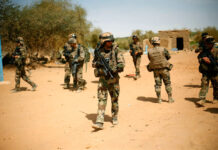
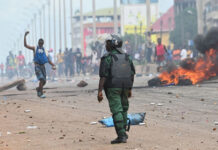
The resurgence of military coups in Africa has taken many governments and leaders unaware. While military coups are not new to Africa, the recent military takeovers have presented scholars with renewed ideological and legal headaches as recent coups across some nations have been met with unwavering public support, particularly among youth(7). Unlike previous coups that carried with them many negative connotations and were characterized as undemocratic power grasps, the recent coups have been framed as indicators of a rejection of entrenched authoritarianism, corruption, economic stagnation, and imperial influences. The cases of Zimbabwe (2017), Mali (2020, 2021), Guinea (2021), Burkina Faso (2023), and Gabon (2023) illustrate a troubling trend where the public, especially the youth, have celebrated military takeovers as a means of breaking free from failing civilian administrations.
Since gaining independence, Africa has become a breeding ground for long-serving presidents, with some leaders remaining in power for years despite visible incapacity to lead. Numerous leaders have resisted democratic reforms and have clung to power, while others have chosen to keep leadership within their families(8). This situation has been a significant catalyst for popular coups aimed at dismantling political dynasties that obstruct democratic progress. The coup in Gabon in August 2023 ended over five decades of Bongo family rule, which was marred by accusations of electoral fraud and repression, leading to widespread public discontent. In Equatorial Guinea, President Teodoro Obiang has been in power since 1979 and is likely to pass the presidency to his son. Similarly, in Togo, President Eyadema was succeeded by his son in 2005 and has manipulated the constitution to earn himself lifetime presidency. In Zimbabwe, there were indications that President Robert Mugabe intended to transfer power to his wife, Grace, before being ousted in a military coup in 2017. In Cameroon, President Biya is reportedly planning to hand over leadership to his son Frank under the “Frankist” banner (9.5).
This trend of political inheritance has long undermined democratic values and fostered frustration among citizens who see little hope for change through elections. The erosion of trust in democratic processes as a means of leadership change has led to a rise in coups. The support for coups, despite Africa’s history of military rule, does not indicate naivety; rather, it reflects a belief that if the current military government fails to enact meaningful change, it will only set the stage for another coup.
The Future of African’s Democratic Landscape
By the end of 2024, the political landscape of Africa underwent a significant change, with 13 out of the 17 planned elections organized across the continent, with four postponements namely, Burkina Faso, Mali, South Sudan and Guinea-Bissau. That period witnessed notable advancements in political transitions, with four out of the thirteen African nations holding elections experiencing a change in leadership. Opposition parties took control in Botswana, Mauritius, Senegal, and Ghana, marking a significant shift after up to 60 years of governance by the same party in Botswana. Furthermore, in South Africa, although the ANC and its current leader retained their position, the party lost its majority for the first time. Transitions in nations such as Chad, Mali, and Burkina Faso where very uncertain, high-stakes elections in South Africa, and the persistence of authoritarian leaders in Tunisia and Rwanda where all high points in the 2024 electoral calendar for the continent(10). These political uncertainties coupled with a surge in coups, has led many analysts to express concerns about the future of democracy in the region. Looking ahead to 2025, a similar scenario is anticipated, with numerous elections on the horizon, including in Cameroon, where a 93-year-old president is seeking another term after nearly 43 years in power.
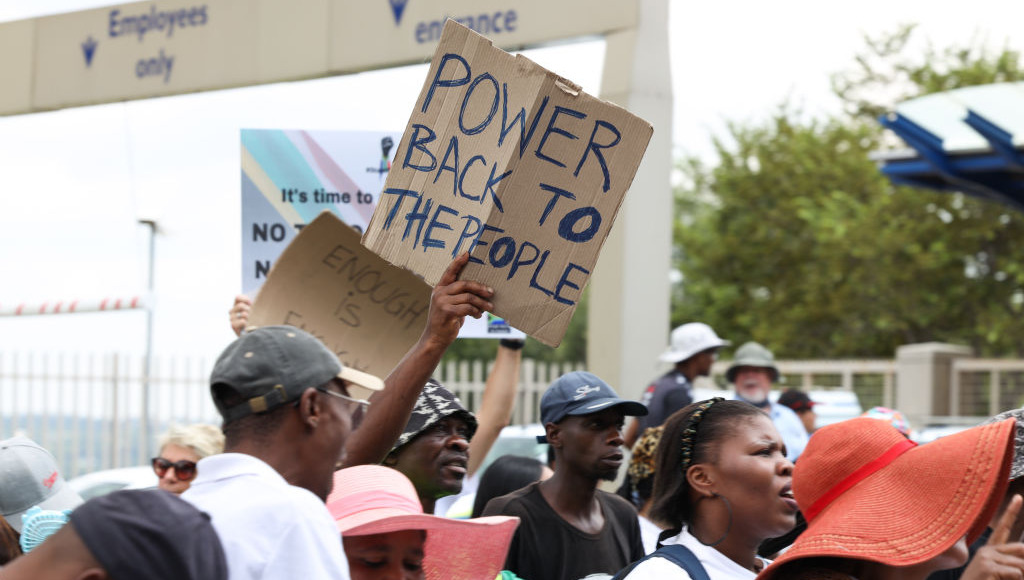
Restoring the democratic ideal necessitates more than just numerical rankings based on freedom and rights indicators. It requires a more effective approach than merely deploying election observation missions in Africa. Ideally, the continent should be able to thrive without relying on such measures(11). Democracy transcends individual elections; even the most well-organized election falls short if voter turnout is low, if competing political parties are aligned, if the competitive environment is skewed, if citizens lack awareness of the issues at stake, or if there are no avenues for redress. These challenges relate to education policy, civic engagement, and the establishment of robust institutions, often overlooked by international observers and rankings.
With its population projected to double in the next twenty-five years and a new generation eager to make its voice heard, Africa plays a crucial role in shaping the future of global democracy. The continent’s youth are passionately dedicated to engaging in public affairs. For Africa’s democracy to stand the test of time, the organization of regular elections is just one aspect. There must be respect for the rule of law, accountability, transparency, strong institutions, respect for, promotion and protection of human rights, freedom of the press and association, a decline in shrinking of the civic space(12). As Africa advances, democracy—much like a fragile yet tenacious plant—continues to establish its presence throughout the continent. From vibrant urban centers to isolated rural areas, the voices of Africans increasingly resonate with global demands for accountability, freedom, and governance that genuinely reflects the people’s desires. Despite notable progress, the continent’s democratic evolution encounters substantial obstacles that challenge the strength of its institutions(13). With 54 nations each following distinct trajectories, the quest for enhanced democracy is influenced by youthful energy, intricate socio-economic dynamics, and expanding international collaborations. In their efforts to build more robust democratic frameworks, African countries must confront several fundamental challenges such as political instability, economic difficulties, and external influences.

Dr. Pippie Hugues
Dr. Pippie Hugues is a Policy Analyst at the Governance and Democracy Division of the Nkafu Policy Institute. He holds a Ph.D. in International Law with specialty in Human Rights, Conflict and Peace building.