
Investment inflows will generate the expected level of development impact in Cameroon if the country addresses persistent challenges like regulatory inefficiencies, institutional fragmentation, and weak linkages between FDI and local production.
By Larissa Ntoubia and Dr. Adeline Nembot
Introduction
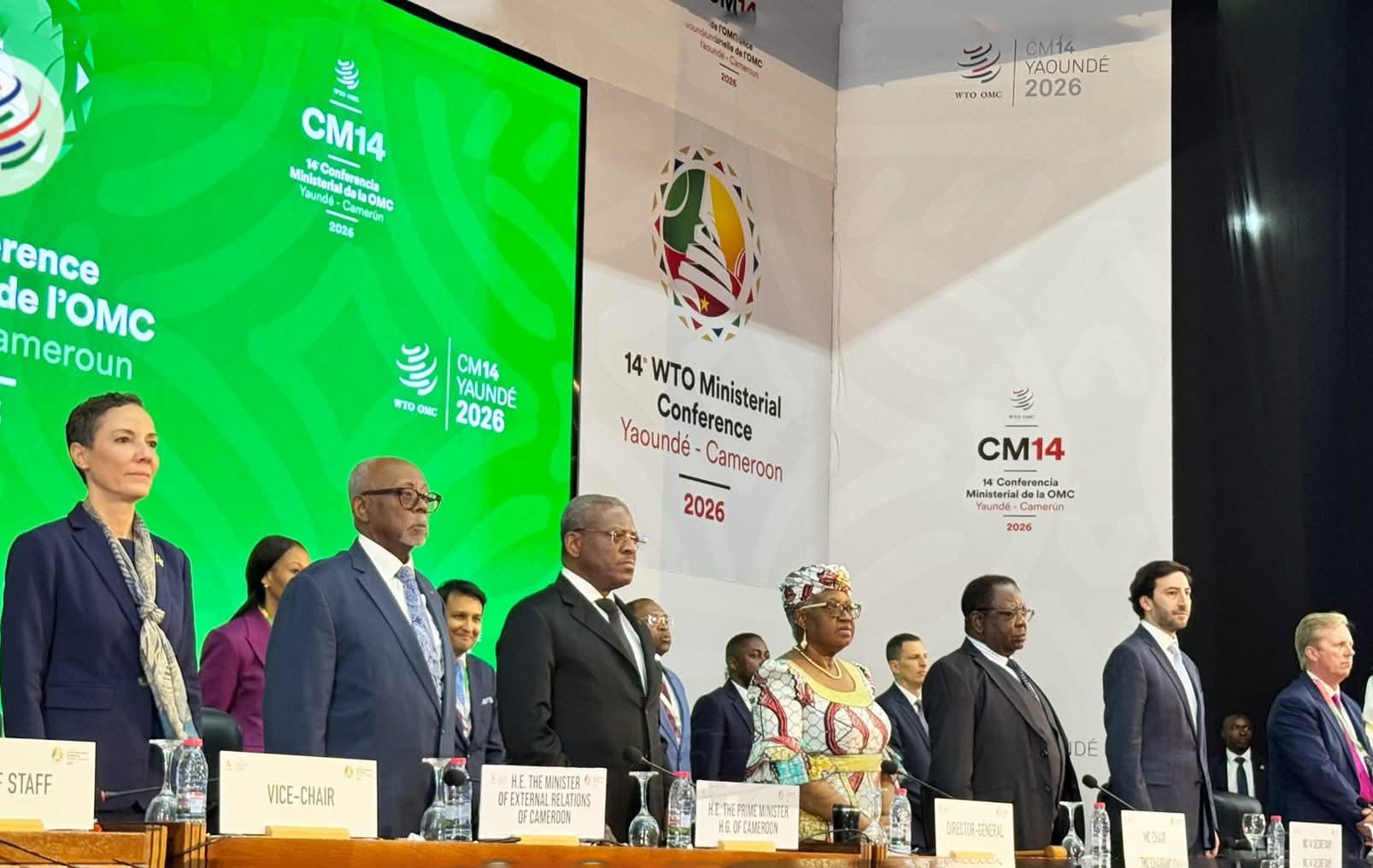
The 14th World Trade Organization Ministerial Conference (WTO MC14), held in Yaoundé, took place at a critical moment for the multilateral trading system, marked by fragmentation pressures, reform debates, and renewed focus on development-oriented trade governance. A central agenda item was the Investment Facilitation for Development (IFD) Agreement, which seeks to improve transparency, predictability, and administrative efficiency in investment processes across participating economies. The agreement supported by a large coalition of WTO members, including many developing countries does not address market access or investment protection. Instead, it focuses on reducing regulatory bottlenecks and improving governance of investment related procedures, with the aim of increasing foreign direct investment (FDI) flows, particularly into developing economies. Importantly, it includes provisions on special and differential treatment and technical assistance for implementation in developing countries.
For Cameroon, MC14 presents a strategic policy moment to align global investment facilitation reforms with national ambitions for industrialization, export diversification, and structural transformation. Investment facilitation therefore links global commitments to national development outcomes. This paper aims to assess the implications of the WTO MC14 investment facilitation agenda for Cameroon, examine gaps in Cameroon’s current investment climate that constrain structural transformation and propose policy recommendations to leverage investment facilitation for industrialization.
Cameroon’s current investment climate
Cameroon’s investment climate is characterized by persistent structural and administrative constraints that limit the country’s ability to attract and retain high-quality, productivity-enhancing investment. While the country has undertaken several reform initiatives to improve the business environment, investors continue to face challenges related to regulatory complexity, inconsistent implementation of policies, and lengthy administrative procedures. According to the World Bank Doing Business 2020 report, starting a business in Cameroon required 13 procedures and approximately 82 days, significantly above the SSA average. These bottlenecks increase transaction costs and reduce investor confidence, particularly in sectors with high transformation potential such as manufacturing and agro-processing. In addition, governance indicators highlight persistent institutional weaknesses: Cameroon ranks below the regional average on regulatory quality and governance effectiveness in the World Bank Worldwide Governance Indicators
FDI remains concentrated in extractive industries, this creates enclave investment with limited spillover benefits on the domestic economy. Data from the UNCTAD indicate that a large share of FDI inflows in Cameroon is directed toward oil, gas, and mining sectors, with manufacturing attracting a comparatively limited proportion.
The weak integration of local firms into value chains further constrains the developmental impact of investment inflows. As a result, investment is yet to drive structural transformation or diversify production.
Linking WTO investment facilitation to domestic reform
The Investment Facilitation for Development (IFD) offers a timely framework for addressing many of these structural constraints. By prioritizing transparency, predictability, and administrative efficiency, the agreement aligns closely with Cameroon’s need to modernize its investment governance architecture. However, its impact on development depends on the extent to which they are effectively internalized within domestic reform processes.
For Cameroon, this creates an opportunity to shift from fragmented investment procedures toward a more coherent and rules-based investment facilitation system. If properly implemented, WTO aligned reforms can serve as an anchor for broader governance improvements, reducing uncertainty and improving coordination across key institutions involved in investment approval, taxation, customs, and regulatory oversight. Global commitments under MC14 therefore can be used as a catalyst for domestic policy coherence and institutional modernization.
Policy gaps and institutional constraints
Despite ongoing reform efforts, several structural gaps continue to undermine the effectiveness of investment facilitation in Cameroon. First, institutional fragmentation remains a key constraint, with multiple agencies operating in parallel without sufficient coordination or data integration. This results in duplication of procedures, delays in approvals, and inconsistent investor experiences.
Second, underdeveloped infrastructure and the lack of full digitalization across investment related processes continues to create inefficiencies and reduce transparency. Investors often face unclear procedural requirements and limited access to up-to-date regulatory information, increasing perceived risk and discouraging long-term commitments. Also, investment policy remains weakly aligned with industrial policy objectives, resulting in a disconnect between capital inflows and national transformation priorities.
Finally, the limited emphasis on productivity linkages means that investment inflows have not sufficiently contributed to technology transfer, skills development, or the integration of domestic suppliers into global and regional value chains. These gaps collectively explain why investment has not yet functioned as a strong driver of structural transformation in Cameroon.
Policy Recommendations
To fully leverage the Investment Facilitation for Development agenda, Cameroon should prioritize the establishment of a unified investment governance ecosystem that consolidates investment promotion, approval, taxation, and customs procedures into an integrated digital and procedural framework. Such a system would reduce fragmentation, improve coordination, and enhance transparency across institutions responsible for investment governance.
In addition, investment facilitation reforms should be explicitly aligned with sectoral transformation priorities. Regulatory efficiency gains must be strategically directed toward agro-industrialisation, manufacturing expansion, and value chain development in order to ensure that investment contributes directly to structural change rather than remaining concentrated in low productivity sectors.
Cameroon should also strengthen investment–productivity linkages by embedding local content requirements, supplier development programs, and technology transfer mechanisms within investment approval and monitoring frameworks. This would enhance the developmental impact of FDI and support the emergence of competitive domestic enterprises.
Furthermore, the operationalization of WTO-aligned transparency reforms is essential to improving investor confidence. Publication of investment procedures, regulations, and administrative requirements would significantly reduce uncertainty and strengthen predictability in the investment environment.
Conclusion
The Investment Facilitation for Development agenda emerging from WTO MC14 represents a strategic opportunity for Cameroon to reposition its investment governance framework in support of industrial transformation. However, realizing this potential requires more than procedural improvements; it demands a deliberate alignment between global trade disciplines and domestic development priorities.
If effectively implemented, investment facilitation reforms can significantly reduce transaction costs, improve administrative efficiency, and enhance investor confidence. More importantly, they can serve as a structural lever for transforming the composition and impact of investment in Cameroon, shifting it from enclave-based capital inflows toward productive, diversified, and job-creating investment.
Ultimately, the challenge for Cameroon is not only to attract investment, but to ensure that investment becomes a driver of industrialization, economic diversification, and long-term structural transformation.

Larissa Ntoubia
Ntoubia Ngapmen Larissa, holds a Bachelor’s degree in Banking and Finance and a Master’s degree in Economics and Financial Engineering from the University of Yaoundé II Soa. She is currently a research assistant at the Nkafu Policy Institute of Denis and Lenora Foretia Foundation under the Economic Affairs Division.

Dr. Adeline Nembot
Dr. Adeline M. Nembot is an economic policy analyst in the Economic Affairs Division at the Nkafu Policy Institute. She holds a PhD in Labour and Development Economics from the Collaborative PhD Program (CPP), obtained under the auspices of the African Economic Research Consortium (AERC), a highly selective scholarship program for the best students from African universities.