
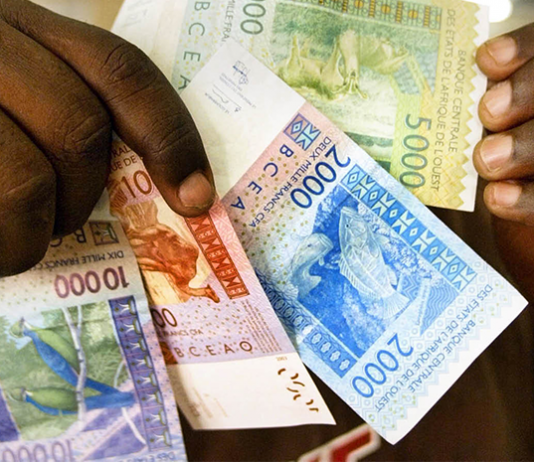


From the WTO MC14 to Action: Building Africa’s Productive Capacity through Trade, Digitalisation and...
Africa cannot rely on trade liberalization alone to achieve economic transformation; instead, it must pair AfCFTA integration with deliberate industrial, agricultural, and digital capacity-building...

Women’s Unpaid Care Work in the Context of Climate Change in Africa: The Role...
Introduction
Climate change is particularly hard on women’s unpaid work in Africa. This is because the rising temperature increases the workload of domestic and family...

The Challenges and Opportunities of Green Financing in Sub-Saharan Africa
Introduction
According to the United Nations Environmental Programme (1), green financing refers to all financial operations carried out with the aim of protecting the environment....

Do the New Digital Professions Influence Differences in Access to the Labor Market Between...
Introduction
For several decades, more and more women have entered the labor market. This improves their investment in human capital and their ambitions in terms...

Tobacco tax: good or bad?
Introduction
Tobacco consumption is a leading cause of death, poverty and impoverishment in the world and is seen as a threat to the world’s...
The Ripple Effects of Sino-African Relations on African Economies
“50,7 billion dollars in financing for Africa over the next three years” is the promise made by Chinese President Xi Jinping to African Heads...

Economic Impacts of a New Global Financing Aid on Sub-Saharan African Countries
Introduction
The world is challenged with multiple shocks, and Sub-Saharan Africa (SSA) is highly affected by these challenges. Due to these challenges, the chances of...

Unifying regional economic communities: Are we on track in Central Africa?
Conversation Between
Dr Jacob KOTCHO
Director of the ECCAS Common Market
&
Dr Jean Cedric Kouam
Director of Economic Affairs, Nkafu Policy Institute
Dr Jacob Kotcho, you are the Director...
From Caregivers to Change-Makers: Empowering Women’s Political Participation by Acknowledging Unpaid Care Work in...
Background
Across the globe, the evidence of women's care labor is unequivocal: women bear the majority (76.2%) of unpaid care work. In many societies, unpaid...

Training-Employment Mismatch in Cameroon: The Role of Emerging Web Professions
Introduction
The issue of professional integration for young graduates remains a significant challenge in Cameroon, particularly given the numerous diplomas awarded by various professional and...
Latest article
No Factories, No Trade: CEMAC Faces the Challenge of Structural Transformation
Highlights
No CEMAC member State accounts for more than 10% of exports to the continent.
The free movement of people, planned since 1999, has...

Burkina Faso’s New Study Abroad Decree: When Education Becomes a Political Privilege
By Enowbachem Agbortanyi
A Policy Framed as National Development
Burkina Faso's latest decree requiring every student wishing to study abroad to obtain government authorization marks more...

From the WTO MC14 to Action: Building Africa’s Productive Capacity through Trade, Digitalisation and...
Africa cannot rely on trade liberalization alone to achieve economic transformation; instead, it must pair AfCFTA integration with deliberate industrial, agricultural, and digital capacity-building...
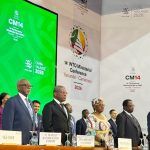
Leveraging WTO MC14 Investment Facilitation for Development to Accelerate Structural Transformation in Cameroon
Investment inflows will generate the expected level of development impact in Cameroon if the country addresses persistent challenges like regulatory inefficiencies, institutional fragmentation, and...

Rethinking Commercial Leadership in Central Africa: Addressing the Challenges of Informality, Inequality, and Digital...
Informality, inequality, weak digital infrastructure, and limited productive financing continue to marginalize ECCAS economies, while calling for coordinated reforms to achieve inclusive and transformative...

From Market Expansion to Value Addition: Repositioning CEMAC’s Trade Strategy for Structural Transformation
Repositioning CEMAC’s trade strategy requires a decisive shift from commodity-based market participation toward value-driven production systems, where trade, industrial policy, and regional integration are...