
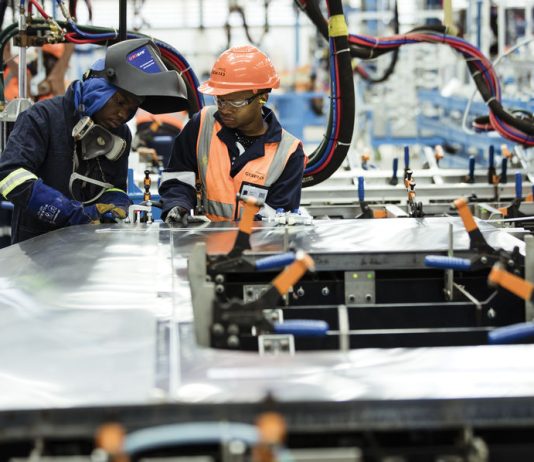
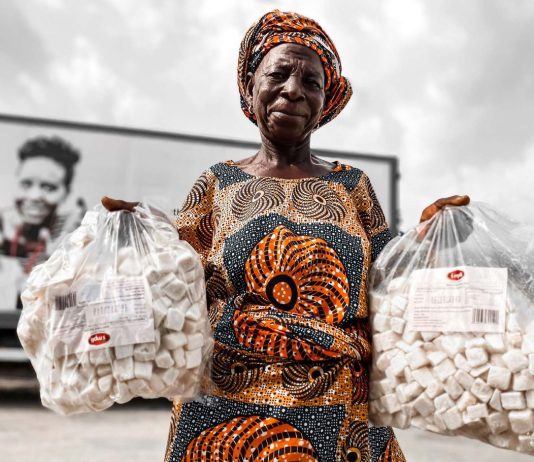

Advancing Regional Digital Sovereignty: Policy Responses to AI-Driven Data Colonialism in Africa
Advancing regional digital sovereignty in Africa requires coordinated policy responses to AI-driven data colonialism, ensuring that data governance, infrastructure, and innovation ecosystems are locally...

Cloud Infrastructure: The Missing Foundation of Regional Integration in Central Africa
Cloud infrastructure remains the overlooked backbone of regional integration in Central Africa, underpinning cross-border data flows, digital trade, and institutional interoperability essential for a...

The water crisis in Africa will not be solved by new loans, but by...
Highlights
Financial experts have made it clear: before considering new debt, governments must improve the management of their water services by plugging leaks and...

Supply Chain Reconfiguration in a Fragmenting World
Africa’s Industrial Future at a Strategic Crossroads
By Dr Salim Ahmed Vessah
For decades, globalization promised efficiency. Firms fragmented production across borders, locating activities wherever labor...

The Illusion of the Free Market: Why Cameroonian Agriculture requires a strategic State
Main Policy Highlights:
Stabilizing agricultural incomes: Establish a smoothing fund and floor price mechanisms to protect cocoa producers from price volatility.
Industrial revitalization through...

The Exit of European Banks from Africa: Future Implications for the African Continental Free...
Introduction
The African Continental Free Trade Agreement (AfCFTA) is a landmark initiative that unites 1.3 billion people across 55 nations, collectively boasting a GDP...

Illicit Financial Flows in the age of Digitalisation in Africa: Opportunities and Challenges
Introduction
In recent years, countries have witnessed the widespread adoption of new digital technologies for financial transactions, including electronic payments, mobile and online banking, e-commerce,...

Training-Employment Mismatch in Cameroon: The Role of Emerging Web Professions
Introduction
The issue of professional integration for young graduates remains a significant challenge in Cameroon, particularly given the numerous diplomas awarded by various professional and...
From Caregivers to Change-Makers: Empowering Women’s Political Participation by Acknowledging Unpaid Care Work in...
Background
Across the globe, the evidence of women's care labor is unequivocal: women bear the majority (76.2%) of unpaid care work. In many societies, unpaid...

Unifying regional economic communities: Are we on track in Central Africa?
Conversation Between
Dr Jacob KOTCHO
Director of the ECCAS Common Market
&
Dr Jean Cedric Kouam
Director of Economic Affairs, Nkafu Policy Institute
Dr Jacob Kotcho, you are the Director...
Latest article
No Factories, No Trade: CEMAC Faces the Challenge of Structural Transformation
Highlights
No CEMAC member State accounts for more than 10% of exports to the continent.
The free movement of people, planned since 1999, has...

Burkina Faso’s New Study Abroad Decree: When Education Becomes a Political Privilege
By Enowbachem Agbortanyi
A Policy Framed as National Development
Burkina Faso's latest decree requiring every student wishing to study abroad to obtain government authorization marks more...

From the WTO MC14 to Action: Building Africa’s Productive Capacity through Trade, Digitalisation and...
Africa cannot rely on trade liberalization alone to achieve economic transformation; instead, it must pair AfCFTA integration with deliberate industrial, agricultural, and digital capacity-building...

Leveraging WTO MC14 Investment Facilitation for Development to Accelerate Structural Transformation in Cameroon
Investment inflows will generate the expected level of development impact in Cameroon if the country addresses persistent challenges like regulatory inefficiencies, institutional fragmentation, and...

Rethinking Commercial Leadership in Central Africa: Addressing the Challenges of Informality, Inequality, and Digital...
Informality, inequality, weak digital infrastructure, and limited productive financing continue to marginalize ECCAS economies, while calling for coordinated reforms to achieve inclusive and transformative...

From Market Expansion to Value Addition: Repositioning CEMAC’s Trade Strategy for Structural Transformation
Repositioning CEMAC’s trade strategy requires a decisive shift from commodity-based market participation toward value-driven production systems, where trade, industrial policy, and regional integration are...