Introduction
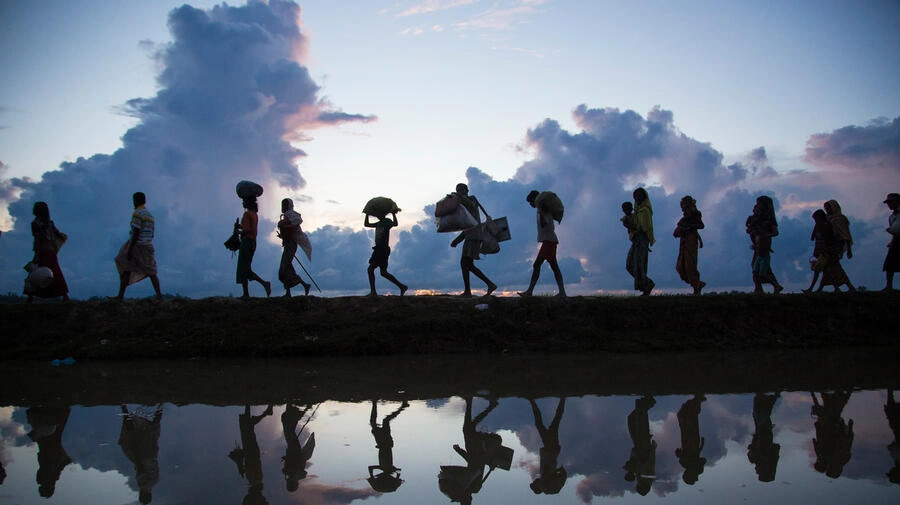
Forced displacement and poverty are two major challenges that have a substantial impact on Africa’s socio-economic landscape. The continent is home to numerous challenges such as armed conflicts, environmental degradation, and political/economic instability which lead to high rates of forced displacement. According to the UNHCR report in 2023, over 44 million people were displaced in Sub-Saharan Africa, up from 38.3 million at the end of 2021. Out of the 44 million displaced, 60% are IDPs (1). Countries like Sudan, the Democratic Republic of Congo, Somalia, South Sudan are at the forefront, where massive displacements have resulted from both internal conflicts and external pressures. This is a huge setback for attaining the United Nations Sustainable Development Goal One, which aims to end poverty in all its forms everywhere by 2030, as well as the African Union Agenda 2063. The enormity and complexity of the problem, and the goal to “leave no one behind”, makes it crucial to fully understand the cyclical and negative relationship between forced displacement and poverty, and to develop effective policy and program responses.
Overview of forced displacement in Africa
Forced displacement is “involuntary or coerced movement from a person’s region or country due to persecution, conflict, generalized violence, human rights violations or the adverse effects of climate change, environmental degradation, or disasters” (2). The Africa Center for Strategic Studies notes that for the thirteenth year in a row, the number of Africans forcibly displaced due to conflict and oppressive governments has increased to above 45 million (3). Currently, nine (9) African countries namely; Sudan, the Democratic Republic of the Congo (DRC), South Sudan, Somalia, Nigeria, Ethiopia, , Burkina Faso, Cameroon, and the Central African Republic (CAR), account for more than 90 percent of the total forcibly displaced population in Africa (4).
The primary cause of forced displacement on the continent has always been conflict. Across West and Central Africa, 12.7 million people have been displaced as a result of political unrest, violent extremism, conflicts between communities over limited resources, and climate change. The Boko Haram insurgency, for example, which has affected Nigeria, Chad, Niger, and Cameroon, has resulted in widespread displacement across the Lake Chad Basin. By the end of 2021, conflict, droughts and flooding had forced 19.2 million people from their homes across East Africa, the Horn of Africa, and the Great Lakes (5).
More than 98% of African refugees and asylum seekers are hosted by African nations; some of which are experiencing conflicts themselves. Examples include Chad, Ethiopia, Sudan, DRC, Cameroon, South Sudan and Niger. East African nations like Uganda, Kenya and Tanzania, are home to a large number of refugees from nearby countries. Other African countries hosting over one hundred thousand (100,000) refugees and asylum seekers include Egypt, South Africa, Mauritania, Rwanda and Algeria (6). Women and children constitute a large proportion of the displaced population, and are often vulnerable to dangers such as gender-based violence and exploitation, as they move from rural to urban areas in search of safety and opportunities.
Despite the role played by the UNHCR, as well as other international, regional and local organizations, in providing protection and immediate relief services to displaced persons, the latter still face several challenges ranging from access to healthcare, education, clean water, sanitation facilities, as well as stigmatization within their host communities.
Exploring the link between forced displacement and poverty
Poverty as defined by the World Bank is “pronounced deprivation in well-being”. The poor are considered as those who do not have enough income or consumption to put them above some adequate minimum threshold. In 2024, an estimated 429 million people in Africa were living in extreme poverty, with the poverty threshold at 2.15 U.S. dollars a day. According to the concept, there are equally non-monetary dimensions of poverty. For example, people could be house-poor, food-poor or health-poor (7). The extensive and complex effects of forced displacement greatly exacerbate the cycle of poverty throughout the continent. Both internally displaced people and refugees are mostly from and are hosted in developing countries. This presents a problem, especially for the most vulnerable and impoverished, such as women, children, and youth. The fact that the displaced frequently go for extended periods of time without opportunities causes them to sink even deeper into poverty.
Forced displacement interacts with poverty in many ways. First of all, people who are forcibly displaced usually lose their belongings, finances and social networks and now lack access to housing, food, clean water, education and health care. Due to this loss, the forcibly displaced tend to rely on humanitarian assistance, which is sometimes insufficient or unavailable. The result is that, they become extremely impoverished and lack a clear way out of it (8). According to a World Bank study, displaced persons typically see a large decline in their levels of income when compared to their non-displaced counterparts. Another study conducted by the World Bank and the United Nations High Commissioner for Refugees (UNHCR) revealed that seven out of ten refugees were poor, using the international extreme poverty line of 1.9 USD/day in purchasing power parity (PPP). When the national poverty lines of the host nations were taken into consideration, the percentage of impoverished refugees increased to nine out of ten (9). In the Central African Republic (CAR), for example, the overall poverty rate for internally displaced people is 76%, according to the World Bank’s 2023 poverty assessment for the country (10).
Additionally, forced displaced people tend to be health-poor. People who have been forcibly displaced often reside in unsanitary environments with little access to clean water, food and healthcare services. Because of the overcrowding and poor medical facilities in refugee camps, outbreaks of diseases like cholera and measles are frequent (11). Poor health conditions affect individuals’ potential for economic advancement, as they are unable to work or seek educational opportunities.
Again, forced displacement leads to disruption in children’s education due to instability or lack of finances. This can have long-term implications on their future earning potential; perpetuating a cycle where future generations remain trapped in poverty.
Furthermore, forced displacement leads to competition over scarce resources in host communities. This can lead to tensions between the forcibly displaced and the host populations fighting for limited resources, making efforts to alleviate displacement and poverty even more difficult.
Despite this harsh reality, it is regrettable that many forcibly displaced individuals are overlooked in poverty statistics, as they are not counted in their home countries or host communities. (12).
Policy pathways
- African nations could strengthen the legal frameworks that govern the protection of forcibly displaced persons within their countries. These frameworks should ensure that IDPs and refugees are provided a more secure environment which is necessary for their integration into host communities and economies.
- Governments could adopt and implement inclusive national development programs that take into consideration the needs of both displaced and host communities. Including displaced populations into national development programs can help address underlying causes of forced displacement, while reducing poverty and promoting stability.
- Also, governments could establish programs that ease access to microfinance, provide support for entrepreneurship and vocational training for IDPs and refugees, to provide them with skills and resources that will help reduce their reliance on humanitarian assistance and enable them contribute to economic development.
- African nations could invest in the development of infrastructure in communities hosting displaced people. This includes improvement in access to basic facilities such as decent housing, water and food supply, sanitation, healthcare and education systems for displaced and host communities.
- Conflict-affected states should enhance interstate cooperation with countries hosting their displaced populations. This is necessary to address the various challenges facing this vulnerable group of persons in host countries.
Conclusion
Even though displacements could equally have positive ramifications on host communities as displaced persons tend to significantly contribute to economic growth, forced displacement however remains a factor that contributes to increased poverty levels in Africa, as it impacts economic stability, social cohesion, and individual livelihoods. To address these issues, comprehensive approaches are required, including long-term development programs and humanitarian aid that does not only provide immediate relief, but also reintegrates displaced people into host communities and helps them rebuild their lives.

Muriel M. Kinkoh
Muriel Kinkoh is Research assistant at the Peace and Security division of the Nkafu Policy Institute. Prior to joining the Foundation, she was administrative and coordination intern at ILIAN Consulting Company Limited; supporting advocacy, peacebuilding and conflict resolution programming.