Introduction
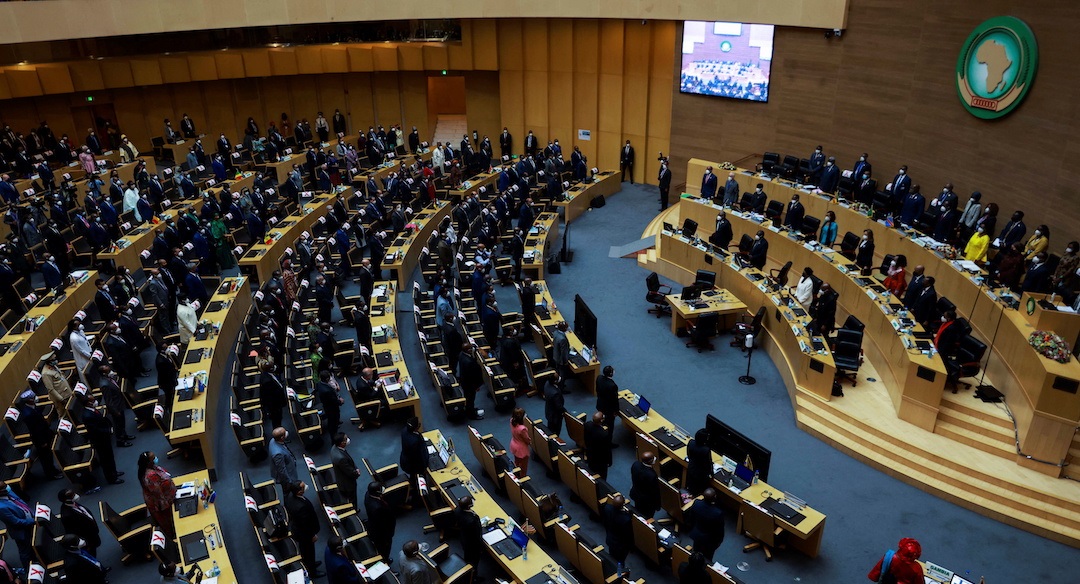
Since February 15, 2025, Mahamoud Ali Youssouf serves as the Chairperson of the African Union Commission. The former foreign minister of Djibouti succeeds the Chadian Moussa Faki Mahamat after an election where the weight of geopolitics was particularly felt, due to the principle of interregional rotation in Africa: the Eastern region presents candidates for the presidency, and the Northern region presents candidates for the vice-presidency ( 1 ). The victory of Djibouti’s candidate by acquiring 2/3 of the votes, i.e. 33 out of 49 voting countries, after 7 rounds of election to win, marked Kenya’s failure, while Algeria’s victory sealed Morocco’s defeat. As a reminder, the Chairperson of the Commission is the legal representative of the African Union (AU). The Chairperson’s actions and statements commit the entire institution, which brings together more than 50 African states. Moreover, this election comes at a particularly delicate time for the African continent. In West Africa, a series of coups have weakened political stability within states and indirectly led to the fragmentation of the regional economic community. Central Africa remains in an alarming situation with the persistence of the Anglophone crisis in Cameroon and the risk of balkanization in the Great Lakes region. In Southern Africa, Mozambique is struggling to overcome the aftermath of post-election violence, and in East Africa, Somalia and Ethiopia are facing major challenges in containing armed insurgencies in parts of their territories. This picture is further complicated by the need to rethink diplomatic relations with the United States under the new Trump administration. How could the election of the AU Commission chairperson affect the AU’s geopolitical positioning in this context? This paper tends to analyze the capacity for political and diplomatic actions of the AU Commission’s new Chairperson (I) and to identify the challenges and opportunities of this election, which could significantly influence the trajectories of development and emergence of the African continent (II).
I – The AU Commission Chairperson: faced with challenges of regional integration
For the general public, the AU Commission Chairperson is the number 1 authority of the African continental organization. He embodies not only the administrative direction of the organization, but also its political vision and its capacity to respond to contemporary African challenges. As the AU’s Chief Executive, he has the power to influence the continent’s capacity for integration, its regional geopolitical dynamics and its ambitions for structural transformation. His scope of action is quite clear when it comes to assessing the previous Chairperson. Moussa Faki Mahamat.the outgoing Chairperson of the Commission, is credited with the AU’s admission as a member of the G20 and the implementation of the African Continental Free Trade Area agreement concluded in 2018 ( 2 ). Some believe that a more proactive action on his part could have made the AU more decisive in managing the armed conflict in Goma ( 3 ), in mediating the Sudanese crisis ( 4 ) or in keeping certain states within the Economic Community of West African States (ECOWAS). This means that the personality of the president of the AU Commission can make a difference. Nkosazana Dlamini-Zuma,during her era as Chairperson of the AU Commission, had succeeded in giving a central place to issues related to gender and women’s rights in the AU’s programs ( 5 ). However, it must be remembered that despite holding the strategic position as a leading figure of the AU, the Chairperson of the AU Commission has limited prerogatives.
Faced with the challenges of regional integration, the highest official of the AU Commission and the chief authorizing officer of its budget has little capacity for action. His challenges are mainly at the economic (creation of an intra-African market and development of cross-border infrastructure (roads, railroads, electricity grids) to facilitate trade…) and political level (strengthening the rule of law and joint management of conflicts and new forms of threat (terrorism, drug trafficking)…). To address them effectively, the AU Commission Chairperson would need the ability to steer the AU’s action in this direction. However, he remains under the authority of both the Assembly and the Executive Council. Apart from his responsibilities in terms of developing draft common positions of the Union and coordinating the positions of Member States in international negotiations, he can only act upon delegation of powers from the Assembly and the Executive Council ( 6 ). In a nutshell, the Chairperson of the AU Commission has no binding power over Member States. He can neither impose decisions on them nor exercise supranational authority that would override national sovereignty. His role is therefore limited to coordinating and facilitating the implementation of continental initiatives, with their effective implementation depending entirely on the goodwill of Member States. Former AU Commission Chairperson, Moussa Faki Mahamat coldly observes that “Although the Chairperson of the Commission is recognized in the texts as the legal representative and “Chief Officer” of the Organization, he paradoxically lacks sufficient scope to act urgently on strategic issues” ( 7 ). The Chairperson of the Commission can drive dynamics, but his action remains largely dependent on the political will of Member States and the resources at his disposal. This constitutes one of the challenges that the new Chairman of the AU Commission must overcome.
II – Challenges and opportunities of the AU Commission’s new Chairperson in driving Continental Integration
The challenges facing the Chairperson of the AU Commission are multiple: overlapping memberships in different regional organizations, the preeminence of national interests, the low effectiveness of peace and security mechanisms, amongst others. However, the election of a new leader always brings hope for change. In this case, change means addressing the structural challenges that hinder the proper functioning of the AU. Therefore, the first challenge that Mahamoud Ali Youssouf would have to face is the financial dependency of the African Union, whose budget adopted in Accra in July 2024 reveals an unbalanced financing structure. Indeed, member states and African institutions only cover 41.85% of the total budget, mainly intended for operating expenses (salaries and maintenance). The remaining 58.15% of the budget comes from international partners, who mainly fund operational programs and peace-building initiatives ( 8 ). This situation is concerning, considering that AU member states typically pay only 80 to 90% of their mandatory contributions on average ( 9 ). Restoring the AU’s financial autonomy is a crucial step in implementing a Pan-African agenda. The new Chairperson of the AU Commission therefore has the opportunity to reposition this issue at the center of the debate, by strengthening the mechanisms for levies on eligible imports. He can also exert diplomatic pressure on member states to pay their mandatory contributions entirely. There should also be a way to effectively sanction non-paying states. All of these measures can contribute to a gradual exit from external dependency, including annual targets to be achieved.
Bringing the AU closer to African populations is another major challenge. The AU remains a distant institution for many Africans. Moreover, there was little excitement around the election of the new chairperson of the AU Commission. The debate that allowed the different candidates to express their vision was broadcast live on YouTube from Addis Ababa and has fewer than 28,000 views ( 10 ) in a continent with nearly 600 million internet users in 2023 ( 11 ), meanwhile, the profiles and visions of the three candidates were available online in the five working languages of the AU ( 12 ) for months. Creating a close relationship between the AU and African citizens can be a continental priority that the new Chairperson of the AU Commission could achieve. This requires modernizing the AU’s communication strategy by making greater use of social media and digital media. The goal must be to ensure greater visibility of the AU’s concrete achievements. This task would be facilitated by integrating the history and challenges of the AU into the school curricula of member countries. For its full development, Africa needs all its children, including those in the diaspora. It would be very beneficial to further involve the diaspora in AU initiatives.
Conclusion and recommendations
The election of the African Union Commission’s Chairperson represents a decisive moment for the future of the continent. Beyond the usual considerations and challenges, the arrival of a new Chairperson opens up a range of possibilities for addressing contemporary challenges and realizing the aspirations of African populations. The challenges are certainly numerous, but two priority recommendations stand out for transforming the AU into a truly effective and representative institution.
– The first recommendation is to build the organization’s financial autonomy, a sine qua non for its capacity for action and independence of decision-making. This requires a renewed commitment from the member states to a plan for a gradual exit from external dependence. This plan will include both compliance by member states with their financial obligations and the effective implementation of innovative financing mechanisms.
– The second recommendation is to draw closer, the relationship between the AU and the African citizens. A modernized communications strategy, the integration of Pan-African issues into education, and greater involvement of the diaspora would help transform the AU into an institution that is truly rooted in the daily lives of Africans.

JENGU Guy Beaudry est doctorant à l’Université de Yaoundé II, Soa et chef du département tendances et conjonctures du Centre Africain de Recherche en Sciences Morales et Politiques (CARES-MP). Il est particulièrement intéressé par les questions de sociologie des relations internationales et les études stratégiques.