Introduction
Ghana held another successful presidential and parliamentary elections on December 7, 2024, marking the ninth general elections with two presidential run-offs that have taken place in the country since the inception of the 1992 Constitution(1).The successful conduct of the 2024 general elections, as underscored by most Ghanaians as well as domestic and international observers further demonstrates the progress of Ghana’s democracy (2). It is imperative to highlight this progress given the democratic decay (3) that is happening in West Africa with the rise of military coups in recent years (4). While Ghana continues to maintain its status as a beacon of democracy(5) or what other experts have described as a democratic bulwark in a sub-region faced with many challenges(6), the election-related violence that continues to characterize every election cycle in Ghana(7), including the recent 2024 elections, has become a source of concern for many experts.
Experts such as Jeffrey Haynes and Samuel Darkwa who have written a lot on Ghana’s democratic governance are also concerned about the lingering or unresolved challenges facing Ghana’s democracy(8). Notwithstanding, Ghanaians are very proud of their country’s sustained democratic rule for more than three decades(9).The question of interest is: What lessons can other African countries draw from the Ghanaian experience to help strengthen the continent’s democratic pathway? I address this important question from two perspectives. First, I examine Ghana’s democratic journey (Fourth Republic) since 1992. Second, I discuss and offer recommendations for lessons from the Ghanaian experience for other African countries.
Ghana’s Democratic Journey
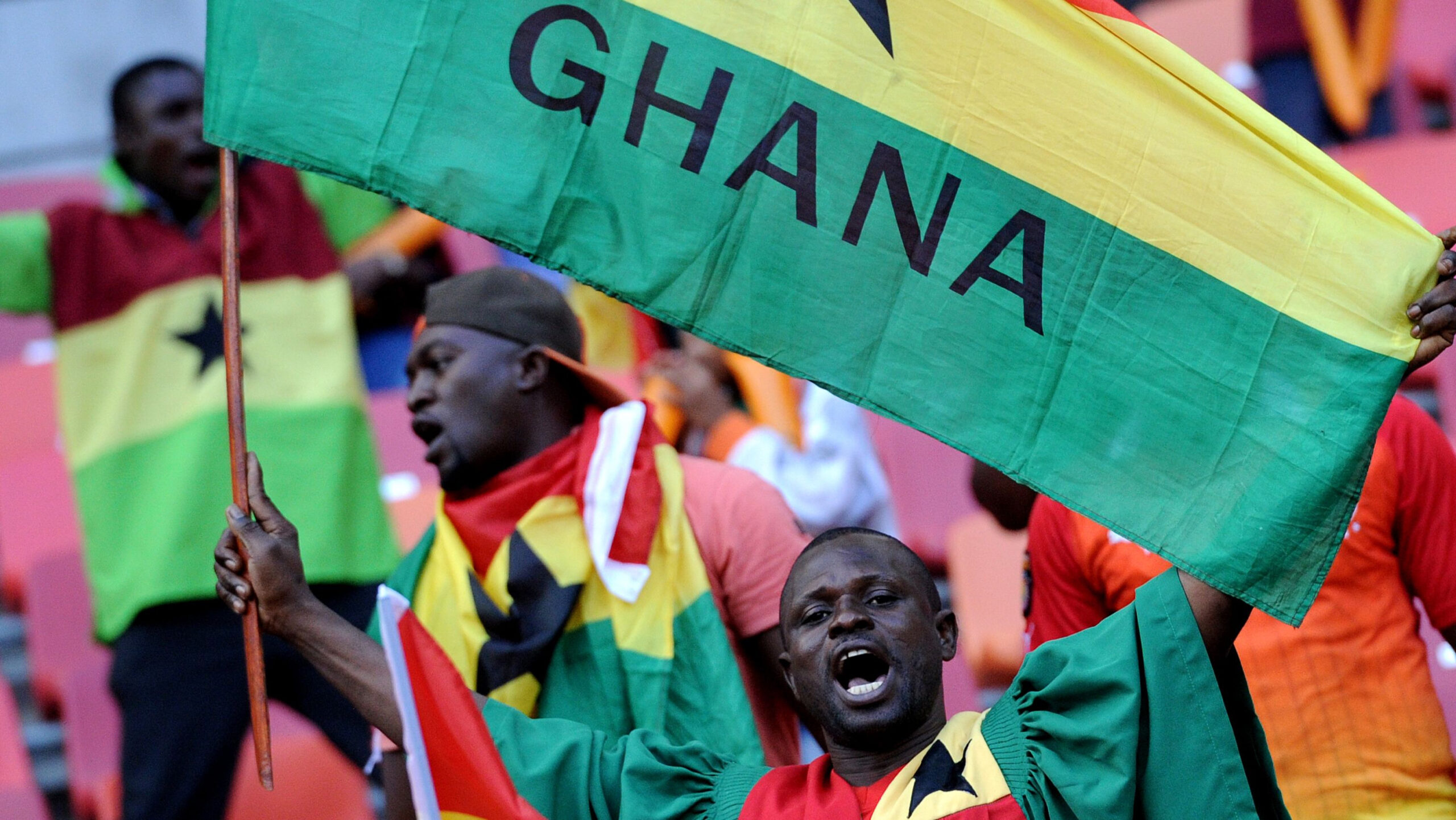
Ghana’s status as the first country in sub-Saharan Africa to gain independence from British colonial rule on March 6, 1957, has elevated its status as the “Black Star of Africa” under the Founding President, Osagyefo Kwame Nkrumah (10). The Black Star (a five-pointed black star in the Ghanaian flag) is a special symbol Ghana has adopted at independence to represent Africa’s emancipation from colonialism (11). While Ghana’s geo-political position at independence could not be compared to other nations with middle or great power status, President Kwame Nkrumah pursued an assertive African-centered foreign policy posture (12) to the astonishment of many. This was done through his support for nationalist movements across the African continent and his promotion of the ideals of Pan-Africanism and African unity (13).
As the case with other African countries such as Nigeria and Sierra Leone, Ghana’s democratic journey was disrupted by military coups from the late 1960s throughout the 1980s. Among the military regimes of the 1970s, Jerry John Rawlings’ Provisional National Defense Council-PNDC regime became the longest in the country’s political history(14). However, domestic anti-PNDC opposition groups such as the Movement for Freedom and Justice (MFJ) and other external impact, including the demise of the Cold War, forced Jerry Rawlings to transition the country to constitutional rule on January 7, 1993, marking the start of the Fourth Republic (15).
The start of Ghana’s transition to democracy in 1992 was not devoid of challenges. For example, the main opposition party, the New Patriotic Party (NPP) boycotted the 1992 parliamentary elections claiming unfairness of the process (16). Others argue that the transformation of the PNDC into the National Democratic Congress (NDC), which helped Jerry Rawlings to win the 1992 presidential election did not represent a genuine democratic change for the country(17). Despite these challenges, Ghana has sustained its democracy for over 30 years to the admiration of many in Africa and around the world.
A comprehensive assessment of Ghana’s democracy is worthwhile, but for brevity purposes, I will only highlight some of the key achievements. The Electoral Commission (EC) is one of the country’s state institutions that has emerged over time as a strong institution of state in the management of elections since 1992. In recent years, however, public trust in the EC has been declining following the unwarranted removal of the EC Chairperson and her two deputies in 2018 (18) and concerns about unnecessary delays in declaring election results. Ghanaians expect that the EC will keep improving in their responsibilities to help regain their public trust.
Other institutions such as the executive, legislature, and the judiciary have also continued to play their constitutional roles in sustaining Ghana’s democracy in the Fourth Republic. For example, all the past five Presidents of the Fourth Republic, including President Nana Akufo-Addo, who just completed his two terms in office followed the constitutional term limit. Article 66, clause 2 of the 1992 Constitution states that: “a person shall not be elected to hold office [four years for a term] as President of Ghana for more than two terms”(19). It is expected that the newly elected sixth President of the Fourth Republic, President John Mahama, will also follow the same precedent.
Given the practice of constitutional amendments where presidential term limits are often changed in some African countries such as Uganda, Rwanda, and more recently Togo, Ghana’s good example of following the constitutional requirement on term limit represent a shining example of the country’s commitment to democratic principles. Ghana’s legislature has continued to also play its role in sustaining the country’s democracy since 1992. However, a provision in the 1992 Constitution which empowers the President to select most of its ministers from Parliament has arguably weakened the legislature, especially its oversight role, hence the demand for the revision of this provision (20).
The judiciary or the court system is another branch of government that has done well in sustaining the country’s democracy. Despite the reported major cases of corruption within the judiciary in 2015 where twenty judges and magistrates were sacked after being found guilty of bribery (21), the judiciary continues to improve its image by doing their best in the administration of justice. The Supreme Court, for example, continues to play a critical role in the management of major electoral disputes as the NDC and NPP, the two dominant political parties, have continued to rely on the Supreme Court to settle their electoral petitions (22, 23). The resolution of the 2012 election petition which was filed at the Court by the opposition NPP to challenge the election victory of the NDC and the 2020 petition which was also filed by the opposition NDC to challenge the NPP’s victory in the 2020 elections further demonstrate that both parties have confidence in the judicial system to address post-election conflicts rather than resort to the use of violence to settle electoral disputes (24). Ghana’s free press, political participation, and strong civic society groups have also continued to sustain the country’s democratic practice. However, recent cases where journalists have either been threatened or attacked (25) have not shown the best of Ghana’s democratic image, given how a free media is essential in holding leaders accountable for their actions (26).
The tenets of democratic consolidation were also on display during the 2024 general elections. The presidential candidate of the opposition NDC, former President John Mahama, won the presidential elections with a massive victory over the NPP’s candidate, Dr. Mahamudu Bawumia, who served as Vice President in President Nana Akufo-Addo’s government (27). John Mahama’s huge win of 56.55% as compared to the 41.61% for Mahamudu Bawumia, shows that Ghanaian voters cannot be taken for granted since they have the power to deliver political accountability to incompetent rulers (28).
Strengthening Africa’s Democratic Pathway: Lessons from the Ghanaian Experience
A recent report by the Global State of Democratic Initiative shows that Africa is not only a home of a range of democratic experiences, but the state of democracy at the continental level remains relatively stable while there has also been declines in some countries where recent coups have occurred. Given Africa’s huge size, as the report notes, a democratic decline in a major region such as West Africa, is a sign of a serious emerging problem (29). The 2024 Freedom House report also indicates a similar trend where freedom has declined for the 10th consecutive year in 2023 in Africa, mainly driven by armed conflicts, military coups, and electoral irregularities (30). At the same time, other countries such as Zambia, Kenya, Nigeria, and Ghana, among others, are making great progress in their democratic pathways (31). In the case of Ghana, as we have seen in the preceding discussion, there are useful lessons that can help strengthen the democratic pathway of other African countries. I provide four recommendations as part of the lesson drawing idea.
Recommendations
First, I recommend that African countries need to build a strong democratic culture to help sustain the democratic future of countries on the continent. As noticeable from Ghana, Ghanaians, including the political class from different ideological persuasions, have developed a strong democratic culture where democracy is not only valued, but it has become accepted as the “only game in town.”
Second, African countries need to also develop a political culture of upholding democratic institutions, norms, and practices. Ghana has shown the value of upholding democratic institutions, norms, and practices as seen with turn-over elections and the peaceful transfer of power from one political party to another since 1992. The adherence to the two terms in office by all the past presidents of the Fourth Republic, as earlier discussed, is another example of how democratic culture has deepened in Ghana since 1992.
Third, the ability to accept election results, concede defeat, and congratulate the winning candidate and political party constitute fundamental elements of liberal democracies. The inability to practice this democratic norm or tradition often leads to mistrust, tensions, and post-election violence. Ghana’s presidential candidates have continued to practice this democratic norm or tradition throughout the Fourth Republic. The recent case where the NPP presidential candidate, Dr. Mahamudu Bawumia, conceded defeat even before the EC declared the official results of the 2024 presidential election after he noticed his party had lost the election not only defused tensions in the country, but it also underscores Dr. Bawumia’s respect for peace and commitment to democratic principles (32). This is another area where African countries can draw lessons from the Ghanaian experience.
Fourth, it is also important for African countries to continue to invest in curriculum-driven civic education to help develop a strong democratic culture across the continent (33).
Conclusion
The democratic universe is undergoing enormous stress in recent times as there appears be a growing dissatisfaction with the inability of democracy to deliver for the people(34). Ghana, like other countries in Africa, is not excluded from this challenge, but it has been able to sustain its democracy for 30+ years with a strong conviction that democracy will keep improving with time and should be the only “game in town “or the only viable form of government to uphold. With another successful 2024 general elections, Ghana is well-positioned to keep advancing its democracy for many more decades and centuries to come. While recognizing the differences in other country’s political history, experiences, and culture across Africa, it could still be argued that Ghana’s democratic progress (35) have many useful lessons for other African countries to emulate.
As one observer has noted, “Ghanaians have made their peace with democracy”(36). I share this view given how a recent Afrobarometer survey shows that 81% of Ghanaians consider multiparty elections, for that matter democracy, as the best way to choose their leaders with the support for multiparty elections also exceeding 80% for the past two decades (37). I strongly believe that other African countries can draw useful lessons from the Ghanaian experience as we make efforts as citizens of Africa to strengthen the democratic pathway of the continent.

Dr. Felix Kumah-Abiwu
Dr. Felix Kumah-Abiwu is a Non-Resident Fellow (Governance & Democracy Division) at Nkafu Policy Institute (Denis & Lenora Foretia Foundation)
Associate Professor/Director, Center for African Studies Kent State University, Kent, Ohio (USA)