By Dr. Primus Tazanu
The resurgence of diverse forms of nationalism across the world is reshaping the political environment in which the United Nations operates, raising important questions about the future of multilateral cooperation. From populist and economic nationalism to ethnic and sovereignty-driven movements, these trends have increasingly challenged international institutions, collective decision-making, and the norms underpinning global governance.
Introduction
In the coming months, the United Nations (UN) will elect its 10th Secretary-General to lead the organization into its next phase. Established over eighty years ago, the UN now faces increasing challenges, including its perceived limitations in effectively responding to conflict involving major powers. Two world powers, Russia and the United States of America, both members of the UN Security Council, have recently launched wars against weaker nations, acts of aggression disapproved by the UN. These conflicts, often framed in terms of national interest, have renewed debates on the limits of international law and the effectiveness of multilateral institutions. Recent conflicts, including developments involving Ukraine, Iran, and Venezuela, have raised important questions about the legality of state actions, the limits of international law, and the role of major powers in shaping the global order. This article examines these developments and reflects on what they reveal about the limitations of the UN, as well as the steps required to strengthen its credibility. It begins by questioning how nationalism is interpreted and applied in global politics.
Nationalisms and the Helplessness UN
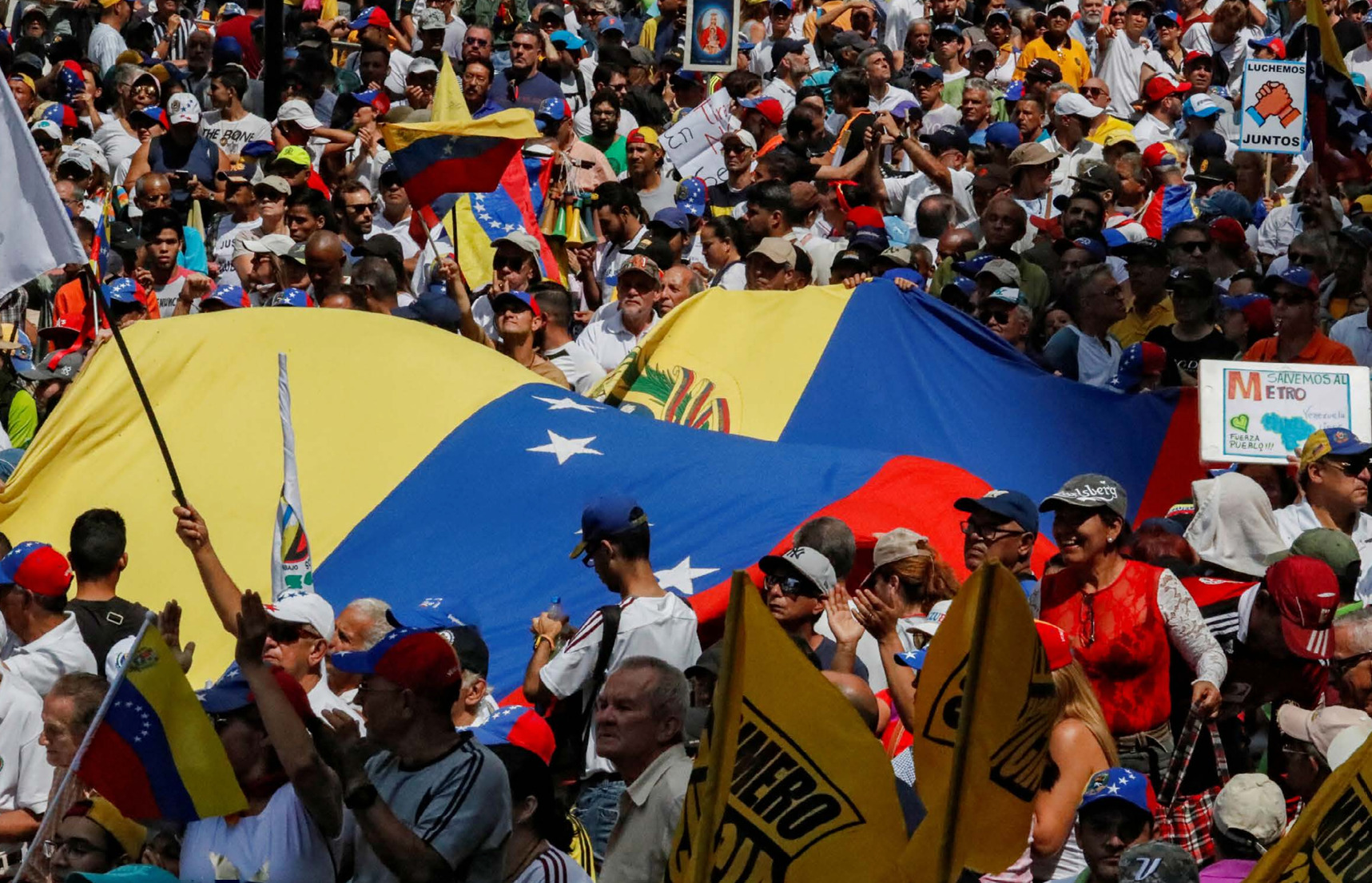
American expansionist campaigns, added to President Trump’s arm-twisting approach to international relations, are highlighting what Lord Palmerston, the 19th century British prime minister, observed more than one and a half centuries ago. Lord Palmerston stated neither friends nor enemies are permanent in international relations. Trump is reworking international alliances in favour of USA, even if it means offending allies or using force to meet American interests. He was unapologetic about his desire to exploit Venezuelan oil. At the same time, he has encouraged American firms to take advantage of the new dispensation and invest in the Venezuelan oil industry. Similarly, American war on Iran is still about natural resources and ideological differences dating back to almost half a century. In the case of Iran, aside from suspecting that the country could develop a nuclear weapon, Iranian nationalist policies since 1979 continue to infuriate USA, the reason Iran is under American sanctions that particularly target the oil industry.
America views Iranian and Venezuelan nationalism with suspicion, the reason they gave President Maduro an ultimatum to resign in November 2025. The war on Iran is meant to quell its nationalist sentiments. In fact the ultimatum and war sound more like the colonial demands by the Spanish conquistadors in the Americas. Before conquering lands, the conquistadors would arrive the outskirts of the village in twilight and read out a requerimiento, a ‘surrender or die’ document, declaring their intentions to enslave the natives, to plunder their land, and to steal their gold. Of course, in most cases, the natives did not surrender and the consequences were bloody.
Just like the conquistadors, Trump interprets native nationalism as outright rebellion, when in fact these people just want to be left alone, and to have control over their resources. Native nationalism looks inward, to protect themselves and their resources. Scholars have long observed that nationalism is often interpreted differently depending on geopolitical context, with some forms being accepted and others viewed as threats. Interestingly, the very white power structure respects and supports white nationalism. American First policy of Mr Trump is an expression of nationalism. Well, the point here is that, unlike non-white people’s nationalism that looks inward, white people’s nationalism, aside from looking inward, often acts outwardly to control and exploit lands that threaten the Westerner’s way of life.
This observation is vital to understanding why the USA, Russia, and most Western countries often feel threatened when resource-rich countries of the Global South adopt nationalism as a strategy of socioeconomic justice. Irrespective of their stance, the UN expects other countries to respect the decisions of states that express nationalist sentiments.
International Aggression and the UN Position
International law does not endorse a country intervening in another, which is why advocates of the global liberal system and institutions find it disappointing when a powerful country attacks another militarily or when it abducts a sitting president of another country. Article 2(4) of the UN Charter prohibits states using force to interfere in the internal affairs of others. On the other hand, however, the USA has justified its foreign aggression by citing the UN’s Article 51, which talks about the right to self-defence. It wants to protect its forces in the Middle East. In the case of Maduro, President Trump believed he was simply enforcing an American law because a US court in 2020 indicted the Venezuelan leader for drug and gun charges.
However, the American position downplays international procedures needed to take Maduro to a US court or to launch military strikes on Iran. International law provides two options for countries to act when they find themselves in this scenario. First, countries can use military force against others only for self-defence. Secondly, they can do so only when authorized by the UN Security Council. The USA did not comply with any of these, raising questions about the applicability of international law. The UN cannot impose sanctions on USA because the global body does not have the power to do so. Additionally, the US has veto rights in the UN Security Council, meaning Americans cannot vote to sanction themselves.
Admittedly, the American actions expose the weakness of the UN, an organization that influential countries have, at times, disregarded. Unfortunately, the UN relies on morality and a belief in gentleman’s agreement, which expects nations to exercise civility and understanding on the international arena, even amidst pain and hurt. On the contrary, powerful nations often go against these expectations when their national interest is at stake.
The Future Power of the UN
Countries with veto rights in the UN Security Council have either ignored or used the organization to justify their foreign aggression in the name of national interests. For sure, it would be impossible for the UN to stop powerful countries such as USA and Russia from taking unilateral decisions to attack weaker ones. There are however, some areas that the UN can pay attention to, if it wants to stay relevant as a global body. Some of these are:
- Reforming the Security Council in significant ways. The organization could increase the number of countries with veto powers in the Security Council, while simultaneously making all seats at the Council non-permanent. Increasing the seats could take into consideration the representational balance such as three countries from each continent.
- Reducing the executive powers of Security Council, while devolving more powers to the General Assembly. Presently, the UN General Assembly has fewer powers than the Security Council even as the former has more members.
- Lastly, the UN could encourage its members to develop regional military alliances similar to NATO. The rationale behind this is that aggressive nations would be cautious when they plan to attack a country that is a member of a military alliance.
Although these suggestions may appear difficult to implement in a world where powerful countries have strong control over the UN and could thus ignore the organization when pursuing their nationalist ambitions, the key point is that weaker members of the UN require more protection from the organization.
Dr. Primus M. Tazanu
Dr Primus M. Tazanu is a Research Fellow in Governance at the Nkafu Policy Institute .He is equally a lecturer at the Department of Sociology and Anthropology, University of Buea, Cameroon. Primus holds a PhD in social anthropology from the University of Freiburg, Germany