By Guy Beaudry JENGU JENGU
African oil megaprojects, exemplified by the Dangote Refinery, are reshaping debates on industrialization, strategic autonomy, and the role of international financial institutions. While such investments can strengthen energy security, reduce import dependence, and drive economic transformation, they also raise concerns about market concentration, governance, and equitable distribution of benefits. Achieving sustainable outcomes will require policies that balance national industrial ambitions with competition, transparency, and inclusive economic development.
Introduction
The African oil paradox fits in a single sentence: Africa exports crude oil, yet pays top dollar for the refined fuels made from its own resources. The explanation boils down to two words: refining gap. This term captures the structural mismatch between the continent’s abundant resource base and its technical inability to process crude oil into finished products locally. According to the African Energy Commission, Africa holds 7.2% of the world’s proven oil reserves. In 2019, the continent produced 9.2% of global crude output, but only 2.4% of refined petroleum products, including fuels, bitumen, and butane. Put simply, Africa refines less than one quarter of its own crude production.
Against that backdrop, the arrival of the Dangote mega-refinery in Nigeria has done much to narrow the gap, with a rated capacity of 650,000 barrels per day. That development took on urgent geopolitical relevance on February 28, 2026, when a military escalation in the Persian Gulf disrupted global supply chains by closing the Strait of Hormuz, a chokepoint on which nine of the thirteen most dependent countries are African. It was precisely in that light that the World Bank first challenged Dangote’s operations in Nigeria, then joined the International Monetary Fund (IMF) in opposing his plan to build another mega-refinery in East Africa. Both Bretton Woods institutions cited the risk of a regional “private monopoly” as the basis for their opposition.
Supporters of the IMF and World Bank position argue that excessive concentration of refining capacity within a single private entity could create market distortions, reduce competition, and potentially expose consumers to pricing risks in the long term. From this perspective, industrial development must be accompanied by competition safeguards capable of balancing strategic autonomy with market efficiency and consumer protection. The challenge for African policymakers is therefore not simply to increase refining capacity, but to ensure that market expansion occurs within an appropriate regulatory framework.
Beyond that immediate geopolitical episode, the Strait’s closure exposed just how vulnerable African economies are to supply shocks, making it urgent to examine what durable continental strategic autonomy would actually require. The central question this paper addresses is: how can African states build sufficient regional refining capacity to reduce their energy vulnerability, while avoiding private monopolies and keeping regional markets integrated? To answer it, the article first evaluates the track record of African-capital-backed regional mega-refining projects, then analyzes the regulatory tools that can balance the transitional protectionism these capital-intensive industries need against the gradual market opening required for long-term sustainability in the face of competition from foreign refined products.
Africa’s Efforts to Close the Refining Gap: Taking Stock
In a special report released in June 2022, the African Energy Commission found that African refineries were running, on average, at below 55% of installed capacity. Output consisted mainly of diesel (33% of total production), fuel oil (20%), gasoline (20%), kerosene (7%), liquefied petroleum gas (2%), and other kerosene derivatives (2%). While most African oil producers have some refining operations, the continent’s capacity was overwhelmingly concentrated in North Africa (57%) and Southern Africa (24%); West, Central, and East Africa together accounted for less than 20% of total output. At the time of that report, just four countries; Egypt (24%), Algeria (20%), South Africa (16%), and Nigeria (14%), held three quarters of Africa’s total installed refining capacity.
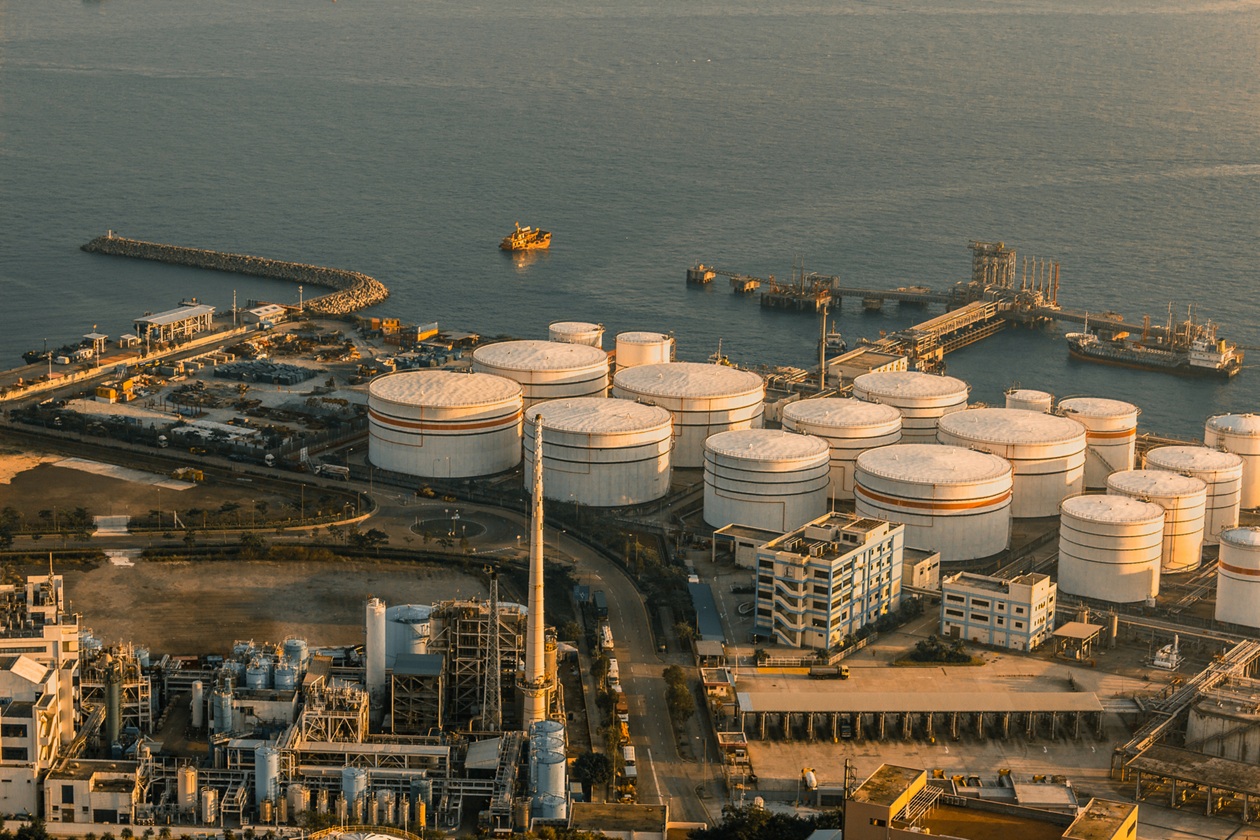
The Dangote Refinery’s commissioning in January 2024 set off a major reshaping of the oil sector across West Africa. Situated in the Lekki Free Trade Zone outside Lagos, Dangote Refinery is the world’s largest single-train refinery, designed to process up to 650,000 barrels per day, a figure pushed to 700,000 barrels per day during performance testing. It produces unleaded gasoline, diesel, kerosene (jet fuel), and polypropylene. The refinery has allowed Nigeria to flip from a net fuel importer to a net exporter, supplying several regional economies including Cameroon.
Since the outbreak of fighting in the Middle East, Dangote’s public messaging has focused squarely on preventing fuel shortages across the continent. In the company’s own words: “By supplying neighboring economies and other countries, the Dangote Refinery should help strengthen energy security across West, East, and Central Africa“. On a technical level, the refinery doesn’t just address the refining gap, it also solves a persistent problem faced by African refiners: the inability to produce low-sulfur fuels that meet international standards such as the Euro-5 specification. The refinery has already signaled a planned shift to Euro-6 fuel production. It supplies domestic markets and exports to countries in Africa and Europe, including the United Kingdom, France, and the Netherlands, as well as to the United States and Saudi Arabia.
This state of affairs creates a paradox for Africa: the Dangote Refinery is simultaneously a major industrial breakthrough and a potential new source of energy dependence. If it comes to hold an absolute monopoly, who besides Aliko Dangote would have the power to set fuel prices across the continent?
Regulating Africa’s Oil Market: From Transitional Protectionism to the Post-oil Era
The core challenge the Dangote case raises is market concentration. A refinery that can supply multiple countries wields enormous market power, enough to set both prices and supply terms. That is exactly the danger the World Bank flagged in April 2026. So how do you build sufficient regional refining capacity without locking in dominant-position players?
The answer isn’t to block big industrial actors from emerging; Africa needs them. The goal should be to put in place a regulatory framework for the African petroleum market that can attract competitive industrial capacity to the continent while guarding against rent-seeking and monopoly power that would hurt African consumers and economies. This is about more than adding refining capacity. It’s about building an African energy market that can withstand global geopolitical shocks without creating new internal dependencies. The right approach is to give refining industries temporary protection so they can reach critical scale, while simultaneously building strong competition, transparency, and regional integration mechanisms. This article proposes three concrete policy measures to achieve that.
Implement Time-Limited Industrial Protectionism at the National Level
One of the biggest structural hurdles for African refining is competition from fully depreciated foreign refineries, especially in the Middle East and Asia. In a new African refinery’s early years, governments may legitimately use local sourcing requirements and temporary tariffs on refined products that are already available domestically. However, this support must be strictly time-limited, five to ten years, and tied to clear performance milestones: refinery utilization rates above 75%, steady growth in regional exports, and a requirement to produce Euro-5 or better fuels.
Build an Integrated African Petroleum Products Market at the Regional Level
Africa’s challenge with petroleum products isn’t just a shortage of refineries; it’s also the severe fragmentation of its markets. Building an integrated regional petroleum products market is therefore a categorical imperative. The African Continental Free Trade Area (AfCFTA) offers the right institutional framework for this, which means developing an African competition policy that positions the continent to compete against global refiners. Within that framework, national and regional competition authorities should have the power to monitor prices, sanction abuses of dominance, and ensure non-discriminatory access to infrastructure. Over the longer term, establishing a continental competition authority under the AfCFTA umbrella would be a game-changer.
Prepare the Continent for Its Energy Transition
African petroleum policy can no longer be designed without regard to the global energy transition. Regulatory frameworks should direct a share of refining revenues toward financing hydroelectric projects, renewables, and transportation infrastructure. The goal is to use today’s oil revenues to build tomorrow’s post-petroleum economy.
Conclusion
Africa’s refining capacity remains unequally distributed and chronically underutilized. The Dangote Refinery represents a step-change in scale that could substantially reduce the continent’s dependence on imported fuels. Yet that industrial success also creates a new risk: over-reliance on a single private actor. The challenge for African policymakers is no longer just about producing more; it’s about governing the regional energy market. Developing heavy industries does require temporary support, but those protections must be time-limited and benchmarked against clear performance targets. Three strategic directions stand out: transitional industrial protectionism at the national level; building an integrated African petroleum products market through the AfCFTA; and getting ahead of the continent’s energy transition.

JENGU Guy Beaudry est doctorant à l’Université de Yaoundé II, Soa et chef du département tendances et conjonctures du Centre Africain de Recherche en Sciences Morales et Politiques (CARES-MP). Il est particulièrement intéressé par les questions de sociologie des relations internationales et les études stratégiques.