Highlights
- No CEMAC member State accounts for more than 10% of exports to the continent.
- The free movement of people, planned since 1999, has still not been implemented.
- The manufacturing sector contributes only 10.3% to the region’s GDP.
- The completion of logistics corridors, the development of regional supply chains, community preference, and the effective implementation of free movement are among the conditions necessary to initiate beneficial structural transformation.
Introduction
More than ten years after the AfCFTA came into effect, CEMAC countries are struggling to develop their intra-African trade. The available data is cause for concern. ECOWAS and COMESA are performing better, for, their member States export more than 25% of their total exports to Africa. In the CEMAC zone, no country exceeds 10%. Intra-regional trade represents only 3% of the region’s trade volume, compared to 12% for ECOWAS. This gap reflects a structural reality. Low productive capacity, political instability, limited movement of people and goods, inadequate logistics corridors, and persistent dependence on raw materials characterize these economies. As a result, CEMAC consistently ranks at the bottom in terms of regional economic dynamics in Africa. This lag raises several questions. It is worth examining to what extent the delay in structural transformation explains the weakness of intra-African trade in the region.
The burden of resource dependence
The economies of the CEMAC region depend on oil, raw timber, and minerals. This extract-and-sell model does not require regional trade: a port and a foreign buyer are sufficient, which explains the weakness of intra-CEMAC trade. Conversely, ECOWAS, less reliant on resource rents, has developed processed agriculture, services, and SMEs oriented towards Abidjan, Dakar, or Lomé. It has leveraged historical trading networks and a dynamic diaspora. This constraint has thus stimulated its integration. To catch up, CEMAC must generate a similar dynamic by leveraging its own productive and commercial strengths.
When borders remain too restrictive
On the paper, the AfCFTA has cancelled customs duties, but on the ground, the reality is different. On the Douala-N’Djamena corridor, trucks still spend four to six days at border checkpoints, incurring costs that can reach 30% of the goods’ value. Unofficial fees accumulate. Standards vary from one country to another. A product manufactured in Cameroon faces obstacles entering Gabon. The CEMAC Convention established free movement of goods since 1999. Twenty-five years later, a Congolese entrepreneur still needs a visa to invest in Malabo. The free movement of people is a prerequisite for trade.
What to produce, and for whom?
Trade demands a competitive supply, yet the CEMAC region imports textiles, rice, and medicines from Asia and Europe due to a lack of robust local industries. The manufacturing sector, which is neither diversified nor competitive, represents only 10.3% of GDP, compared to 13 % in Côte d’Ivoire and 14% in Senegal. Without productive capacity, the countries import goods collectively but do not export to one another, thus limiting intra-regional trade. Structural transformation has failed: the workforce remains concentrated in subsistence agriculture and the informal sector, instead of shifting toward modern industry and services. Without factories and regional value chains, the AfCFTA cannot fully benefit the CEMAC region.
Instability comes at a high cost
Insecurity in the Lake Chad Basin, tensions in the Central African Republic, and political instability are hindering the development of trade corridors. No investor or transporter is willing to take a risk on disrupted routes or have their goods looted: stability remains a prerequisite for trade. However, some progresses have been made. The bridge over the Logone River, inaugurated in 2025, has halved travel time between Yagoua and Bongor, facilitating the Cameroon-Chad corridor. The industrial port zone of Kribi is attracting cocoa and timber processing plants. The cocoa processing sector is growing in Cameroon, with 35% of beans processed locally, compared to 15% ten years ago. These advances, while still limited, demonstrate that regional development is possible despite the crises.
Actions to be taken
The agreements provide only a framework; their effective implementation is crucial. The AfCFTA and the CEMAC offer this framework. It is up to the member states to make it a reality. Three areas are priorities.
Firstly, improve physical and administrative connectivity. This requires completing the N’Djamena-Douala corridor, modernizing the port of Kribi, digitizing customs procedures, and harmonizing standards. A truck must be able to travel from Libreville to Bangui without incurring multiple tolls.
Secondly, developing regional value chains. Five sectors appear promising at the regional level: processed wood, agri-food, construction materials, pharmaceuticals, and the digital economy. Common incentives, cross-border special economic zones, and a preference for “Made in CEMAC” products in public procurement could stimulate local production.
Thirdly, the free movement of persons established in the CEMAC Convention must be effectively implemented. Implementation should no longer be delayed. A CEMAC passport, a community residence permit, and the mutual recognition of certificates would facilitate the mobility of entrepreneurs and skilled workers.
Conclusion
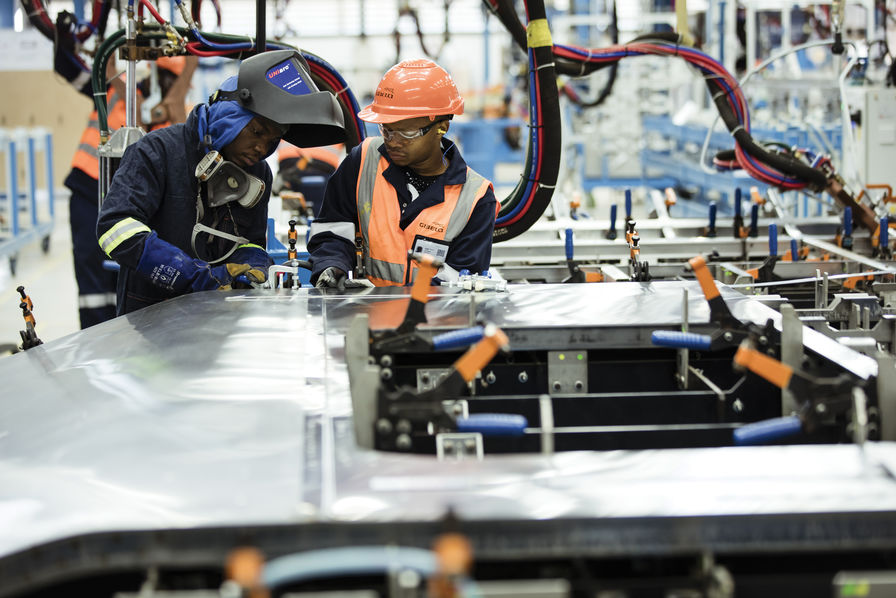
Structural transformation requires more than promises. It requires technical schools to train welders and programmers, as CEMAC’s human capital is the weakest in Sub-Saharan Africa. Reliable access to electricity for SMEs remains limited, and credit for light industry is lacking. This is a difficult but vital undertaking. ECOWAS and COMESA are already implementing targeted policies; the CEMAC region can draw inspiration from them. With the AfCFTA and its 1.4 billion consumers, the opportunity is historic. If intra-African exports are capped at 10%, the fault lies with the member states, not the continental framework. It is now time to set a deadline to close this gap.