Main Policy Highlights:
- Stabilizing agricultural incomes: Establish a smoothing fund and floor price mechanisms to protect cocoa producers from price volatility.
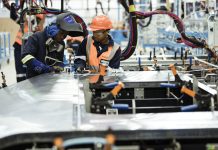
- Industrial revitalization through PPPs: Refurbishment of idle processing units,, such as SCAN in Foumbot, through public-private partnerships to absorb production surpluses and reduce the trade deficit.
- Sovereignty through AgriTech: Utilizing technological innovation and index-based microinsurance to reduce speculative intermediaries and sustainably secure farmers’ incomes.
Introduction: The structural vulnerability of a liberal model
Cameroon is currently at a decisive turning point in its development policy, torn between the import-substitution ambition enshrined in the SND30 (National Development Strategy 2020) and the persistent vulnerability of its producers to global markets. The current crisis in the cocoa sector perfectly illustrates this paradox. Just two years ago, euphoria reigned in the production areas. With a kilogram of cocoa sold for up to 6,000 FCFA, the “Cameroonian model” of total liberalization was presented as a continental success story. But since the beginning of 2026, prices have plummeted below 2,000 FCFA, plunging producers into despair. This cycle of instability, sometimes marked by scenes of deliberate destruction of plantations, is not simply a temporary crisis. It reveals the limitations of a liberalization model lacking stabilization mechanisms. Without safety nets, our farmers are exposed to the volatility of the London and New York stock markets, whose dynamics and risks they do not control.
- State disengagement and failure of transformation
2.1 The trap of liberalization without protection
Can we actually expose the most vulnerable producers to global free trade without any form of protection? In other countries, the agricultural sector is heavily regulated.
- The European Union, with the CAP established in 1962, relies on direct income payment mechanisms and stabilization funds to guarantee the viability of its farms in the face of market fluctuations.
- The United States uses Farm Bills to provide subsidies to offset price drops, thus ensuring a vital minimum wagefor farmers.
In Cameroon, liberalization has unfortunately been accompanied by a near-total disengagement of the State. Lacking stabilization funds and floor prices, agriculture has become a speculative activity where each harvest is a risky gamble. This lack of regulation directly impacts the trade balance, whose structural deficit exceeded 1,400 billion FCFA in 2024. Every ton of cocoa beans sold off cheaply or of perishable goods left unsold represents a net loss of foreign currency and a further erosion of our economic sovereignty.
2.2 The challenge of local processing: The case of SCAN
The second flaw in the current model lies in the lack of local processing. The example of the Société des conserveries alimentaires du Noun (SCAN) in Foumbot is revealing. Formerly an industrial unit capable of processing 320 tons of tomatoes per day, it has been idle since the early 2000s.
Officially, SCAN closed up due to a shortage of raw materials, a paradox in one of the country’s most productive agricultural regions. A fully operational SCAN would absorb surpluses, stabilize prices, and prevent producers from selling their harvests at a loss or letting them rot. Processing is not a luxury: it is a condition for economic survival. Processing our grains into semi finished products would reduce our dependence on imports and avoid exporting raw materials only to later buy finished products at exorbitant prices in return.
2.3 Recovery Strategies: Partnerships and Digital Innovation
The State can no longer play a minor or merely an advisory role. Importing tomato paste while our own harvests are being lost is economically inconsistent and a betrayal to our farmers. Budgetary constraints are real, but they should no longer be used as a reason for inaction. The role the State plays must evolve: it must become an architect and regulator rather than a solitary manager.
- Public-Private Partnerships as a Lever : Industrial revitalization, particularly in a polelike Foumbot, can be supported by management or lease-management contracts awarded to high-performing local industrial companies. These partners provide rigorous management and capital, while the State guarantees legal security and oversight of the sectors.
- AgriTech as a modern safety net: Technological innovation, or AgriTech, offers concrete solutions for disintermediating markets. Tools such as digital warehouse receipt systems (allowing the use of inventory as collateral) or weather-based index-based microinsurance can protect farmers against climate and price shocks without placing an excessive burden on public finances. These digital instruments make it possible to eliminate speculative intermediaries and stabilize incomes independently.
These instruments, already used in other parts of Africa, would strengthen the autonomy of producers and reduce dependence on budgetary subsidies.
Conclusion: A call to strategic action
It is high time to take action. Cameroonian producers are not longing after speeches, but after a predictable market and functioning infrastructures. The success of our development rests on one undeniable fact: we must transform our current vulnerability to global market fluctuations into a sovereign strength. This requires a strategic State, capable of mobilizing public-private partnerships, modernizing supply chains, and leveraging AgriTech to stabilize incomes and revitalize local processing. The result: a healthy trade balance, a revitalized rural world, and renewed hope for a generation that should never have to choose between the land of their ancestors and exile. Without this commitment to protecting our workforce and developing our country, the dream of import substitution will shatter against the reality of abandoned fields.