



The Role of International Organizations in Promoting Democratic Governance in Central Africa
Introduction:
Long criticized for their poor governance, African countries, particularly those in Central Africa, have embarked on far-reaching political and institutional reforms (1) . The...

Unifying regional economic communities: Are we on track in Central Africa?
Conversation Between
Dr Jacob KOTCHO
Director of the ECCAS Common Market
&
Dr Jean Cedric Kouam
Director of Economic Affairs, Nkafu Policy Institute
Dr Jacob Kotcho, you are the Director...
Open Source vs. Proprietary Solutions in Land Governance: Navigating Uganda’s Digital Landscape
Government and civil society institutions in Uganda face a choice between open source and proprietary software solutions to register customary land across the country....
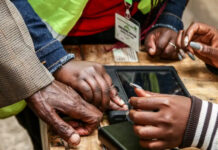
Why Artificial Intelligence Matters in Elections in the Economic Community of Central African States
Artificial intelligence, the ability of computer systems to learn and perform tasks that usually require human intelligence, is at the forefront of technological innovation....
The Illusion of the Free Market: Why Cameroonian Agriculture requires a strategic State
Main Policy Highlights:
Stabilizing agricultural incomes: Establish a smoothing fund and floor price mechanisms to protect cocoa producers from price volatility.
Industrial revitalization through...

Supply Chain Reconfiguration in a Fragmenting World
Africa’s Industrial Future at a Strategic Crossroads
By Dr Salim Ahmed Vessah
For decades, globalization promised efficiency. Firms fragmented production across borders, locating activities wherever labor...

Unilateral Power in a Fragmenting World
By Dr Julienne Stéphanie Mesumbe
When the United Nations was founded in 1945, its charter carried a solemn promise: that collective security would replace unilateral...
Latest article
Beyond Democratic Backsliding: The Promise of Africa’s Democratic Resilience
By Prof. Felix Kumah-Abiwu
Executive summary
While recent discussions on Africa’s democratic trajectory often focus on democratic backsliding, military coups, and governance challenges, the continent...
No Factories, No Trade: CEMAC Faces the Challenge of Structural Transformation
Highlights
No CEMAC member State accounts for more than 10% of exports to the continent.
The free movement of people, planned since 1999, has...

Burkina Faso’s New Study Abroad Decree: When Education Becomes a Political Privilege
By Enowbachem Agbortanyi
A Policy Framed as National Development
Burkina Faso's latest decree requiring every student wishing to study abroad to obtain government authorization marks more...
From the WTO MC14 to Action: Building Africa’s Productive Capacity through Trade, Digitalisation and...
Africa cannot rely on trade liberalization alone to achieve economic transformation; instead, it must pair AfCFTA integration with deliberate industrial, agricultural, and digital capacity-building...
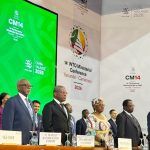
Leveraging WTO MC14 Investment Facilitation for Development to Accelerate Structural Transformation in Cameroon
Investment inflows will generate the expected level of development impact in Cameroon if the country addresses persistent challenges like regulatory inefficiencies, institutional fragmentation, and...

Rethinking Commercial Leadership in Central Africa: Addressing the Challenges of Informality, Inequality, and Digital...
Informality, inequality, weak digital infrastructure, and limited productive financing continue to marginalize ECCAS economies, while calling for coordinated reforms to achieve inclusive and transformative...