
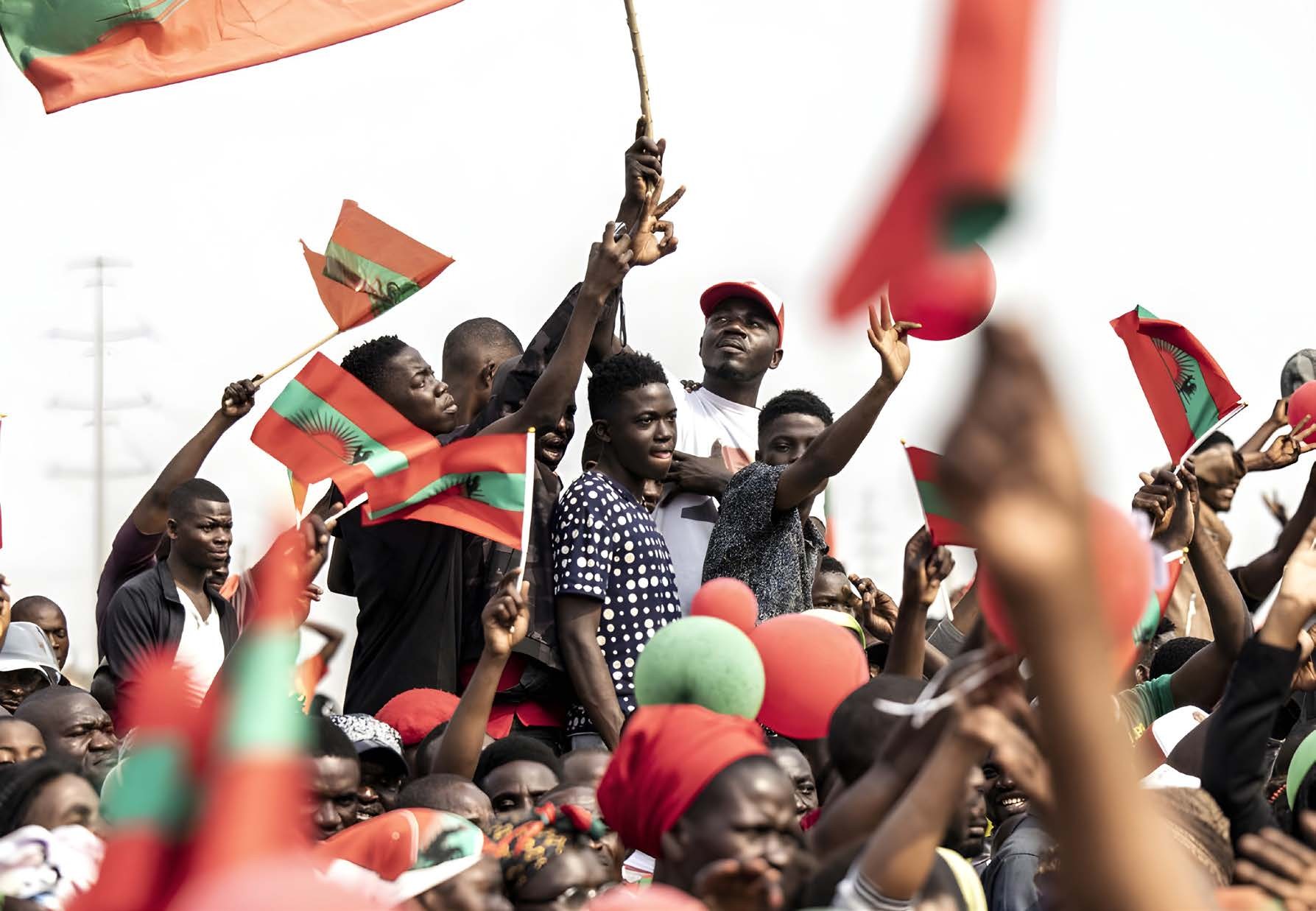
Balancing electoral security and civil liberties in Africa requires nuanced regulation of digital disinformation that counters authoritarian misuse of technology while safeguarding open civic space and democratic participation.
The rise of digital authoritarianism in African elections
Digital technologies have been at the heart of political mobilization, voter education, and election monitoring in Africa. However, these technologies have also introduced new possibilities for digital authoritarianism, including the use of surveillance, internet shutdowns, and restrictive legislation to control political narratives and crackdown on dissent during election times. New evidence indicates that governments across the continent are increasingly using digital infrastructure to manipulate election outcomes. Internet shutdowns, content restrictions, and surveillance are often cited as measures to curb the spread of disinformation or maintain law and order. Nevertheless, these practices are often criticized for undermining the transparency of election outcomes and democratic participation. A report by the Collaboration on International ICT Policy for East and Southern Africa (CIPESA) indicates that several countries in Africa, including Chad, Uganda, Gabon, and Zimbabwe, have been guilty of internet shutdowns during election times or protests. The cases of internet shutdowns are on the rise. For example, in 2022, 201 shutdowns were recorded, and the following year, there was 41% increase to 283 internet shutdowns in 39 African countries. Internet shutdowns are often cited for undermining democratic governance and limiting the ability of citizens to communicate and participate in election monitoring. Similarly, there has been an increase in the censorship of social media and political debates during election seasons. For example, in Uganda, there was Facebook censorship as a result of accusations of interfering with domestic politics. This is an indication of the tensions between governments and digital platforms during election seasons. At the same time, there has been an escalation of digital platforms as channels for political influence operations. There are bots and propaganda machines that have polarizing effects on politics. Social media algorithms have also escalated this since they can promote content that is sensational and can create echo chambers and misinformation ecosystems.
This indicates a paradox whereby digital technologies have both positive and negative effects on democracy and election security in Africa.
Disinformation, AI propaganda, and electoral instability
Disinformation campaigns are increasingly defining the nature of electoral competition in African elections. Political actors, foreign influence networks, and domestic propaganda machinery are using social media platforms to disseminate wrong information, shape public opinion, and undermine electoral processes. Evidence of several African elections shows the scope of the challenge. For instance, in Uganda’s elections, political actors employed hashtag campaigns, fake accounts, and misleading imagery to shape online discourse and mobilize supporters. Similarly, misinformation campaigns against opposition leaders were observed in Angola’s elections, showing the scope of digital propaganda in electoral processes. This is because the emergence of generative artificial intelligence (AI) has further complicated these issues. AI-generated images and propaganda materials like deepfakes have emerged as key tools for manipulating political perceptions and creating false narratives around political leaders and electoral processes. There is concern that such tools may create major disruptions in democratic processes in many sub-Saharan African countries. In the Sahel, coordinated propaganda efforts have also leveraged manipulated imagery and viral social media content to depict political leaders as heroes or cast their opponents in a negative light, especially in Burkina Faso. These propaganda efforts often leverage the disenchantment of the populace with governance and foreign interference, making them particularly effective in unstable political climates. The rising rates of digital disinformation pose significant threats to the integrity of democratic processes. Misinformation on voting processes, procedures, or allegations of electoral manipulation can erode trust in democratic processes and lead to political violence. However, overbearing government actions, such as shutting down the internet or criminalizing online free speech, tend to heighten tensions and restrict transparency and free political expression.
Policy pathways: Combating disinformation while protecting civic space
However, it is important to address the issue of digital disinformation without compromising democracy and freedoms. The following strategies can help African governments and regional institutions to address electoral security while promoting democracy and freedoms on the continent.
Governments must establish clear and rights-based regulatory frameworks for digital platforms. Instead of blanket censorship and shutdowns, governments must focus on well-defined regulations around coordinated disinformation campaigns, transparency in political advertisements, and algorithmic accountability. Independent regulatory bodies must be used for enforcement instead of security forces.
Governments should invest in fact-checking and digital literacy programs. Improving citizens’ ability to critically analyze information online is a key component of long-term resilience against misinformation. Collaboration between electoral bodies, civil society groups, and technology firms can facilitate the design of misinformation monitoring tools
Civic space protection should be a core electoral governance tenet. Civil society organizations and digital rights advocacy play an important role in enhancing electoral transparency through citizen monitoring platforms.
Regional bodies like the African Union should also establish continental standards on digital governance in and around elections. Such standards should, for instance, prohibit internet shutdowns, enhance the transparency of political campaigns, and foster cooperation against coordinated disinformation campaigns.
Africa’s digital politics is at a critical moment in which elections are increasingly taking place in cyberspace especially with constant communications and citizens engagement throughout the process. While digital technologies hold promises for increasing electoral participation and transparency, they also carry risks of disinformation campaigns and digital repression that could undermine democratic governance. A sustainable way forward for African democracies is to balance the regulation of digital manipulation with the protection of basic freedoms that underpin democratic governance. By adopting open regulations, digital literacy, and protection of civic space, African democracies can mitigate risks of digital authoritarianism and harness digital technologies to strengthen, not undermine, electoral governance in Africa.

Enowbachem Agbortanyi
Enowbachem Agbortanyi is a Policy Analyst with the Peace and Security Division at the Nkafu Policy Institute. He holds a Master’s in Political Science from the University of Gothenburg and is a Swedish Institute Alumnus. His work spans roles at Centre for Human Rights and Democracy in Africa (CHRDA), and research contributions to the Varieties of Democracy Institute (V-Dem) and the Governance and Local Development Institute (GLD) both in Sweden.