In Cameroon, the rise of artificial intelligence is fueling the spread of misinformation, posing a heightened risk to political stability while underscoring the urgent need for appropriate institutional, technological, and civic responses.
By Prof Ngo Tong Chantal
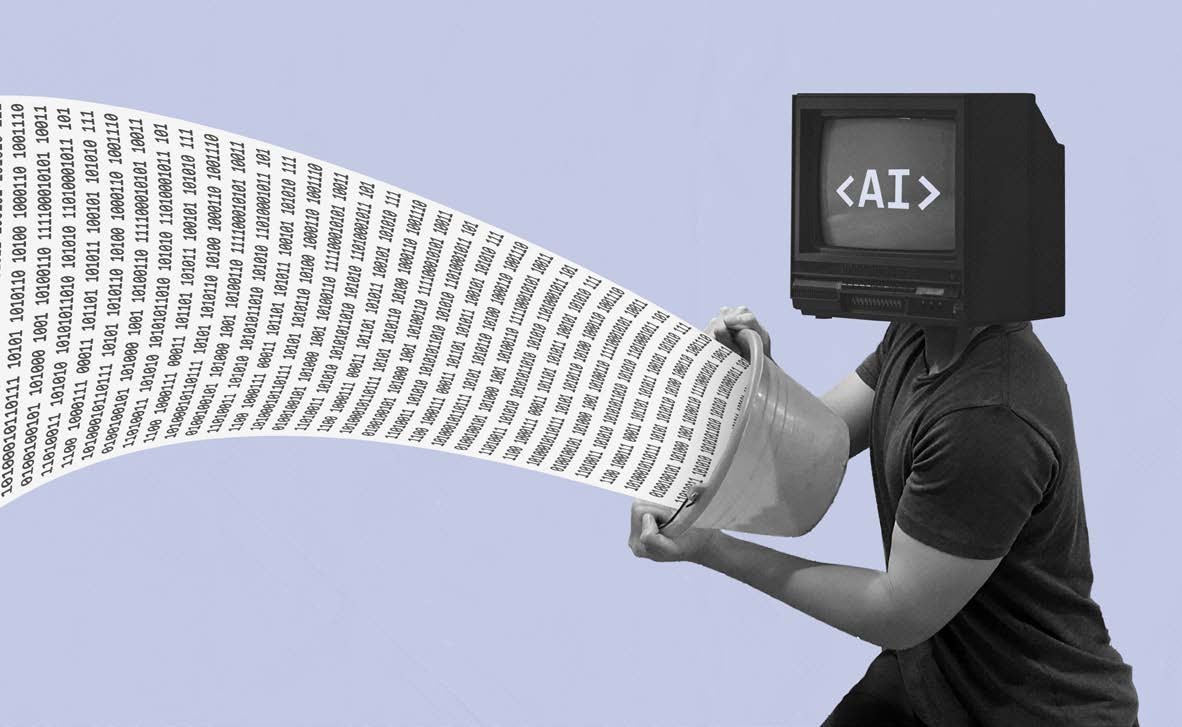
Although the practice of disinformation is as old as humanity itself, the concept is relatively recent. It first appeared in 1949 in the Dictionary of the Russian Language: dezinformatsia, referring to “the act of getting someone whom one wishes to mislead to accept a certain description of reality.” According to Thierry Garcin, it was deployed as a weapon, a deliberate strategy implemented by the USSR to destabilize Western countries. In 1972, the English language adopted the concept of disinformation, later defined as fake news. Fake news, or disinformation, was defined in 2017 by the Collins Dictionary as “false information, often sensational, disseminated under the guise of news reporting. “The practice of fake news exacerbates social tensions and contributes to heightened uncertainty in climates of political instability. While Denis Teyssou argues that artificial intelligence is inextricably linked to the rise of deep fakes, Dimon Raymond Oyeniran maintains that AI is a significant factor in the growth of disinformation in Africa. With deep fakes, AI serves as a tool for spreading false information. The practice of editing videos that attribute statements to political figures that they did not make, known as “deepfakes,” is a disinformation tool that involves manipulating videos or audio recordings using artificial intelligence techniques, to make people appear to be saying or doing things they never said or did. Deepfakes-videos or audio recordings created or modified using artificial intelligence are considered as a weapon of disinformation.
According to various Global Risks Reports, since 2024, disinformation has posed a serious threat to the security and stability of nations. It undermines democracy and exacerbates sociopolitical crises across African states. By fueling hate speech and polarizing public opinion on issues that incite violence, disinformation transforms information itself into a weapon against peace, security, and stability. According to the Global Peace Index (Economist Intelligence Unit), Cameroon’s instability index in 2025 was 2.683 (state of peace, law), a 5-point increase, ranking 137th out of 163 countries globally. Analysts attribute much of this deterioration to disinformation. Repeated rumors about President Paul Biya’s health and alleged death have destabilized the political climate, particularly during election periods. These rumors, often amplified by manipulated images or videos, illustrate how disinformation erodes trust in institutions and heightens insecurity. It is therefore urgent to find mechanisms to assess and verify information and ensure that citizens have access to accurate information. Artificial Intelligence acts as a “double-edged sword” in this context: on the one hand, it can help detect fake news, do real-time fact-checking, and the guarantee the reliability and integrity of an information; on the other hand, it is used to create fake videos and manipulate images that constitute fake news and deepfakes.
How can political actors and civil society actors work together to mitigate the negative effects of AI and optimize its constructive potential to ensure the reliability of information, strengthen democracy, and promote healthy and constructive public debate? Collaboration and cooperation toward the common goal of building a peaceful democracy are essential in the face of the threat that disinformation poses to political stability. In a forward-looking approach combined with strategic interactionism, the discussion will focus on examining, on the one hand, AI as a Tool for Disinformation ad a Factor of Instability, and on the other hand, AI as an instrument of stability”.
- AI: A tool for disinformation and a factor of instability
Disinformation, in its broadest sense, is defined as “the manipulation of a specific target for political, military, or economic purposes, using information processed through indirect means.” Although disinformation has long represented a global threat, its impact has reached alarming proportions in the digital age, where online platforms exponentially accelerate the spread of false information. Disinformation disseminated through the internet, media, and social networks presents new challenges for states due to its capacity to destabilize and disrupt political order. The rise of artificial intelligence has amplified these practices. While the history of disinformation stretches back centuries, the history of artificial intelligence (AI) is more recent, dating to the post-World War II era in 1950. The term “Artificial Intelligence” appeared in 1956 to describe the ability of systems developed by computer pioneers and mathematicians to autonomously solve complex problems. Today, AI has evolved far beyond simple programming, with technologies such as Generative Adversarial Networks (GANs) enabling the creation of original, highly realistic content. In Cameroon, online rumors concerning the death or health of political figures are commonplace. For example, President Paul Biya has been the subject of death rumors on at least 39 occasions, and claims of illness or coma 13 times. Circulating in contexts of political crisis and electoral campaigns, these rumors generate insecurity and mistrust among the population. Assiene Bissossoli and Salla Bezanga analyze these rumors about the president’s death as political tools used to challenge or resist the dominant order. Such rumors, constantly disseminated, fuel hate speech, exacerbate violence, and destabilize society. In crisis situations, rumors appear as a negative phenomenon, carrying the risk of instability and destabilization of society. Furthermore, whether they concern a political figure or are used in the context of elections, rumors are a strategy for political positioning, an instrument of political competition. Philippe Aldrin speaks in this sense of “a rumor-based approach specific to political competition and the exercise of power.”. Disinformation during election periods has a destabilizing effect on electoral systems and casts doubt on the credibility of the electoral process. The harmful impact of disinformation is now amplified by AI, which in 2025 was described as “a new tool for disinformation in the presidential campaign.” AI-generated images and videos were used to persuade crowds or encourage stances that favor either the ruling party or the opposition depending on the actors involved. Thus, when deployed in schemes of manipulation, AI is a factor of instability. Yet, when harnessed for fact-checking and verification of information, AI can serve as an instrument of stability, offering tools to counter disinformation and restore trust in public discourse.
2. AI: an instrument of stability
The contribution of artificial intelligence to fact-checking makes it a significant element of socio-political stability. Fact-checking is the practice of verifying the accuracy of statements made by political leaders or other public figures. It involves examining the truthfulness of information disseminated in the media, public discourse, and on social networks. As such, it is a key tool in the fight against disinformation and fake news. The logic of fact-checking is essentially a logic of “monitoring,” ensuring that information circulating in the public sphere is reliable and trustworthy.
In Cameroon, platforms such as #237Check and Data check have been created to verify information and analyze data related to online news. These initiatives play a crucial role in countering false narratives and restoring public confidence. For example, ahead of the Pope’s upcoming visit to Cameroon from 15 – 18 April 2026, manipulated images circulated online claiming that attendees would be charged to attend Masses. Data check quickly debunked this rumor, clarifying that no fees would be imposed. This illustrates how fact-checking platforms can neutralize misinformation before it spreads widely. Similar initiatives exist across Africa. Africa Check in South Africa, has exposed numerous false claims relating to elections, public health, and governance. During the COVID-19 pandemic, it played a vital role in debunking myths about vaccines and treatments, thereby protecting public health.
Conclusion and recommendations
Artificial intelligence plays a dual role in a State’s socio-political landscape. On the one hand, it assists in detecting fake news, enables real-time fact-checking, and helps guarantee the reliability and integrity of information. In this way, AI contributes to improving the social climate and provides effective means of combating disinformation. On the other hand, AI is increasingly misused to create fake videos and manipulate images that constitute fake news and deepfakes. When deployed in this manner, it amplifies disinformation and becomes a destabilizing factor. For instance, in Cameroon, manipulated images have circulated during election periods, fueling rumors about political figures and undermining public trust.
In this regard, we recommend to governments, enterprises, and organizations of civil society to:
- Develop strategies to train and strengthen the skills of fact-checkers, journalists, and civic actors to design solutions to detect fake news and ensure the reliability of information;
- Guarantee a transparent public space where reliable information can be shared within a trusted environment. Independent fact-checking platforms such as #237Check in Cameroon and Africa Check in South Africa demonstrate how civic initiatives can counter disinformation;
- Strengthening collaboration between governments, civil society, and technology companies is essential to harness AI’s constructive potential while mitigating its risks.
Ultimately, the future of democracy and stability in Africa depends on whether AI is used as a weapon of manipulation or as a tool for accountability, transparency, and peace.

Pr. NGO TONG Chantal Marie is a Research associate in Governance & Democracy at the Nkafu Policy Institute. She holds a Ph.D. in Political Science, obtained from the University of Nantes (France). Pr. NGO TONG is also a Senior Lecturer at the University of Ngaoundéré. She is a reviewer and co-editor of the African Development Perspectives Yearbook and a member of the Research Group on African Development Perspectives, Bremen since 2019.