Introduction
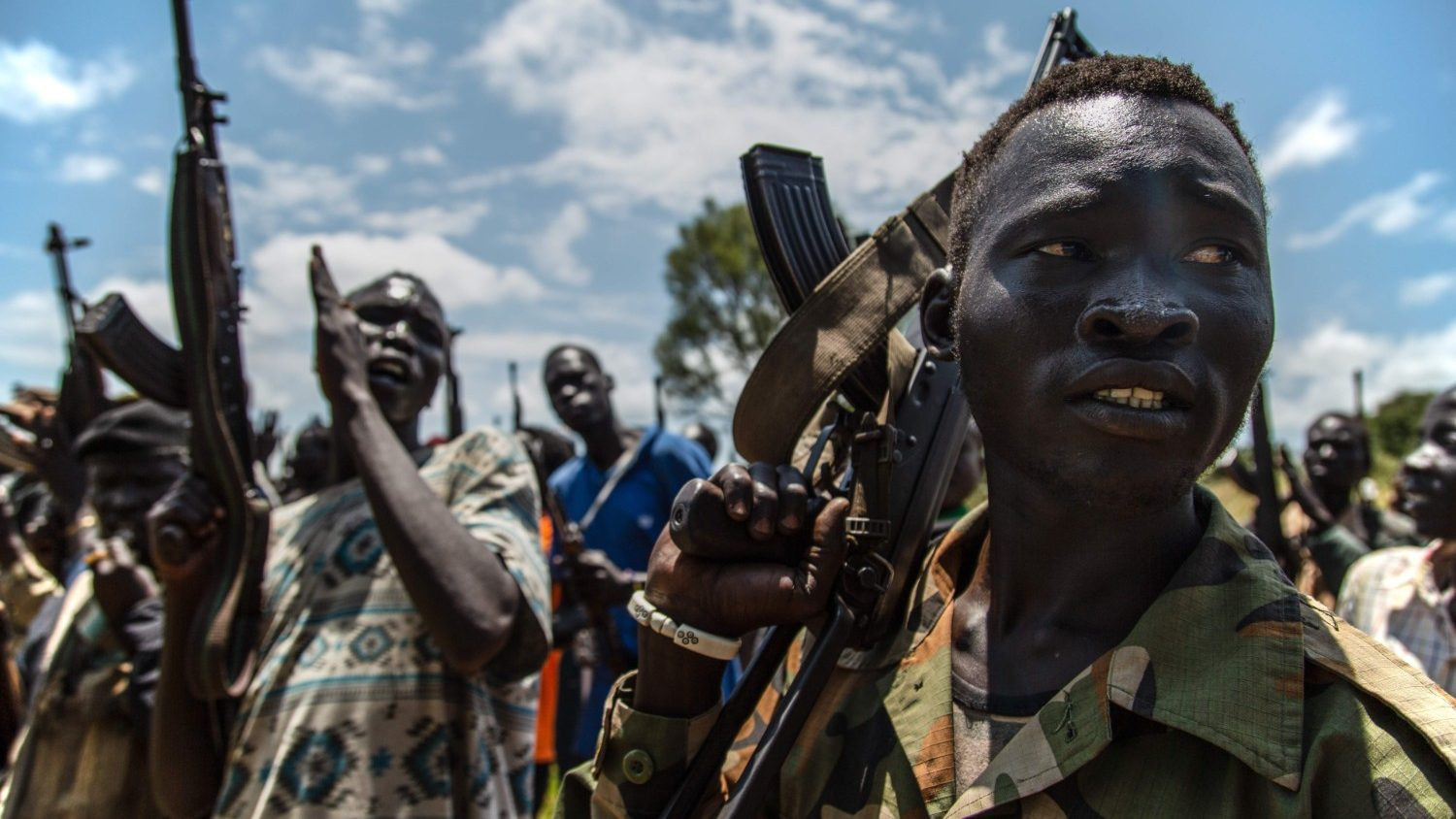
Since the start of the year 2025, the tragic situation in Sudan has been given less attention in world news. Indeed, the agenda of diplomatic chancelleries is monopolized by the Russian-Ukrainian conflict, the conflict between Israel and Hamas, the trade war between the United States and its economic partners, and the renewed conflict between the Democratic Republic of Congo (DRC) and the M23 Rebels. However, the civil war that broke out in Sudan on April 15, 2023 remains particularly violent and bloody (1) . This conflict pits two rival military factions under the command of former allies who instigated the October 2021 coup. On the one hand, there is the Sudanese Armed Forces (SAF), led by General Abdel Fattah al-Burhan, who has held de facto power since the coup, and on the other, the Rapid Support Forces (RSF) of General Mohammed Hamdan Daglo (2). While the former insisted that the Rapid Support Forces should be placed under the command of the national army so that they would no longer be a threat to his power, the latter contested this opinion, arguing that it was not his place to play second fiddle. As a result, the two parties were unable to reach a compromise on power sharing and this triggered the war since April 2023.
In fact, since its independence, Sudan has experienced a series of very deadly civil wars due to the heavy involvement of the military in the politics of the state. In the 1980s, the conflict ended with a military leader, Omar al-Bashir (3) seizing power. His dictatorial drift intensified the rift which resulted to the Darfur War, where crimes against humanity were allegedly committed. In their historic rivalry with the North, the Southerners obtained their independence in 2011. After about thirty years of reign, the military regime of Omar al-Bashir did not overcome the bread price crisis in 2018 (4) , which led to its fall following the popular revolution. The political transition initiated after the fall of the regime, in such a fractured society, was interrupted by the putsch of 2021 and no solution to date seems to be on the horizon. However, there is continuous rise in the humanitarian and economic cost of this war.
Almost two years into the conflict, the death toll is in the hundreds of thousands, with internally displaced persons and refugees lacking the bare minimum to survive (5) . However, the international community’s attention seems to be focused on other conflicts of interest that appear to be more strategic for the major powers, while the protagonists are sticking to their positions (6) . Meanwhile, the conflict is escalating with tribal hatred, child mutilation, sexual violence, and famine. This situation of selective emotion is giving rise to apprehension, given that the international powers are said to have divergent interests that are undermining any attempt at a solution. Russia’s veto on November 18, 2024 of a draft Security Council resolution on the protection of civilians in Sudan supports this view (7). Some UN diplomats have had to declare that this war would be hopeless. However, should we abandon Sudan and its millions of inhabitants trapped by a fratricidal war?
It is important to stress that the international solidarity which underpins the philosophy of the United Nations does not authorize this silence in the face of the suffering of the Sudanese people. Even if there are explanations for this “oversight” of such a tragic conflict in the 21st century, this attitude is unacceptable (I), because there is need to take into consideration its tragic consequences (II) in order to envisage lasting solutions (III).
I- An unacceptable “oversight”
Looking at the situation in Sudan since April 21, 2023, it is difficult to explain the reasons for the international community’s neglect to the grave consequences of the war which include thousands of deaths, internally displaced persons and refugees. Moreover, the main actors have been identified and invited to negotiations in Geneva in July 2024 (8) . Though subjective, certain reasons account for this state of affairs. They are linked to the actors with an interest in the conflict and the basis for its resolution.
Regarding the actors, it is important to emphasize that the co-belligerents are fighting internally while their supporters operate on an international scale. On the one hand, the position adopted by the co-belligerents has remained extremist since the beginning of the conflict, each having considered its logistical and strategic resources sufficient to overcome the adversary. This fact explains the high level of violence that characterized the first months of the confrontation. Having neutralized each other on the ground, neither party sees itself in a position to force the other to make concessions. Despite truce commitments, no concrete agreement has been reached by the belligerents, who are continuing hostilities and preventing the delivery of humanitarian aid to civilians (9) . However, due to the difficulties for each party to control the entire front line, the protagonists sow terror among the civilian population to exploit or rally it to their cause. On the other hand, the major powers that have shown an interest in the conflict, such as the United States, Saudi Arabia, Germany, and the United Arab Emirates, have maintained a certain silence. The international geopolitical agenda draws their attention to other issues such as the war in Ukraine, immigration to the West, and the Sino-American trade crisis. As the conflict entered a war of attrition, the international organizations involved in peacekeeping grew weary of condemnations, due to a lack of consensus among the major powers (10) . Regarding the basis for action leading to the cessation of hostilities, various legal and political initiatives are open to stakeholders. From a legal perspective, the situation in Sudan is similar to that of the DRC, which justified an intervention by the Security Council due to the risk of threats to international peace (11) . With Russia having blocked any action in this body, the war crimes committed by the belligerents could justify the International Criminal Court initiating legal proceedings to step up the pressure on the instigators as in the Russia-Ukraine conflict (12) . Similarly, certain powers may implement the right of humanitarian intervention, as in Libya against Muammar Gaddafi, or a humanitarian intervention, such as that of France in Côte d’Ivoire against Laurent Gbagbo (13) . From a political perspective, the disinterest of African Heads of State is manifested by a virtual absence of initiatives from the African Union. However, this continental organization also has a peace and security architecture whose effectiveness is constantly being questioned (14) .
In a nutshell, the resignation of the actors and the denial of the legal and political foundations of an intervention have left the civilian population with lots of tragic consequences, thus, causing more humanitarian crisis.
II- Tragic Consequences
Even as the intensity of the civil war in Sudan wanes, it continues to exact a tragic human, social, and economic toll on civilians. These costs are justified by the brutality of the conflict, but also by its duration.
Concerning the humanitarian consequences, the violence of the clashes is such that it is no longer possible to count the exact number of people who have died, both in the ranks of the military and among the civilian population. But, approximately, the newspaper Le Monde revealed on July 2, 2024 that in 14 months, “the conflict has caused 60,000 civilian victims and plunged half the population into serious food insecurity” (15) . The human toll is more severe. Targeted attacks on civilians have been perpetrated in Northern Darfur, exacerbated by ethnic motivations (16) . In the city of Omdurman, the UN reports that 120 civilians were killed and more than 150 injured in drone attacks on January 13, 2025, likely launched by the Sudanese Armed Forces on a market in Ombada Square, Dar es Salaam, an area controlled by the Sudanese Armed Forces (17) . Deadly incidents of this nature are increasing in both camps under the complicit gaze of the international community. As of February 6, 2025, the UN estimates that the conflict has displaced more than 12 million people, including more than 3.5 million who have crossed the borders into neighboring countries (18) .
For the social and economic consequences, a study by the Institute for Security Studies indicates that Sudan’s economy is in ruins, its business centers transformed into battlefields, while half the population suffers from hunger (19) . Furthermore, the war has stimulated regional illicit markets, with civilians and combatants turning to smuggling networks for essential goods. Thus, illegal activities have flourished, particularly in the historically marginalized border areas between Chad, Libya, and Sudan (20) . In this context, inflation averaged 256.1% in 2023, while the Sudanese pound suffered depreciation as a result of the war. During the same period, real GDP contracted by 37.5%, while the budget deficit widened to 9.1% of GDP (21) . In light of these indicators, the main victims are civilians. Faced with inflation, instability, and deprivation of access to basic services and infrastructure, the civilians still endure the terror of armed groups.
Combining humanitarian and socioeconomic factors, Sudan is becoming inhabitable for its people. It is therefore important for the international community and regional and sub-regional structures to resolutely address the issue in order to find lasting solutions to this conflict.
III- Conclusion: What sustainable solution?
No miracle solution can be invented to put an end to a conflict like the one that has been raging in Sudan since April 2023. It is for the main actors of the conflict to negotiate terms for lasting peace, or external actors resort to force to bring peace on behalf of the international community.
However, if none of these approaches are implemented despite the tragic human toll, it is in fact because the final decision to end hostilities does not belong to the co-belligerents, but to their external supporters. Indeed, the United States supports one of the factions, while the United Arab Emirates defends the other. This support can only be justified by the interests of these powers, each wanting to control the country’s oil reserves. The fate of the population is therefore a non-existent variable in the equation for peace to return in Sudan. This is why the non-commitment of the African Union seems unacceptable, as an organisation that is directly affected by the conflict in Sudan which is a member state. The AU’s inability to act and restore peace in Sudan raises questions of its independence from external actors who seem to have interest in the ongoing Sudan conflict.

Prof. Théophile NGUIMFACK VOUFO
Holder of a PhD/Ph.D in Public Law, option Public Finance, Dr. Nguimfack is currently Lecturer at the Faculty of Legal and Political Sciences of the University of Dschang.